The ideas below start with projects you can finish Saturday afternoon and move up to ones that need more commitment, so you can pick by how much time you have and whether the wall is yours to alter.
Paint is the fastest way to change what trim does in a room: matching the wall color keeps things quiet, while a darker shade on the casing turns it into a frame that pulls the eye.
[link-whisper-related-posts]1. Wainscoting
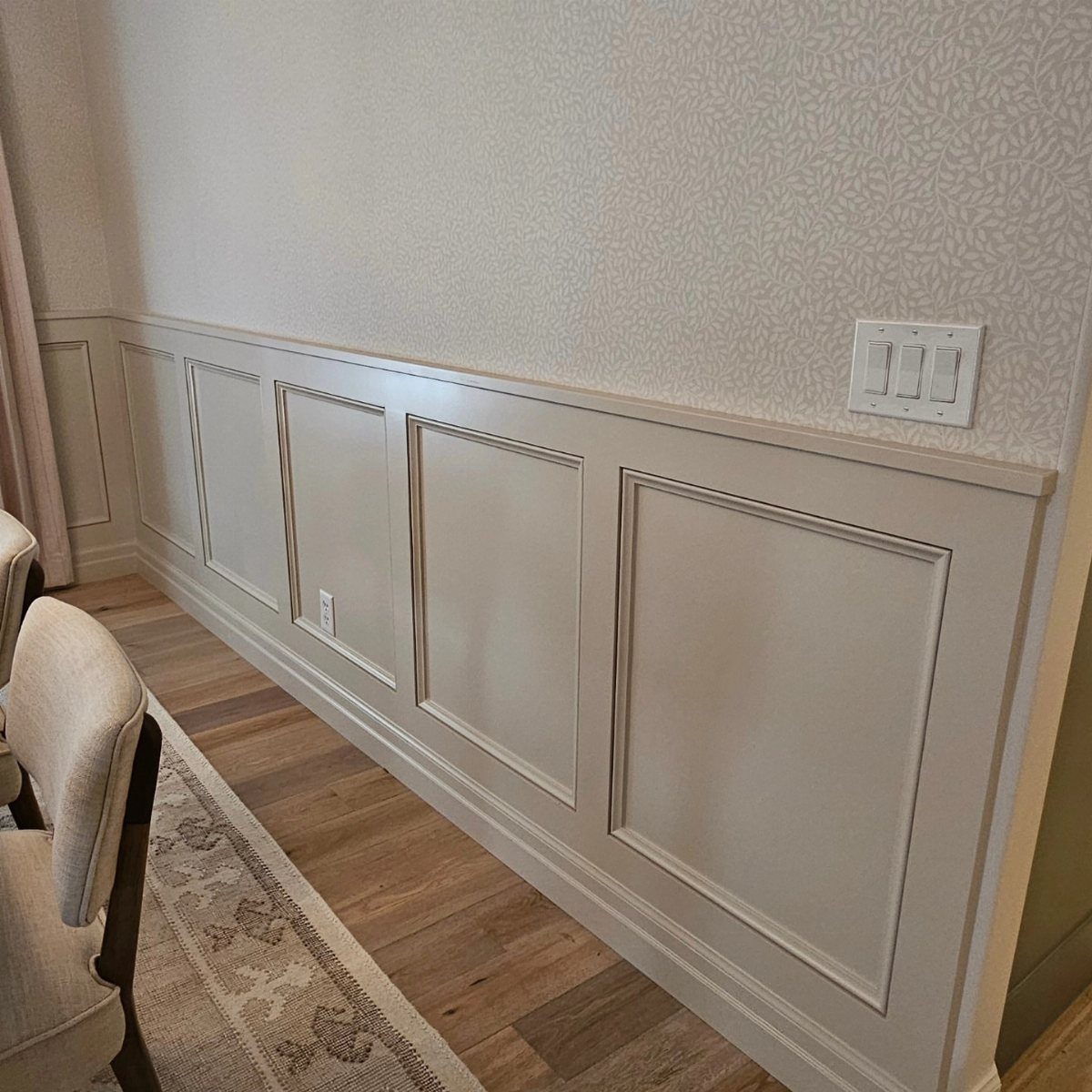
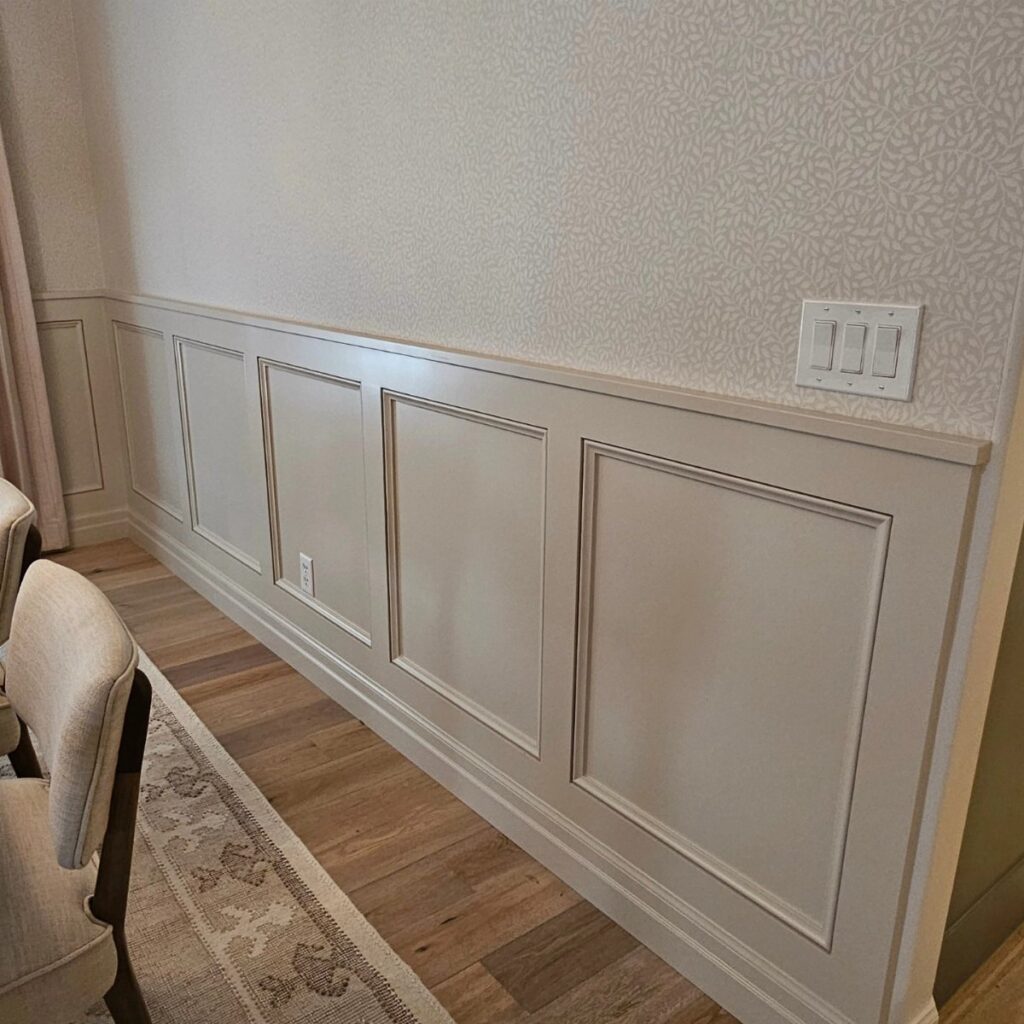
Wainscoting is paneling that climbs from the baseboard to somewhere between halfway and two-thirds up the wall, filling that space with boards rather than leaving it open.
High wainscoting uses picture-frame molding set into the lower wall, capped by a rail, with wallpaper above.
That split lets you treat each half differently, which is why I like it in dining rooms where chairs beat against the lower wall.
The height call matters more than the style. I would measure against furniture you already own rather than picking a standard number.
Two coats of semi-gloss or satin on the trim, caulked at every seam, is the minimum for a surface that gets kicked and wiped.

Pre-Cut & Mitered Molding Strips to Build 4 Picture Frames: This kit includes pre-cut wall molding strips with precision mitered corners. The long and short pieces are designed to be assembled into four 20" x 20" decorative picture frames for wall paneling and wainscoting projects

Wall Molding Kit: The package includes 24 pcs wall molding (24in-14 pcs, 54in-6 pcs, 48in-4 pcs), which can be combined into 6 frames, allowing you to easily create a stylish accent wall. The 6-frame layout shown is designed for a wall measuring approximately 10 feet high by 11 feet wide. Please measure your wall and plan the layout before installation.

High Quality Material - These molding panels are made of polystyrene material, which is hard and durable, lightweight, odorless, non-warping, and non-cracking. The quality is absolutely superior to that of foam molding panels.
2. Chair Rail Trim
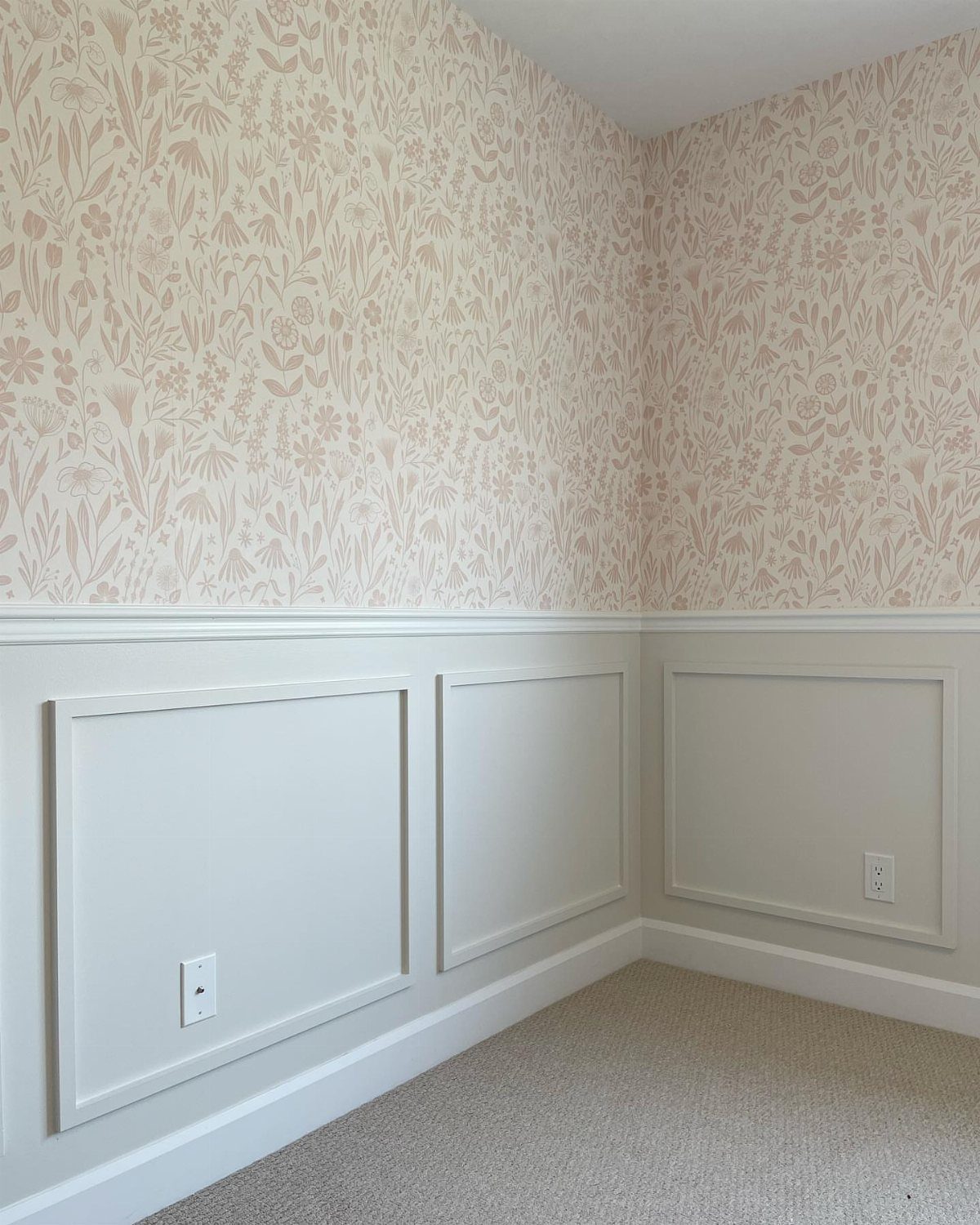
A chair rail works as a clean break between floral wallpaper and white wainscoting, but it works equally well on plain painted walls where the rail itself is the only ornament.
Originally it stopped chair backs from scarring plaster; now it mostly divides visual territory.
Installation is simpler than full wainscoting because you are hanging one piece, not a grid. Paint it to match the wall for quiet continuity, or contrast it for a sharper line.
White against pattern keeps the busy upper wall from overwhelming the room. For a weekend project with one board and a miter box, this is the lowest-commitment trim upgrade that still changes how a wall reads.

DIY Installation - Installation is a snap with our simple 3-step process: cut, peel, and stick. It's quick, effortless, and requires no special tools

DIY Installation Made Easy: Cut, peel, and stick in just 3 simple steps. No special tools required. Effortless installation for a quick and hassle-free experience.

Effortless Installation — Experience the simplicity of our 3-step installation process: simply cut, peel, and stick. It's a swift, hassle-free process.
3. Baseboard Molding
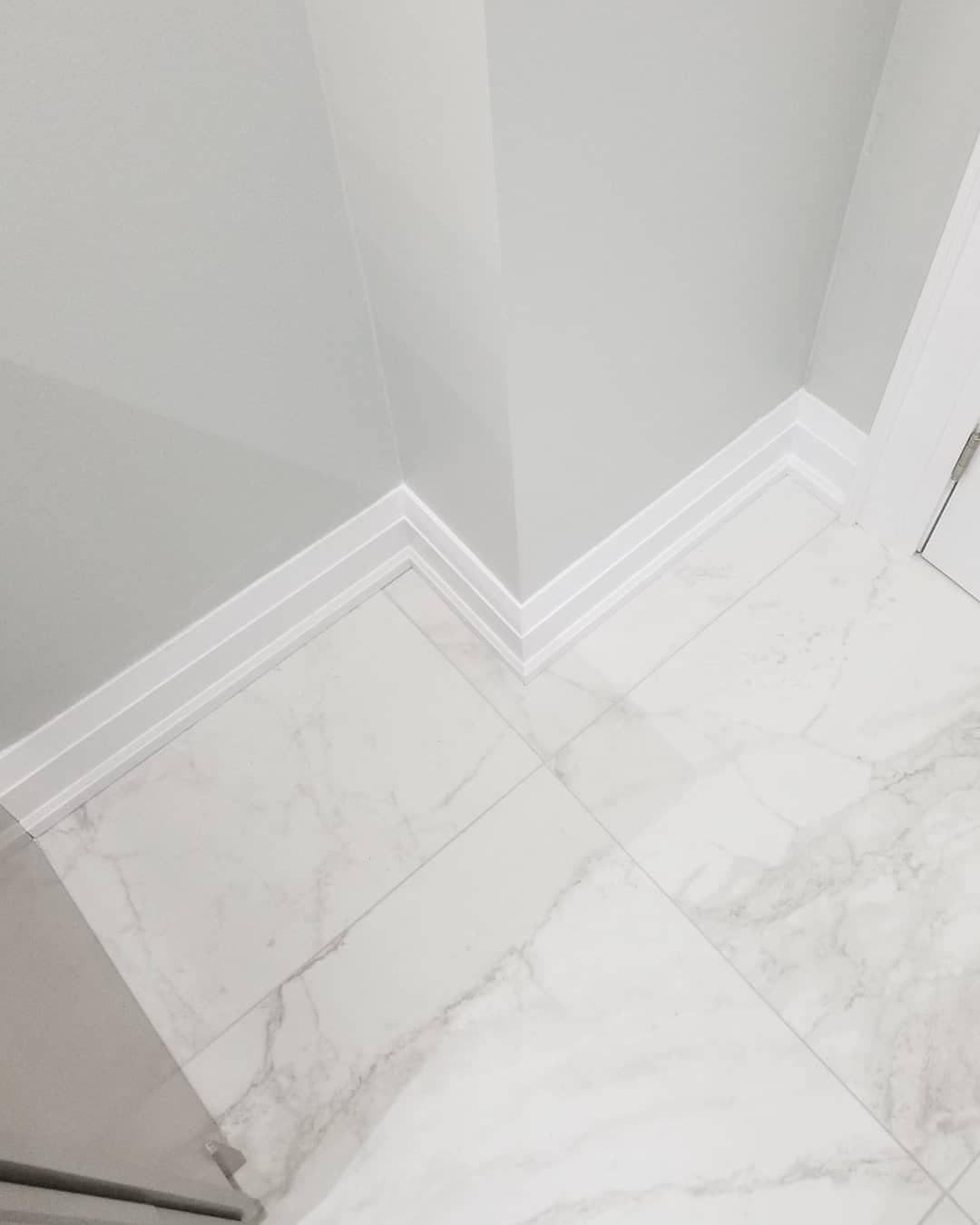
Baseboard molding hides the ragged gap where wall meets floor and takes the scuffs that walls would otherwise absorb.
A stepped profile is a builder-grade upgrade from simple 1x stock; each added reveal catches shadow and reads as more finished without demanding custom millwork.
Height is the first decision. The material is usually MDF or finger-jointed pine for paint, hardwood if you plan to stain.
Paint follows the same discipline as any trim: caulk the top edge, prime, two coats minimum, semi-gloss or satin for washability.
I would not bundle this into a wall-painting day; the baseboard needs its own masking, its own brushing, and time to cure before furniture returns.
Doing it separately also means you can replace the base without repainting the whole room later.
There was an excellent article in FHB about two years ago on designing and building built-up, larger moldings using different standard, off-the-shelf moldings (1x’s firred out, topped by caps, etc.).
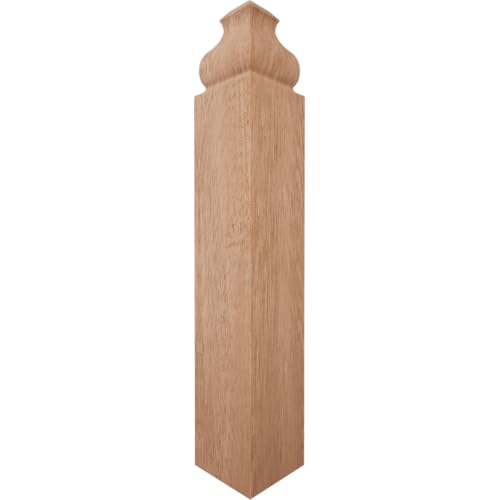
Item Description: 1 1/8"W x 6 1/2"H x 1 1/8"P Americraft Solid Hardwood Stain Grade Universal Baseboard Outside Corner Block for Profiles up to 5 1/4"H x 1 1/8"P, Sapele

Premium PVC Molding Trim - Built to Last, Made of high-quality PVC, this baseboard features a waterproof and moisture-resistant surface, making it ideal for damp areas like kitchens and bathrooms. Engineered for durability, it resists deformation and cracking even after prolonged use. Plus, its easy-to-clean design ensures effortless maintenance for long-term convenience.

Durable and Waterproof: Our wall base protector is made of high-quality Polystyrene, this baseboard trim resists moisture, and daily wear, perfect for kitchens, bathrooms, and high-traffic areas
4. Painting Trim
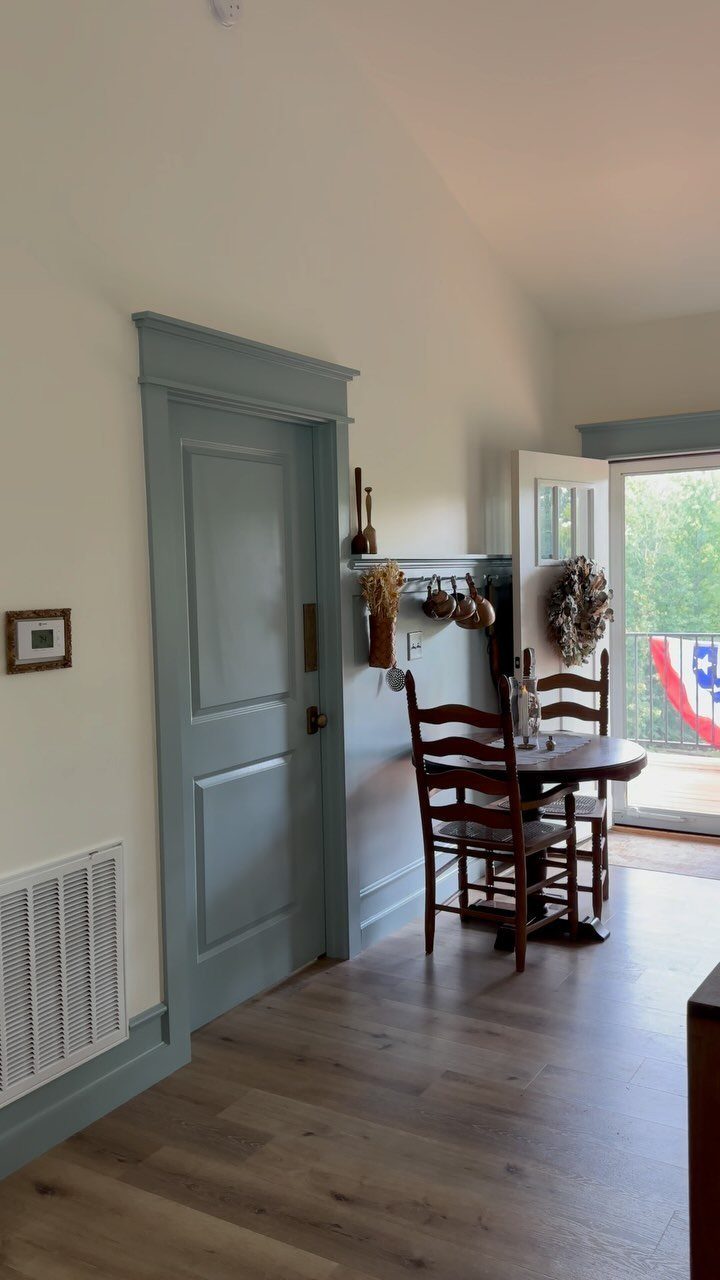
Painted trim turns the casing and baseboard into deliberate color blocks rather than default white.
Slate blue trim matches nothing obvious in the room and still works, which is the point: trim color can echo a fabric, a dish, or nothing at all, as long as it relates to something else in the house.
Sheen matters more than hue. Semi-gloss or high-gloss is the right call for trim that gets touched; flat or eggshell marks too easily and wipes poorly.
The gloss level also catches light differently, so a bold color in high gloss reads brighter than the same color in satin.
Matching the wall color exactly, or tinting it slightly lighter or darker, gives a quieter effect than contrast; contrast suits a room with enough neutral elsewhere to absorb it.

UNPARALLELED ADHESION - Say goodbye to frustrating installation problems. Our molding trim features an advanced adhesive backing, ensuring a secure bond that lasts. Add to cart now.

Wadile Moulding Trims:With a size of 180 inches by 3.1 inches and a thickness of 0.3 inches. It can be easily cut to fit your desired length, making installation a breeze. Note: 180 inches consist of 2 rolls 90 inches.
5. Wall Frame Molding
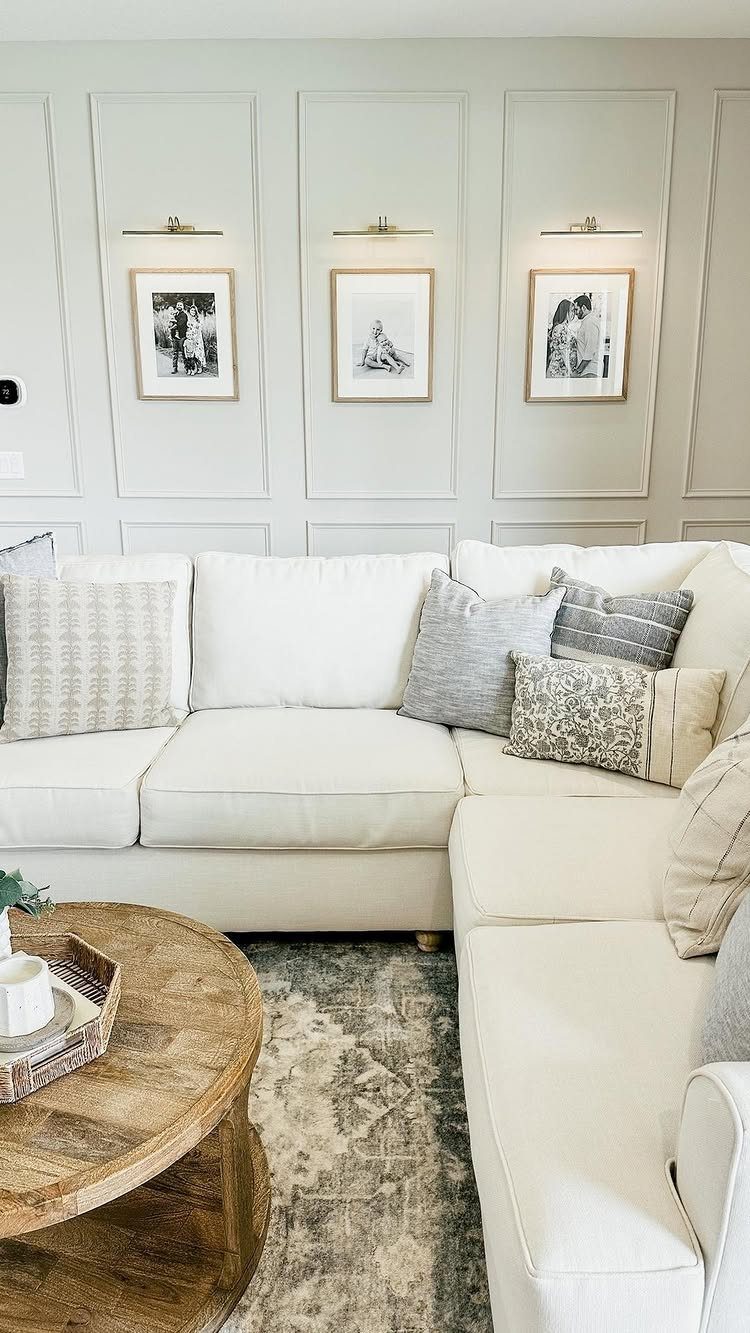
Wall frame molding is empty picture frames built from trim, hung directly on the wall in repeating rectangles.
Large frames behind a sofa, sized to the wall rather than to any actual art that might sit inside them, fill flat wall space without demanding a full wainscoting job.
The frames themselves become the decoration, which is why this works best on walls that would otherwise stay blank.
Proportion is what makes or breaks it. A frame too small for its wall looks like a mistake; too large, and it competes with furniture.
I would measure the wall section, subtract the space the sofa occupies, and divide the remainder by 3 or 4 for the frame width, leaving breathing room between.
Traditional installs keep the frames empty; the photo adds framed photos inside, which is a valid variation but changes the effect from architectural to layered.
Installation is trim nailed to drywall, caulked, primed, painted; no special order, just patience with a level.

Dimensions: 5"W x 5"H x 1/2"P
6. Stairway Base Trim
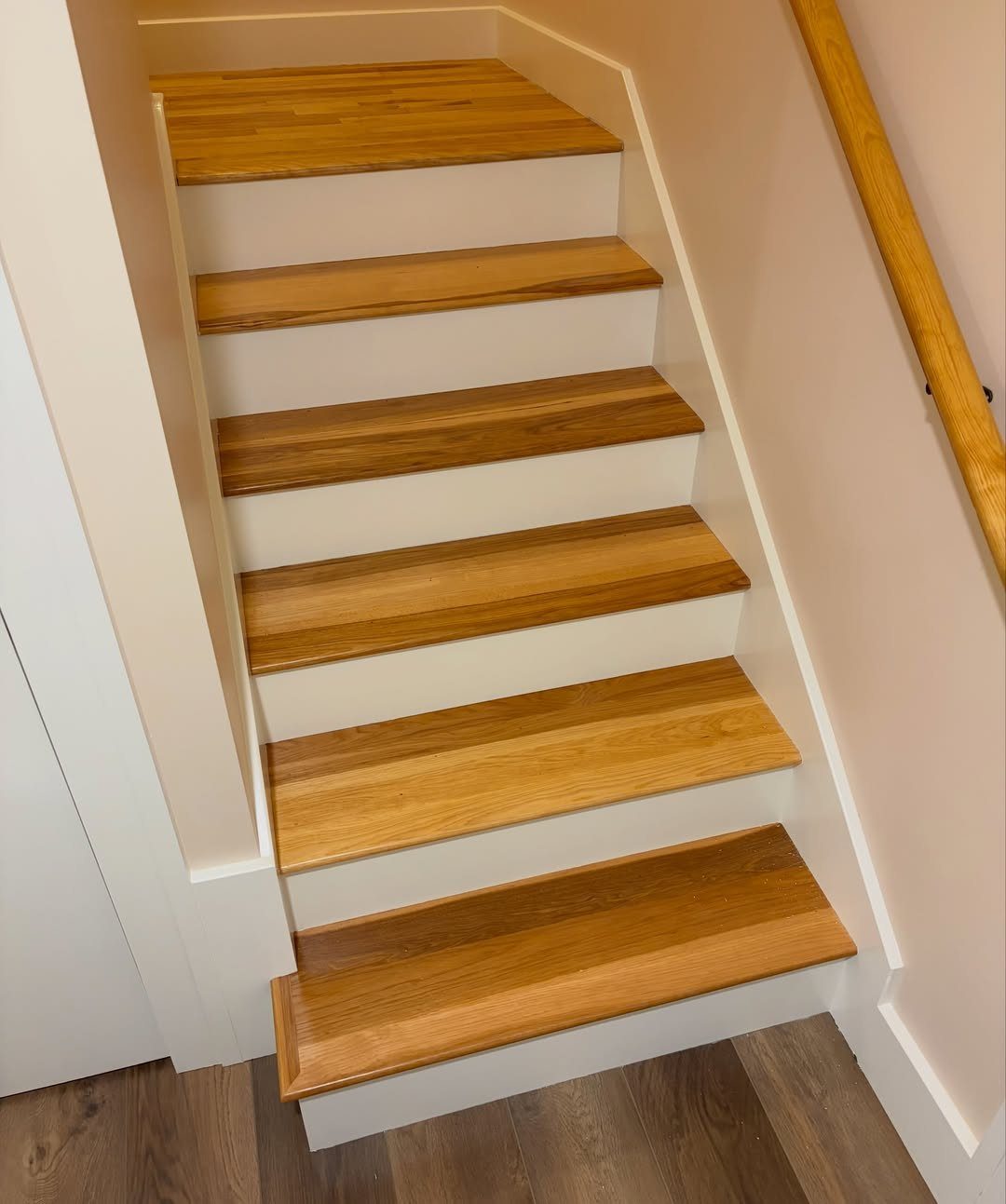
Stairway base trim follows the rake of the stairs, running along the wall at the same angle as the treads rise.
White trim against light oak makes a staircase read as built-in and finished rather than inserted into a leftover space. The angle cut is the only hard part; everything else is standard baseboard installation.
I would use the same profile as the baseboard in adjoining rooms, carried through for consistency. Cut one piece as a test before committing the full length.
Paint happens after installation, and I would mask the treads carefully; oak takes stain unevenly if paint seeps into the grain.
For a staircase that opens directly into a living space, this trim matters more than it would in a closed stairwell, because it is visible from the moment someone enters.

Wall Molding Kit: you will receive 3 sets of pre-cut peel and stick molding for walls, a total of 12 pieces, which can be easily matched and connected to give a sophisticated look to a door or wall, meeting your various decoration needs
7. Geometric Pattern Wall Trim
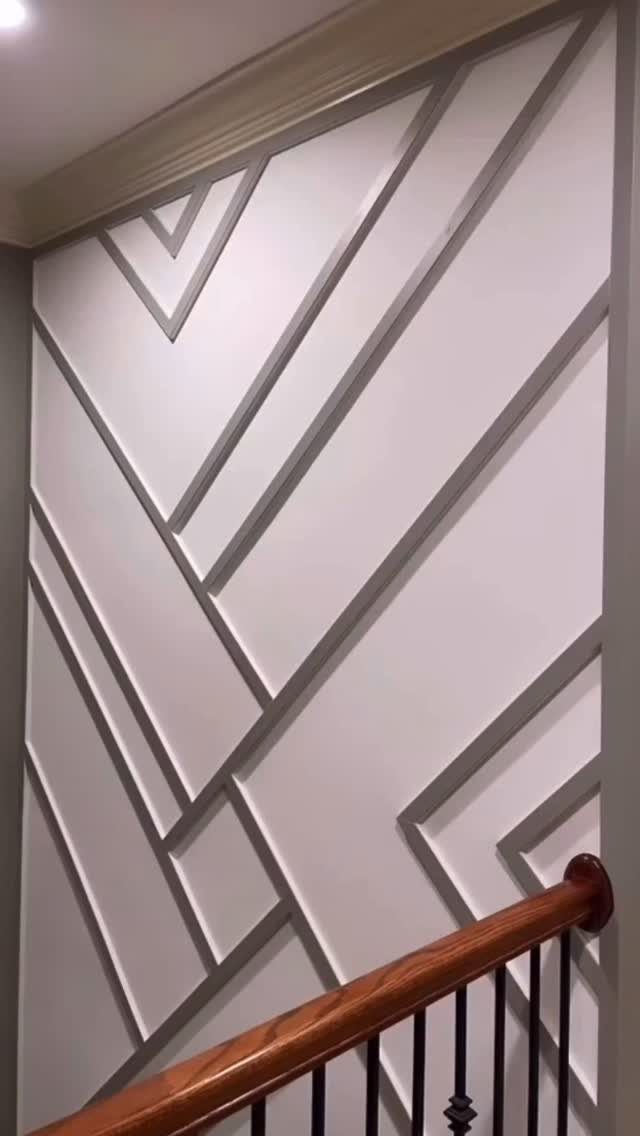
Geometric pattern wall trim turns a plain wall into a grid of shadow and line with nothing but 1×2 or 1×3 boards and a miter saw.
A diagonal run works on a stair wall because the railing already breaks the space into smaller visual chunks; on a wide uninterrupted wall, I’d keep the pattern tighter or add a chair rail to anchor it.
Paint everything the same color as the wall, including the trim, or the effect becomes busy instead of architectural. White-on-white reads as texture, not decoration, which is what keeps this from looking like a dated rec room.
The math matters more than the wood choice. Measure your wall, sketch the pattern full-scale on paper, and buy extra board length for the cuts that go wrong.
A geometry this angular lives or dies by whether the lines actually meet; caulk can hide a small gap, not a big one.
This suits someone who wants maximum visual return from a single weekend and a tight lumber budget. It trades away the traditional feel of wainscoting for something that reads more studio apartment than inherited home.
8. Ceiling Crown Molding
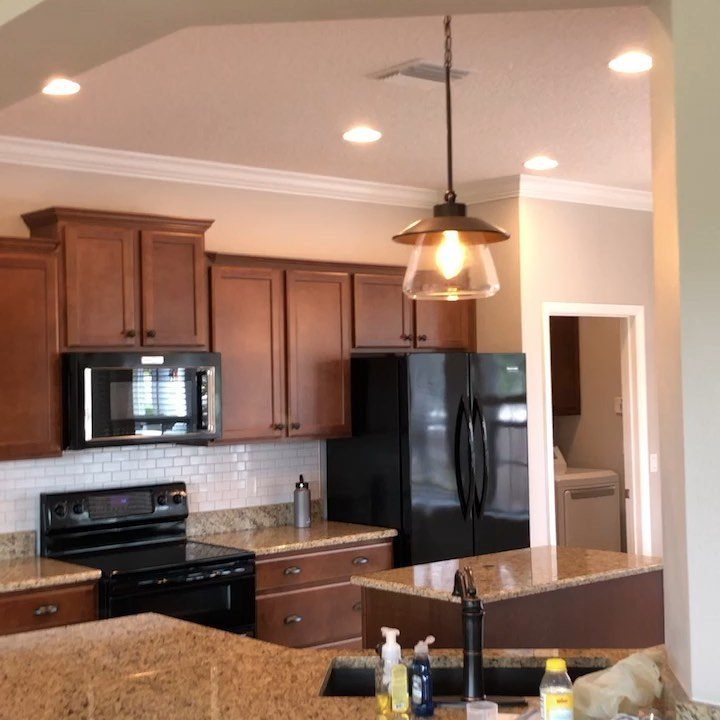
Crown molding carries the eye upward and finishes a room the way a frame finishes a picture; white painted trim against a white ceiling adds height without shouting.
Wood crowns stained to match cabinets read heavier and need taller ceilings to pull off.
The joint where two pieces meet in a corner is the hard part.
Coping, not mitering, is how you get a tight inside corner; the back side of one piece gets shaped with a coping saw to fit over the face of its neighbor.
I tried mitering my first crown job and spent two evenings filling gaps with caulk that eventually cracked. A basic coping saw is cheap and saves hours.
Materials alone cost a few dollars per linear foot; hiring out runs you more. Simple ogee or cove profiles suit most homes; anything with dentil blocks or multiple steps belongs in rooms that already have other formal millwork.
Renters should skip this one entirely. Crown is permanent, and the nail holes plus caulk line destroy the wall finish on removal.
For a lease, peel-and-stick trim exists, but it reads as exactly what it is.
Professional Installation
Crown molding corners are where DIY plans usually fall apart. Coping an inside corner with a hand saw takes practice most weekenders do not have, and a gap at eye level reads across the whole room once the paint dries.
Trim carpenters earn their fee on those joints alone.
A contractor who lists "painting" and does trim as an afterthought is the wrong choice for detailed work.
When you call a pro, ask to see photos of wainscoting or crown jobs specifically, not just general room work where trim happened to be present.
The install itself is only half the labor; caulking every seam, sanding, priming, and two finish coats in semi-gloss or satin is a separate discipline with its own crew in better firms.
Custom millwork installed well outlasts the rest of the house.

Material Advantages - Our molding trim made of quality polystyrene which offers more strength and impact resistance, ensuring it holds up better to everyday wear and tear, making it a long-lasting addition to your ceiling

【Wallpaper Borders】90" x 3.1", Thickness: 0.3". Can be cut and spliced to the length you need.

Coverage - Includes 10-pack ceiling crown molding trim, each measuring 56.4" in length, providing an impressive coverage of 564 inch (47 feet) length. Perfect for enhancing both residential and commercial ceiling designs with an elegant touch
Color Coordination
Tint that same color slightly lighter or darker on the trim and you keep the family but add depth.
White or cream against any wall color is the classic clean break; dark trim, black or deep brown, frames the room and references older varnished wood traditions.
Stay within one temperature, warm or cool, and check undertones against fabrics and flooring already in the space.
In rooms with strong natural light and warm outdoor tones visible year-round, a color that reads neutral on a swatch can shift warmer on the wall.
Test at the actual height and light level where the trim will live, not just at eye level in the middle of the wall.

3/4" x 3 1/2" x 3 1/2" Poplar (Paint Grade) Rosette Bullseye Plinth Blocks, Hardwood

Dimensions: 5"W x 5"H x 3/4"P

Dimensions: 3"W x 3"H x 3/4"P
Material Options
Wood remains the primary material for millwork, though manufacturing now turns out trim in PVC, plaster, MDF, and polyurethane too.
Hardwood justifies its price only if you intend to stain and show the grain. PVC survives moisture in bathrooms but reads as synthetic up close.
Polyurethane is light and carvable for ornate profiles that would be heavy in wood.
Built-ins and archways are places where custom trim, whatever the material, brings a flat element into relief. Match the trim material to the job it has to do, not to an aesthetic choice alone.
Cost Considerations
A pro bid breaks out each stage: installation, filling nail holes, caulking seams, sanding, priming, and the finish coats.
Dedicated trim painters cost more than the wall crew and save the finish from the wavering line a generalist leaves at ceiling height.
Hiring out multiplies that.
Doing baseboards or chair rail yourself keeps the budget in lumber and paint; crown, with its corner joints, is where most homeowners see the value in paying someone who owns a coping saw and knows how to use it.
Frequently Asked Questions
What is trim work on walls called?
Trim work on walls is commonly called molding. Casing trim fits around windows and doors to seal the gaps where they meet the wall, while baseboards run along the floor line and crown molding finishes the ceiling junction.
Wainscoting, chair rails, and wall frame molding are all specific types of wall trim that serve different visual and protective purposes.
What kind of trim is in style now?
Clean-lined crown molding, geometric pattern wall trim, and traditional wainscoting are all current, depending on the room’s character.
Geometric patterns made from 1×2 or 1×3 boards suit modern spaces and tight budgets, while simple ogee or cove crown profiles work in most homes without demanding formal millwork elsewhere.
Chair rails, baseboards, and wall frame molding are all current options, each fitting different wall conditions and commitment levels.
What is the edging on a wall called?
The edging where wall meets floor is called baseboard molding, and it hides the ragged gap while taking scuffs that walls would otherwise absorb. Where wall meets ceiling, the edging is crown molding.
Both are trim; baseboard is the more utilitarian of the two, and crown is the more permanent installation that renters should usually skip.