Living room trim ideas run from a quick paint job on existing crown to a coffered ceiling grid that needs recessed lighting and a real budget.
Renters and short-timers usually lean toward paint and thin molding strips, while first-home owners settling in can justify the built-up stacks and dropped beams that stay with the house.
A miter box rental is enough for the weekend end; 12-foot ceilings and practice squares on scrap board sit at the other.
[link-whisper-related-posts]1. Classic Crown Molding
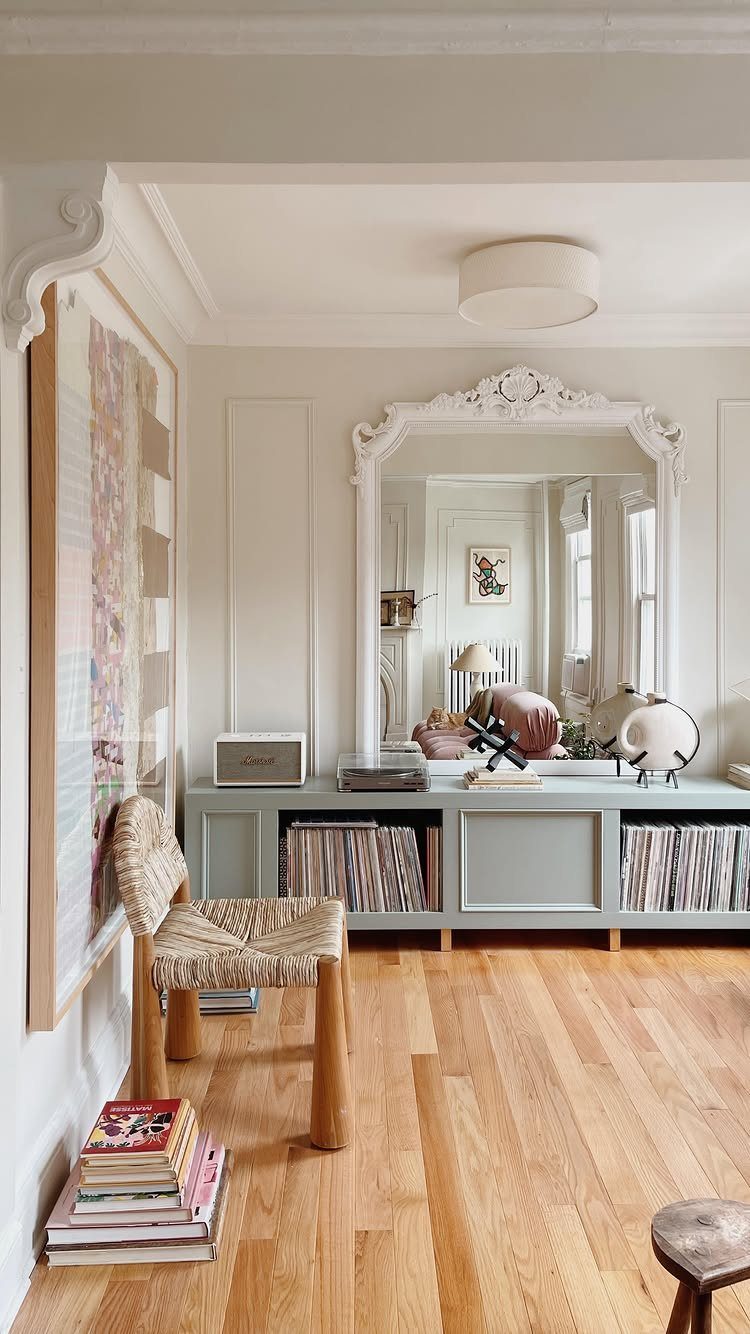
Crown molding is the one trim choice that never needs defending. A wider profile with more detail reads as expensive even in plain white, and the eye travels upward, so the room feels larger than its walls allow.
I’d check the existing baseboards first. Ornate crown against skinny base looks like a mistake, and matching the scale matters more than matching the style.
Paint it the wall color instead of ceiling white if the room is small; the blend stretches the height without adding another line.
This one suits renters in older apartments where the landlord already installed something basic.
A fresh coat in a warmer white, or swapping a thin strip for a wider profile, changes the whole room for the cost of a Saturday and a miter box rental.

Generous Coverage: 14 pcs of molding trim, each 3.9 ft, totaling 55 ft. Solves the common issue of insufficient quantity for full-room projects. Achieve a consistent look across your home without extra orders

Generous Coverage: 14 pcs of molding trim, each 3.9 ft, totaling 55 ft. Solves the common issue of insufficient quantity for full-room projects. Achieve a consistent look across your home without extra orders

LED Baseboard with Integrated Light Trough: each pack contains 6 pcs pre-cut crown moulding with LED light channels, totaling 23.62ft/ 7.2 meters in length; Each rail is approximately 47.24 inches/1.2 meters; This baseboard is ideal for LED ceiling lights, LED baseboard trim, or indirect lighting systems in stylish homes (glue not included)
2. Chair Rails with Contrasting Colors
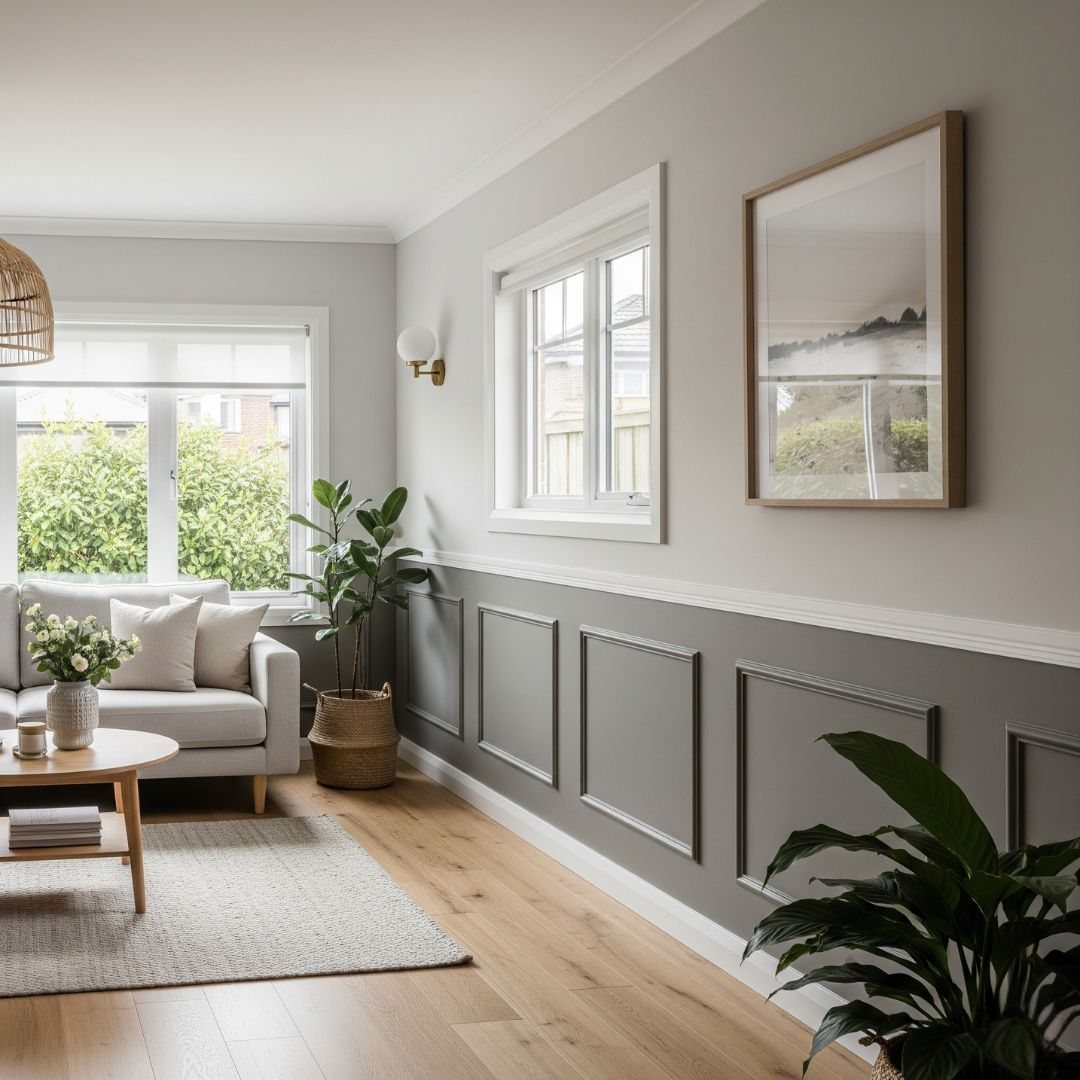
A chair rail placed at the usual height gives you two rooms in one paint job.
The rail itself is cheap pine or MDF, and the protection it offers is real. What sells the look is the contrast; without it, you have a line that divides nothing.
This suits the reader who wants change without construction. Tape the line level, paint the lower half, install the rail to cover your wobbles.
The whole project fits a single weekend, and the supplies cost less than a night out for a standard wall.

DIY Installation Made Easy: Cut, peel, and stick in just 3 simple steps. No special tools required. Effortless installation for a quick and hassle-free experience.
DIY Installation Made Easy: Cut, peel, and stick in just 3 simple steps. No special tools required. Effortless installation for a quick and hassle-free experience.

Effortless Installation — Experience the simplicity of our 3-step installation process: simply cut, peel, and stick. It's a swift, hassle-free process.
3. Wainscoting
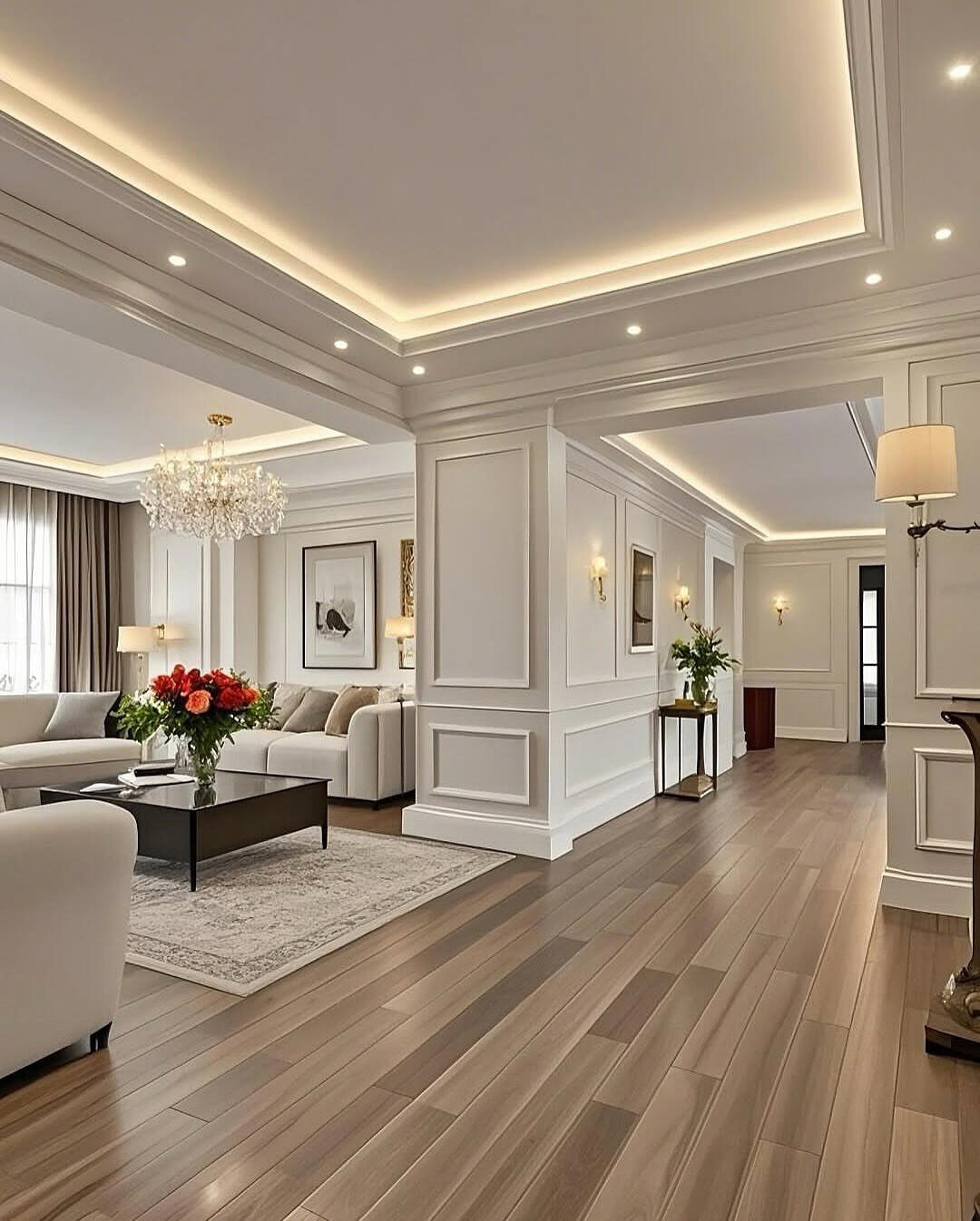
Wainscoting is paneling that stops at chair-rail height, and in white against pale walls it reads as architecture rather than decoration.
The same panels in a rich color, or left in natural wood, shift the mood entirely toward library or cottage.
The choice is between beadboard, raised panel, or flat board-and-batten. Beadboard is fastest to install and forgives uneven walls; raised panel needs everything plumb.
I have seen all three work in modern rooms when the scale is right, so the furniture matters more than the era.
This one trades wall space for character. In a small living room, wainscoting can feel busy; in a long rectangle with bare walls, it breaks the tunnel effect.
Budget for paint as a separate line item, since every edge shows.

Stylish Wall Upgrade: This wainscotting wall panel kit adds texture and charm to any space. The 37.8” tall beadboard panels create a beautiful decorative accent for living rooms, bedrooms, kitchens, studies, and more

No More Plain Walls: Turn flat interior walls into vertical beadboard wainscoting panels that instantly add texture and dimension without complicated layout planning
4. Built-Up Moldings
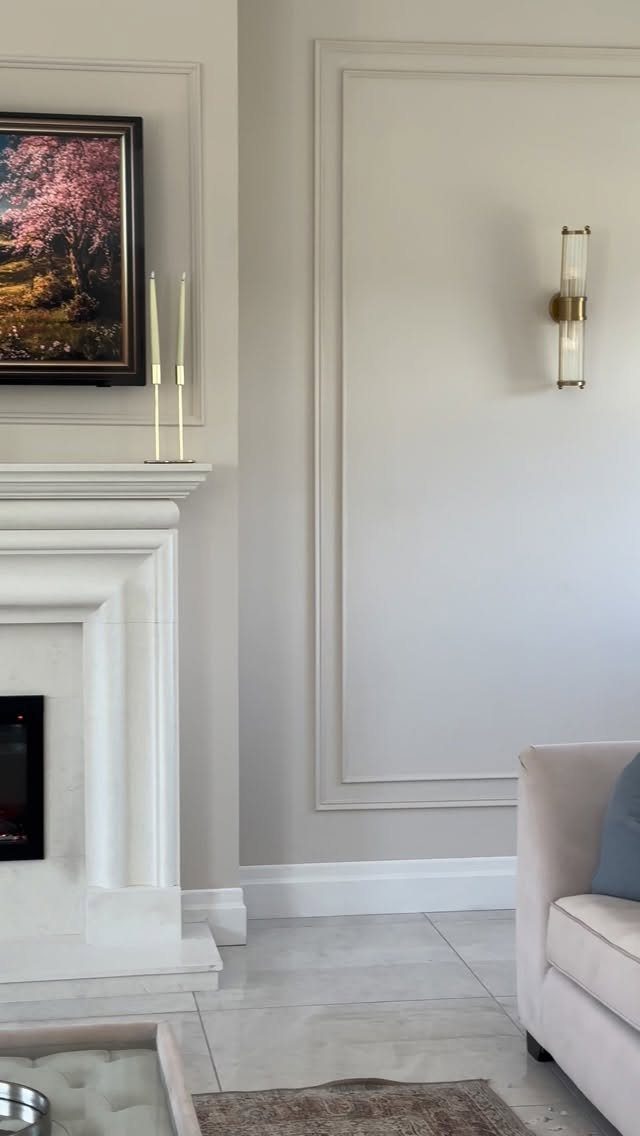
Built-up moldings stack standard pieces into something custom. Rectangles built from base cap, casing, and a thin strip inside, all layered and painted as one.
The maker started with built-in bookshelves in mind, then chose this instead at 12-foot ceilings where dusting shelves felt like a second job.
Buy a few cheap profiles and test the stack on a scrap board before cutting anything. A mitered corner in layered trim is harder than it looks; I would practice on a 2-foot square first.
There was an excellent article in FHB about two years ago on designing and building built-up, larger moldings using different standard, off-the-shelf moldings (1x’s firred out, topped by caps, etc.).

MDF Material for Lasting Use: this board and batten wall panel kit is made from MDF, offering sturdiness and water resistance; The surface is smooth, providing a comfortable touch for interior wall applications

Premade Board and Batten Paintable Wainscoting Kit: Package includes 20 premade molding trim slats, 4 decorative edge strips, and two pairs of gloves for convenient installation

Pre-Cut Arch Wainscoting Panel Board:A complete set of 4 pre cut arched wall decorative strips, each set containing 9 components: one arched component and 8 vertical strips, totaling 36 components; These 9mm thick panels can be easily connected, adding a delicate touch to doors or walls
5. Coffered Ceiling Trim
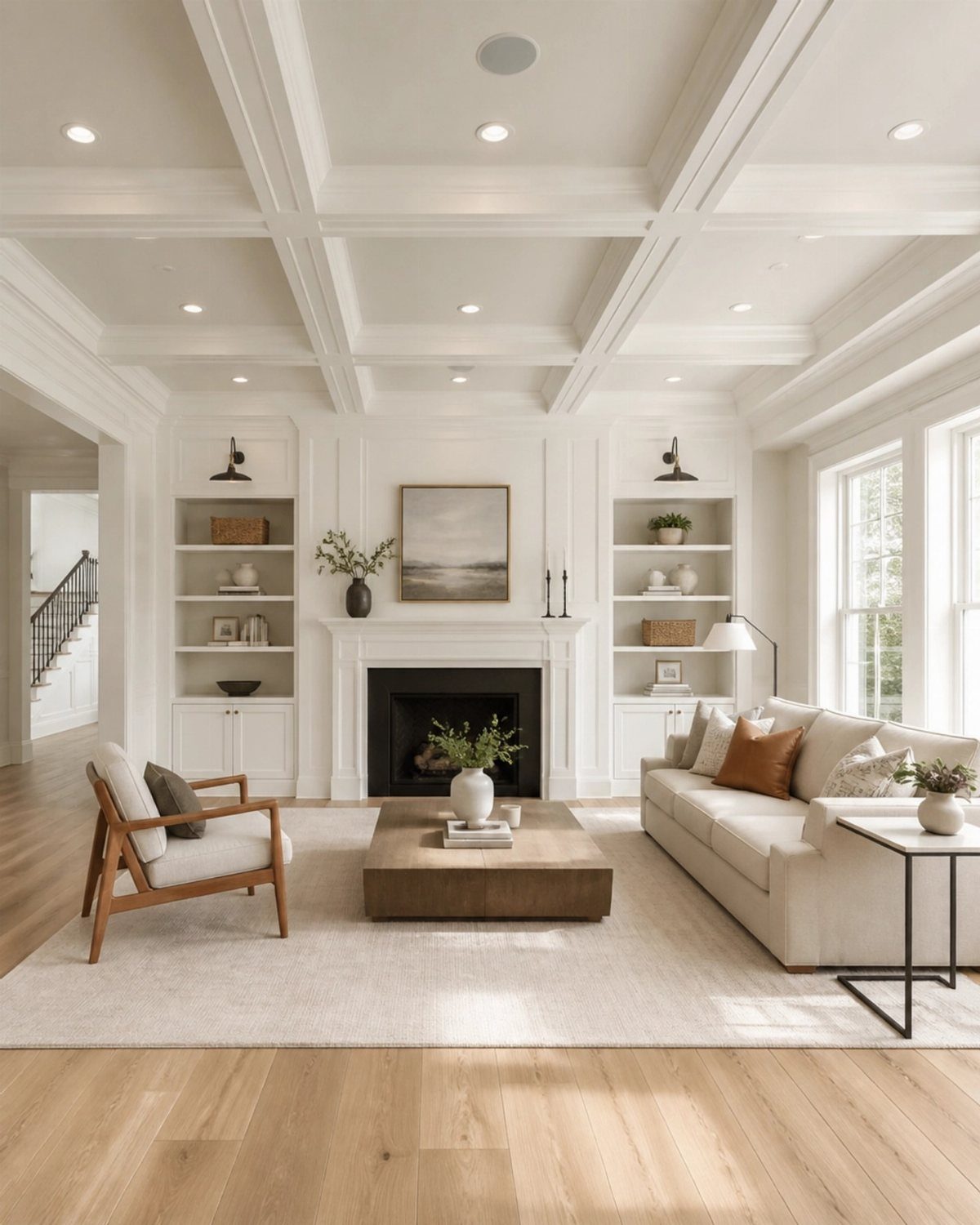
A coffered ceiling is a grid of beams that drops below the surface, creating shadow lines that hide uneven drywall and add weight to a room that feels too tall. White keeps the grid from pressing down.
The depth of the beams changes the effect. A shallow drop reads as trim; a deep one becomes a trellis overhead and needs recessed lighting inside each box.
I would measure the tallest person’s reach with a raised arm before deciding; head clearance in the beams matters more than the drawing looks.
This is the most expensive idea here, and the least reversible. It suits the first-home owner staying put, not the renter.
If the ceiling is already low, skip it entirely and spend the money on better windows.

COMPLETE COVERAGE: Each pack of 12 tiles cover 48 sq.ft. Great for basements, kitchens, bedrooms, living rooms, garages, and office spaces. Easy to install, perfect for DIY renovations and home makeovers.

Premium Wood Fiber Construction: These ceiling tiles are crafted from high-quality wood fiber material that provides excellent acoustic properties and durability, making them ideal for residential and commercial applications where sound absorption and longevity are essential

EASY INSTALLATION – Designed to fit standard 15/16" T-bar grid systems or can be mounted directly to any smooth, flat surface.
6. Picture Frame Wall Molding
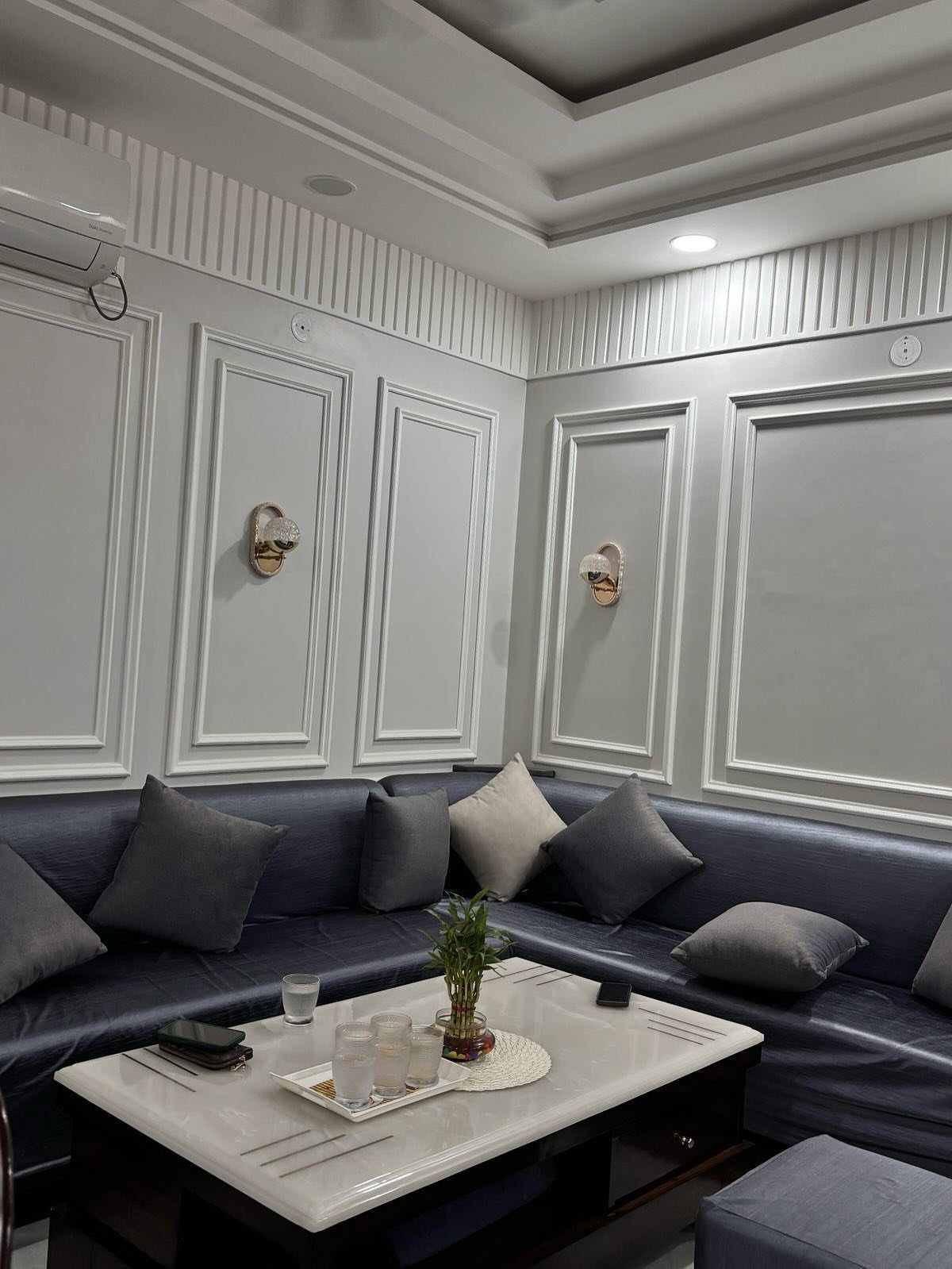
Picture frame molding is thin strips arranged in rectangles, nailed flat to the wall, and painted to match.
White on grey is one route, but the same strips in the wall color disappear into texture, while gloss black on matte reads as gallery.
Spacing is the whole job. Measure the wall, decide how many boxes fit, and accept that the end boxes may need to be narrower than the center ones.
I mark everything with painter’s tape first and live with it for a day; the eye catches unevenness that the tape measure misses.
This is the weekend project for the reader who wants wainscoting’s formality without the lumberyard trip.
The strips are cheap per foot, a wall takes surprisingly little, and the only tool is a nail gun you can rent by the day.

Generous Coverage: 10 pcs of molding trim, each 3.9 ft, totaling 39 ft. Solves the common issue of insufficient quantity for full-room projects. Achieve a consistent look across your home without extra orders

Wall Molding Kit: The package includes 24 pcs wall molding (24in-14 pcs, 54in-6 pcs, 48in-4 pcs), which can be combined into 6 frames, allowing you to easily create a stylish accent wall. The 6-frame layout shown is designed for a wall measuring approximately 10 feet high by 11 feet wide. Please measure your wall and plan the layout before installation.
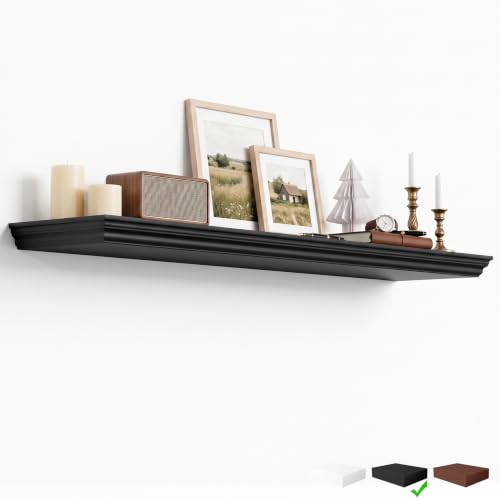
FSC MIX CERTIFIED WOOD: Made with FSC MIX certified materials, these shelves support responsible forestry practices while offering lasting quality and a natural wood look. A thoughtful choice for your home and daily living
Frequently Asked Questions
What kind of trim is popular now?
Thicker crown with more profile detail still looks high-end in basic white, and stacking standard pieces into layered rectangles gives a custom millwork look without the shop bill.
Picture frame molding is also widely used for its formality without heavy construction. The common thread is trim that adds architectural weight rather than thin decorative strips.
Should your trim be lighter or darker than walls?
In a small room, running crown in the wall color instead of ceiling white stretches the height by removing one more visual break.
For picture frame molding, gloss black on matte walls reads as gallery, while matching the wall color makes the strips disappear into texture.
What are some modern wall molding ideas?
Flat picture frame molding in slim strips suits modern spaces when you paint it to blend with the wall or to pop against it. Layering standard molding pieces into stacked rectangles builds out custom-looking profiles without ordering custom cuts.
Wainscoting in flat board-and-batten rather than raised panel also suits modern spaces when the furniture scale is right.
How do I determine the appropriate color for my molding trim?
Consider the room’s size and the effect you want. In a small room, paint crown molding the wall color to stretch the height.
Picture frame molding gives you three solid directions: crisp white on gray, tone-on-tone for quiet texture, or gloss black on matte for a gallery wall feel. The overall palette matters less than the specific visual result you are after.