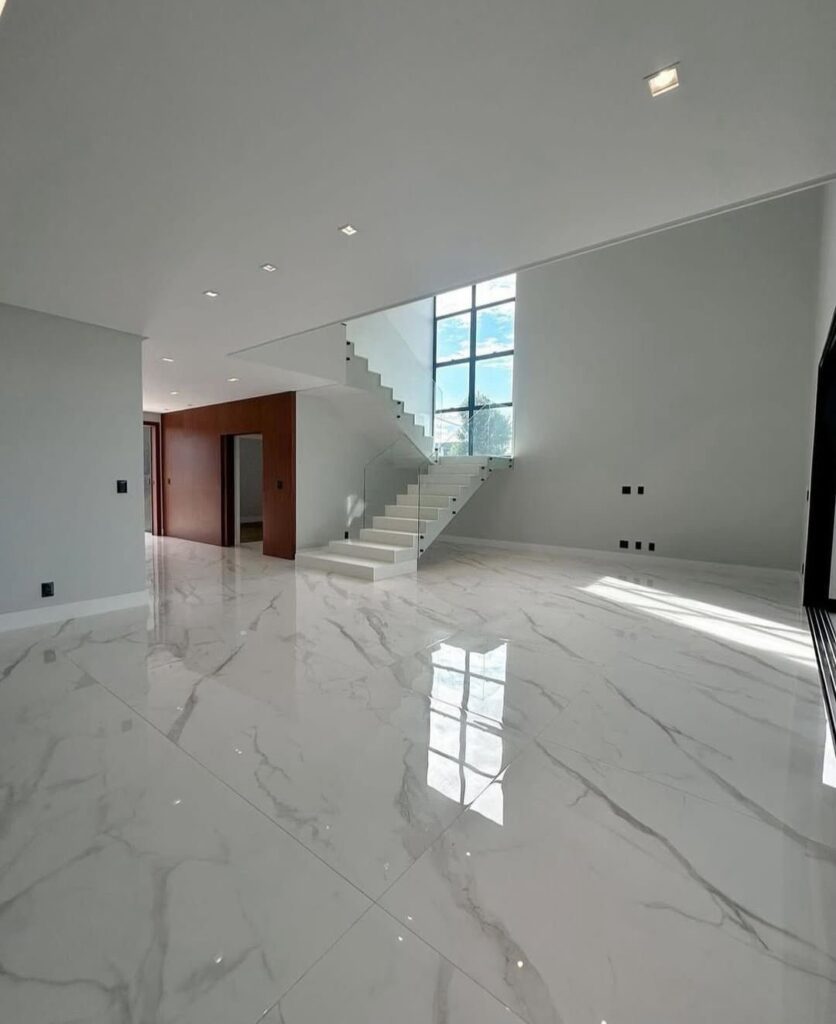
Marble flooring design runs from a weekend checkerboard layout to a commissioned medallion that centers a formal living room, and the options below cover the finishes, colors, and patterns that come up most often for renters and first-home owners working with real budgets.
The deciding factor is how much of the floor you want to command attention, because marble never truly recedes.
A honed white finish hides scuffs where kids and dogs run, and the purple veining in some slabs asks to be the room’s art without any extra decoration.
[link-whisper-related-posts]1. White Marble Floors
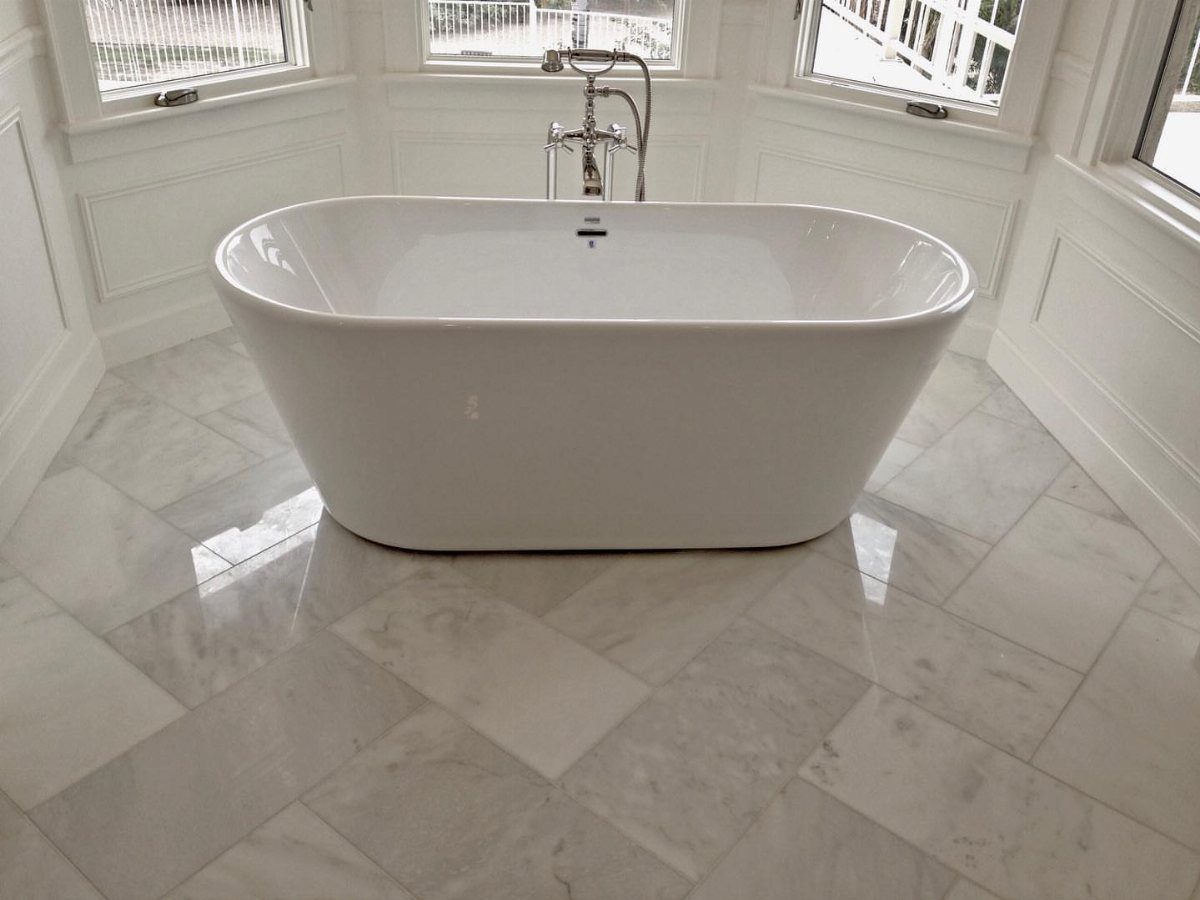
A white marble floor does the heavy lifting in a small bathroom or narrow entry. Light bounces off the polished surface and the room reads larger than its walls allow.
Diagonal tiles laid square to the door make a small space feel almost generous, though larger formats work better if the subfloor is flat enough.
The honed finish is the practical choice for anyone with kids or a dog. It hides the scuff that shows up instantly on high polish.
White marble needs regular sealing depending on traffic, and acidic cleaners will etch it no matter how well sealed. For the reader with a weekend budget and a Saturday, this is the marble that forgives a simple room.

Premium Grade Basketweave Bardiglio Gray Marble Mosaic Tile. Italian Gray Bardiglio Marble Honed 1 x 2 Basket Weave Mosaic with Carrara White Dots Wall and Floor Tiles are perfect for any residential commercial projects. The Dark Grey Marble Bardiglio Carrara Marble Basketweave Mosaic Tile with Carrara White Dots can be used for kitchen backsplash, bathroom flooring, shower surround, dining room, entryway, corridor, kitchen backsplash, spa, etc.

Premium Grade White Carrara Marble Hexagon Mosaic Tile. Italian Bianco Carrera White Venato Carrara Honed 3 inch Hex Mosaic Wall and Floor Tiles are perfect for any residential / commercial projects. The 3 inch Carrara White Marble Big Hexagonal Mosaic Tile can be used for kitchen backsplash, bathroom flooring, shower surround, dining room, entryway, corridor, kitchen backsplash, spa, etc.
2. Black Marble Flooring
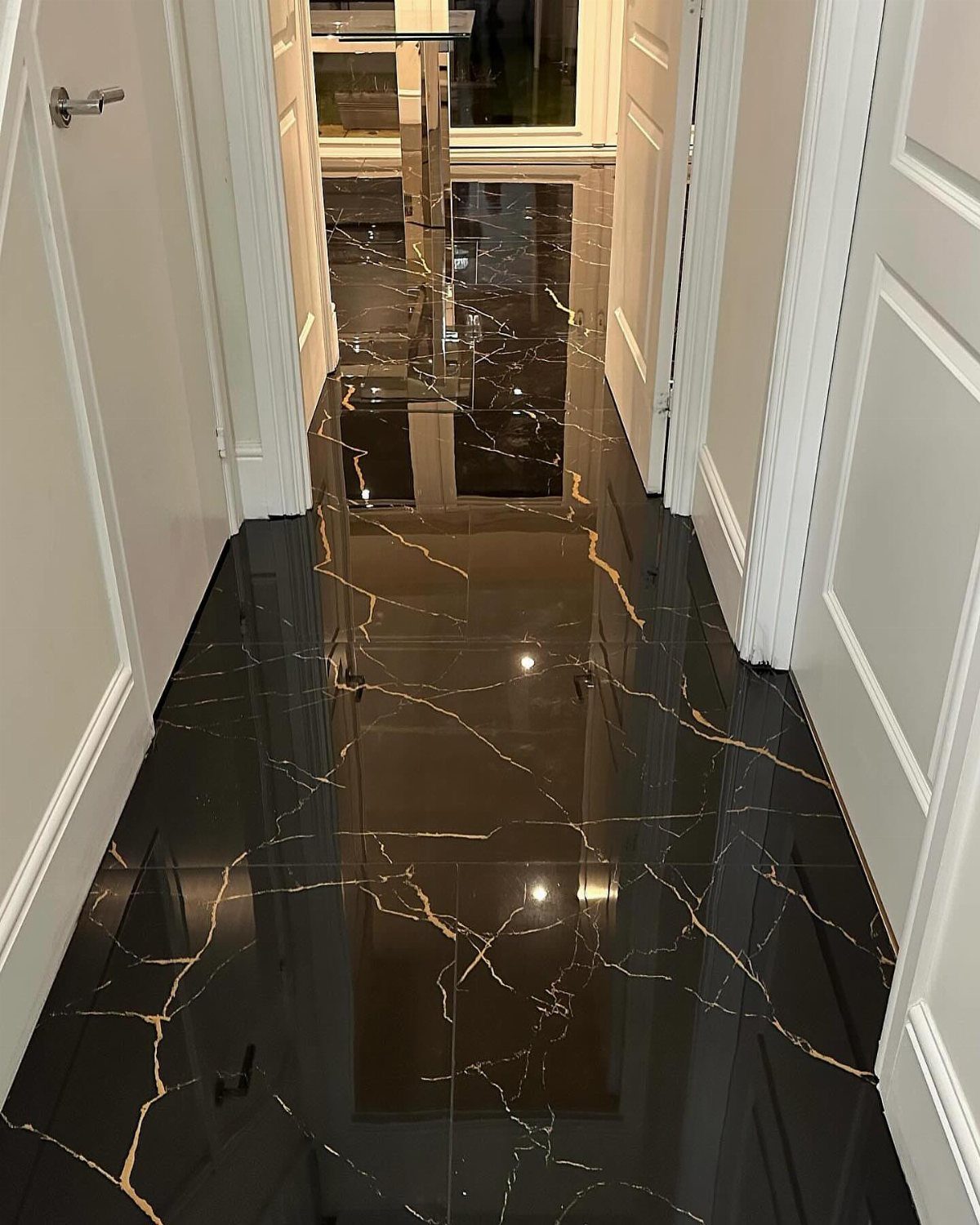
Black marble with gold veining turns a hallway into something you remember walking through.
The contrast against white trim or pale walls gives the space its pulse, though in a narrow corridor the effect can feel like a tunnel if the ceiling is low.
I would test a sample at the intended scale before committing; the veining that reads elegant on a single tile can look busy stretched across a floor.
This pairs best with minimal furniture and industrial metal finishes. The polished surface shows every footprint, so matte or honed finishes make more sense for daily traffic.
A reader with an open-plan kitchen and living area might use black marble to anchor the transition between zones.

Sheet size: 11-1/4 in. x 12-1/4 in. x 8 mm

Convenient Size Options: Peel and stick floor tile are made of vinyl and the thickness is 1.5 mm. Available in convenient 12" x 12" tiles, we offer two versatile packs to suit your needs: A box containing 4 tiles (4 sq ft) for smaller projects or 20 tiles (20 sq ft) for larger transformations. Perfect for DIY enthusiasts seeking flexibility

Material:Made of PVC composite laminate, anti-scratch, high impact, color fadeless, more durable and stronger than other plastic self-adhesive tiles. Glossy/Poished surface finishing with realistic ceramic look, high waterproof and stain-resistant performance, protect the walls from splash and oil.
3. Calacatta Marble Tile
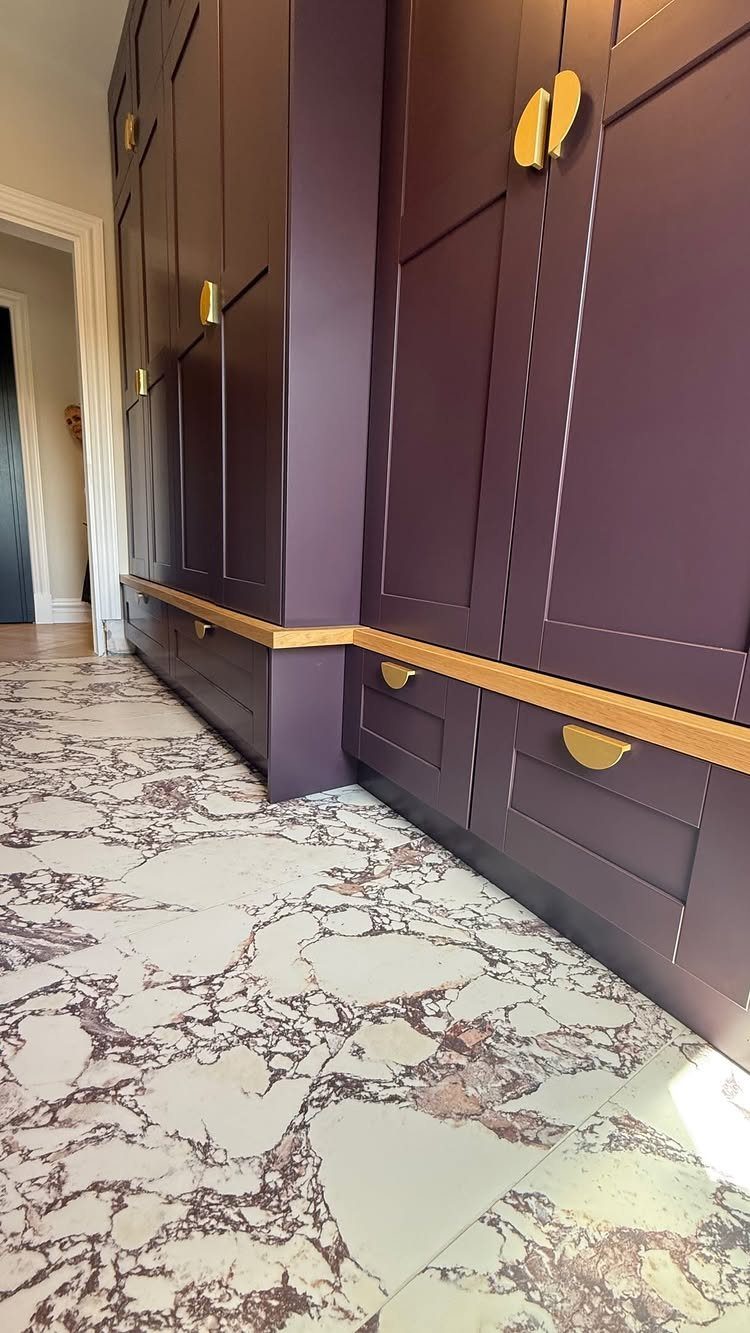
Calacatta marble carries veins that move like brushwork across the stone, gold and gray swirling through a creamy field. Calacatta Viola carries heavier purple-brown veining that reads bolder than the classic Calacatta most buyers picture, especially beside dark cabinetry.
Either version demands attention; this is not the marble for a room where you want the floor to disappear.
The investment is real. Calacatta sits at the top of the price range for marble, and waste runs high because the pattern must be laid to flow rather than cut randomly.
A grand entrance or the floor beneath a kitchen island justifies the cost for the reader who wants one unforgettable surface. For a whole house, the budget stretches fast.

Premium Performance: Constructed from high-performance PVC polymer material, these peel and stick wall tiles are waterproof, heat-resistant, stain-resistant, scratch-resistant, and fade-resistant, with a strong adhesive backing for secure placement.

SIZE AND COVERAGE: 10 sheets peel and stick wall tiles, 11.58"x11.35"x0.12" each, cover about 9.12 square feet. Please consider cutting loss 3-5% in every DIY project. An added BONUS: comes with a pair of gloves protect your hands from dirty and injury

WHITE MARBLE STYLE WITH A GOLDEN TOUCH: A light marble-inspired background accented with gold-toned veining brings warmth and decorative detail to your walls. Style with brass hardware, cream cabinets, or oak finishes for an inviting combination.
4. Gray Marble Flooring
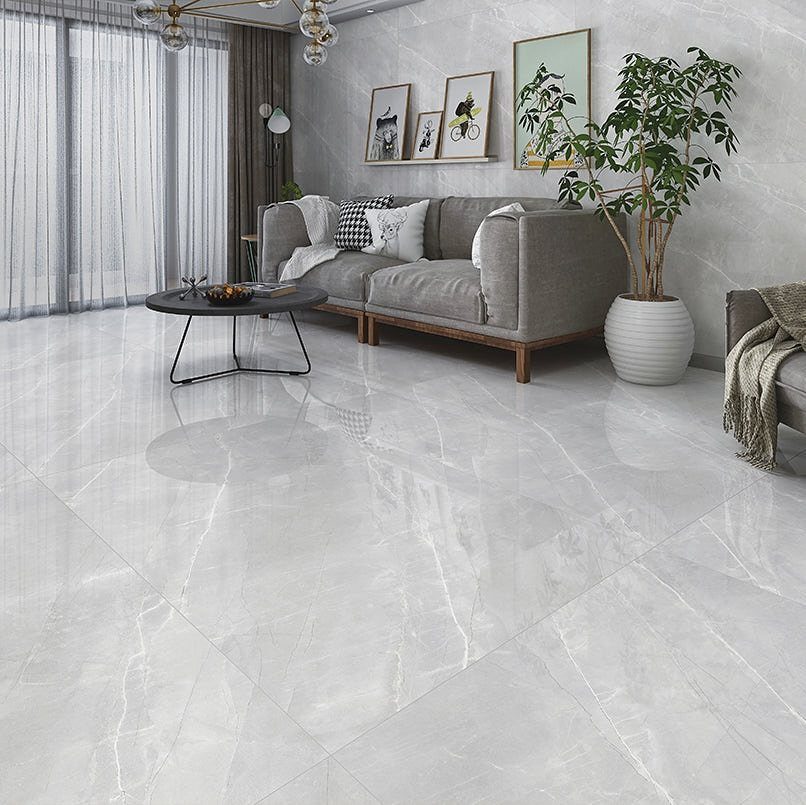
Gray marble lands in the middle where white feels too bright and black too heavy.
The Silver Drop variety, with its soft veining, turns a bathroom into something closer to a spa without the coldness that sometimes comes with lighter stone.
Polished gray marble reflects window light without the glare of white, which matters in rooms that face south or get sun all afternoon.
This is the adaptable choice. Gray reads modern without committing to a style, and it handles mixed metal finishes, brass and black and chrome, without clashing.
For the reader updating one room at a time over years, gray marble bridges old decisions and new ones.

You gain marble medallion peel and stick tile to replace outdated floor covering and spruce up interior hard surfaces.


Savannah Yugoslavia White Marble Medallion Inlay Waterjet Art Piece 36 inch Round Polished
5. Checkerboard Patterns
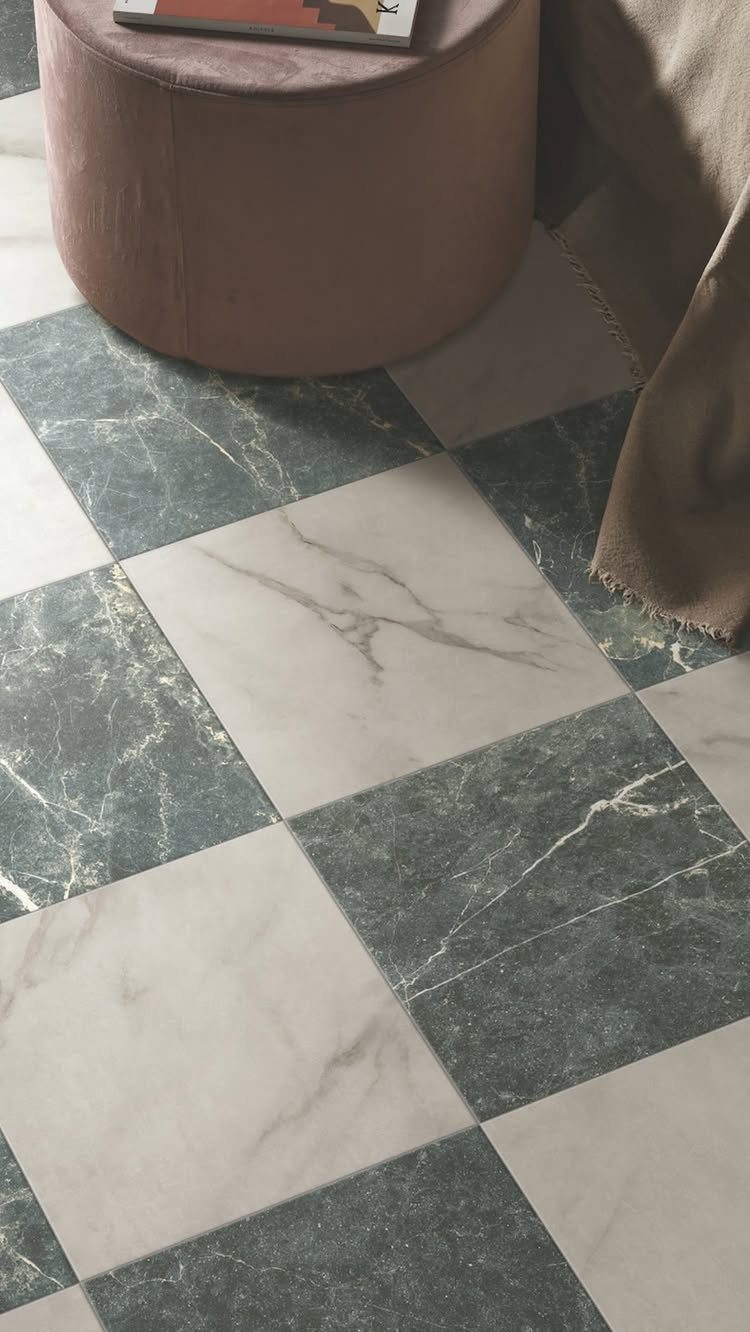
Checkerboard marble floors carry the weight of Parisian apartments and old American hotels, though green and white shifts the mood away from the classic black and white.
Either pairing works; the green introduces color without demanding the whole room change around it. The pattern needs precise layout, tile to tile, or the eye catches every misalignment.
A slightly tumbled finish softens the formality for a kitchen or casual entry. The reader should order extra for the diagonal cuts at the edges and expect to spend time dry-fitting before any mortar touches the floor.
This is a weekend project only if the room is small and the layout simple.

DESIGNER COLLABORATION- CHRIS LOVES JULIA - Beige tones and the bonneville pattern bring distinctive style and personality to your space.

DESIGNER COLLABORATION - CHRIS LOVES JULIA - A Grey and White Marble colorway; highlights the Bonneville design; with recognizable Chris Loves Julia collection details.

Red and white marble peel and stick floor tiles by Chris Loves Julia x FloorPops
6. Medallion & Inlay Design
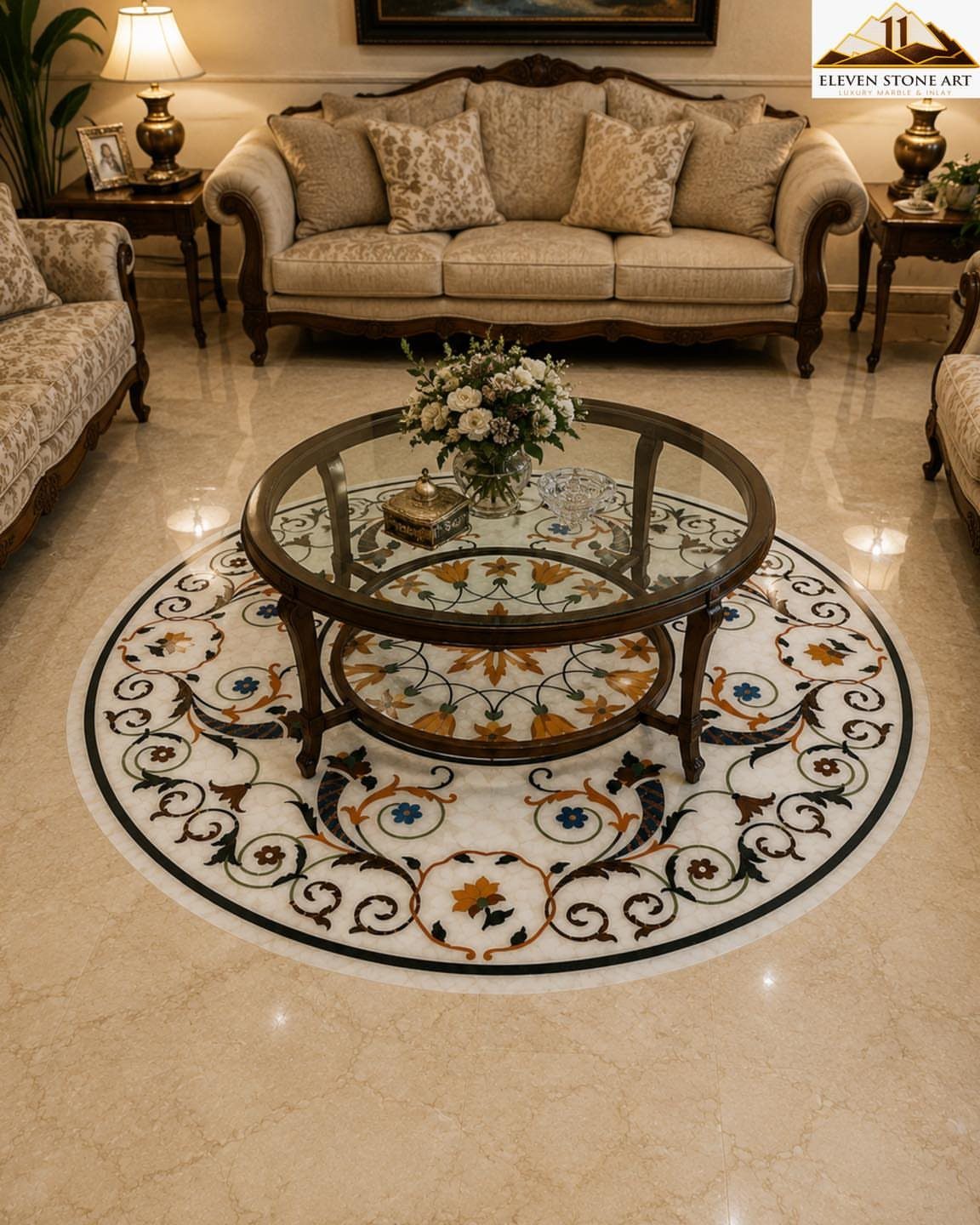
A marble medallion centers a room the way a rug used to, except this one is permanent. Floral inlays are cut by waterjet and fitted together like a puzzle, with each stone locked into place by the surrounding pieces.
Most homeowners commission this rather than attempt it themselves; the precision required is beyond handheld tools.
The medallion suits a grand entrance or a formal living room where furniture arrangement stays fixed. It anchors a space that otherwise drifts.
For the reader with a smaller room or shifting floor plans, a single statement piece of furniture achieves something similar without the commitment of stone set in mortar.

Premium Grade White Carrara Marble Hexagon Mosaic Tile. Italian Bianco Carrera White Venato Carrara Honed 2 inch Hex Mosaic Wall and Floor Tiles are perfect for any residential / commercial projects. The 2 inch Carrara White Marble Hexagonal Mosaic Tile can be used for kitchen backsplash, bathroom flooring, shower surround, dining room, entryway, corridor, kitchen backsplash, spa, etc.

Premium Grade Carrara White Marble 4 inch Octagon Mosaic Tile w/ Nero Marquina Black Dots Honed. Italian Carrara White Marble Matte 4 inch Octagon Octave Mosaic Wall & Floor Tiles are perfect for any interior projects. The 4 inch Carrara White Marble Octagon Octave Mosaic tiles can be used in both residential and commercial spaces for any wall and floor, such as kitchen backsplash, bathroom flooring, tub surround, shower floor, dining room, entry foyer, entryway, hallway, corridor, balcony, etc.

Carrara marble tile with a smooth, matte honed surface—unpolished for a refined, non-glossy look.
7. Victorian Black and White Marble Flooring
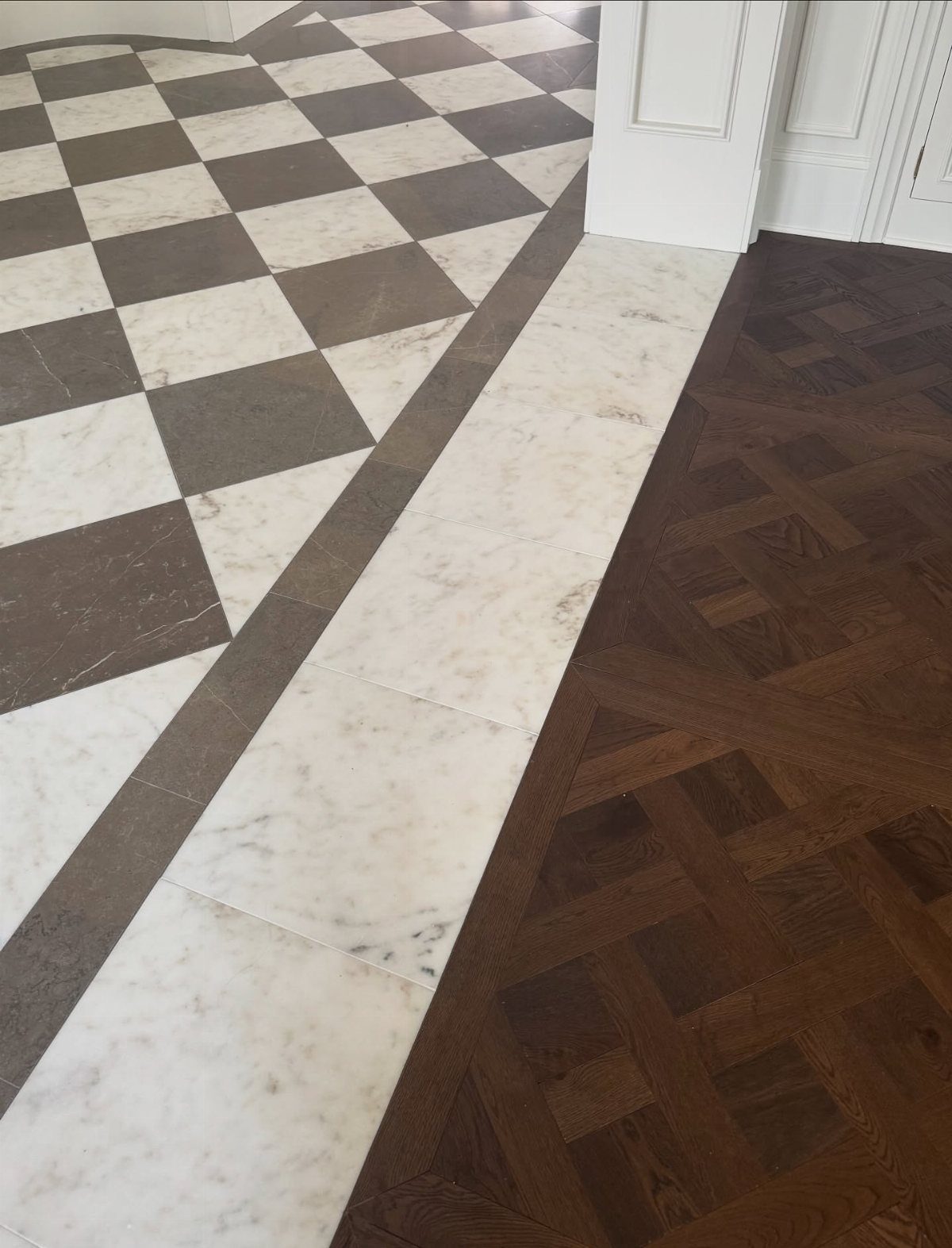
A Victorian black-and-white marble floor reads as formal without ever feeling dated, which is why it still shows up in foyers and powder rooms where first impressions matter.
The checkerboard pattern carries most of the visual weight, so the rest of the room can stay simple. I would not install this in a space with competing patterns already fixed; the diagonal layout and border need room to breathe.
If you are weighing this against simpler options, the trade is time for impact. Laying a checkerboard straight keeps installation simpler, but the diagonal placement visible here adds movement that feels intentional rather than safe.
For a smaller twist on the same palette, triangular geometries in black-and-white marble exist as a secondary option.

Natural Black Marble: These Marble pencil tiles are made of black natural marble, there will be some white lines textures in black marble, which is a characteristic of natural marble

100% Natural Marble: This Tile Edge Trim made from high-quality marble which is popular for enduring, long lasting and easy to clean

Natural Marble Stone: Features rich black background with distinctive white veins.
8. White Marble Floor Border
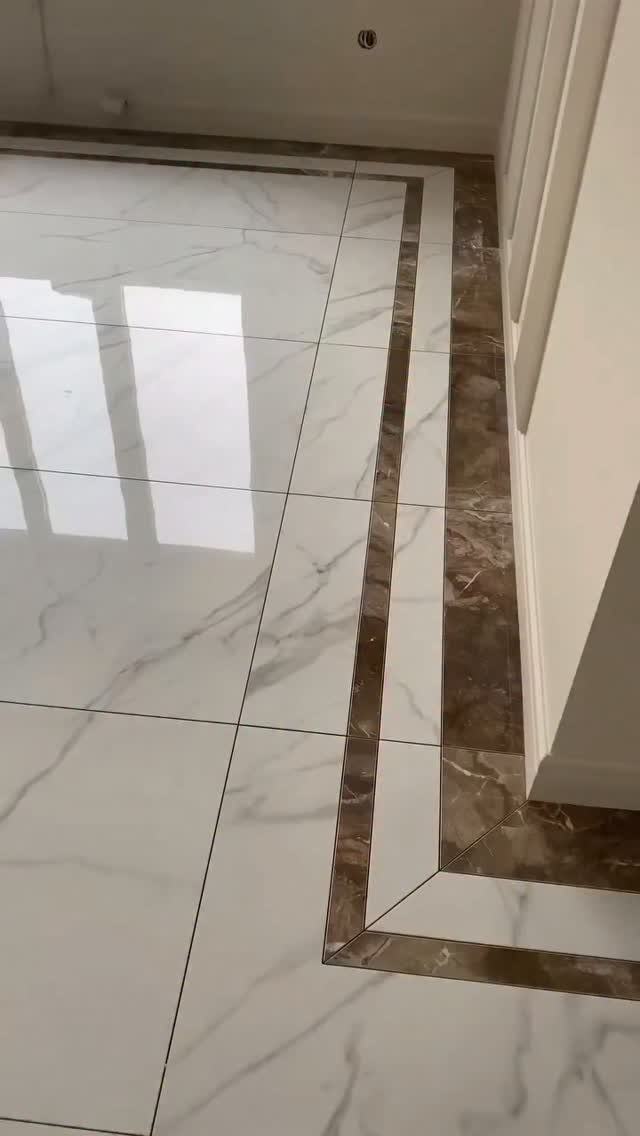
A dark brown border against white marble-look tile gives a polished floor the structure of a rug without fabric to maintain. A double border line frames the room’s edges so the walls can stay bare.
I would check whether your tile supplier stocks the accent color in the same thickness and finish before committing; a height mismatch between field tile and border will telegraph underfoot.
Brown lines paired with black ones over white marble can shift the same idea toward a more traditional register if the chocolate tone here feels too contemporary.
This approach suits renters or owners working with existing white marble-look tile who need definition without replacement.

WARM GOLD DETAILS ACROSS A LIGHT BACKDROP: Gold-toned marble-style veining brings warmth and movement to the light base. Pair with cream cabinetry, brass fixtures, and natural oak for a space with a welcoming, elegant feel.

Premium Grade Calacatta Gold Marble Chair Rail Bullnose Tile. Italian Calacatta Oro Calcutta Gold Borghini Honed 2 x 12 Chair Rail Bullnose Wall and Floor Tiles are perfect for any residential / commercial projects. The Calcutta Gold Borghini Calacatta Borghini Marble 2x12 Chair Rail Bullnose Molding Tile can be used for kitchen backsplash, bathroom flooring, shower surround, dining room, hall, etc.

Customizable as per your needs, Lenght is Costumized up to 72 Inches.
9. Herringbone Marble Tile Floor
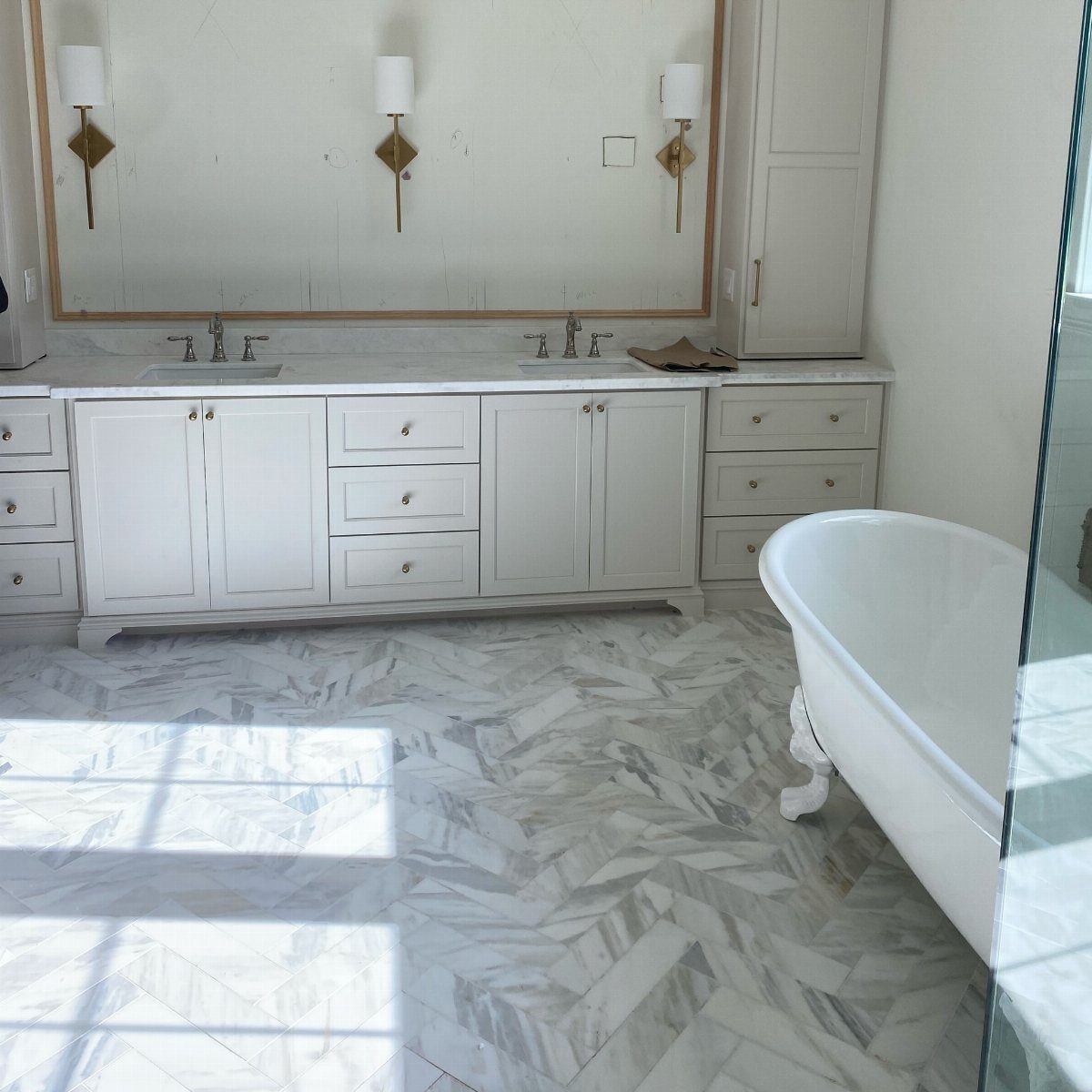
Herringbone marble tile asks more of an installer than a straight stack, but the return is a floor that catches light differently across every hour of the day.
Rectangular marble in this pattern adds texture to a bright bathroom without dark colors that would shrink the space.
I have seen compact kitchens feel larger after similar light-toned stone went in, since the angled lines draw the eye along the room’s length rather than chopping it into grids.
The pattern eats more tile through cuts and waste, so order accordingly.
For anyone hesitating between this and a simpler layout, herringbone rewards the extra material and labor in rooms where you stand still long enough to notice flooring at all.

Jasmine Emperador Rojo Marble Medallion Inlay Waterjet Art Piece 36 inch Square Polished

Premium Grade Versailles Emperador White Marble Medallion. Crafted from the finest marble using advanced waterjet technology, this tile embody the perfect blend of luxury, sophistication, and durability. Discover the unparalleled beauty and numerous advantages of Marble Medallion Tiles that will leave a lasting impression on anyone who sets foot in your home.

Premium Grade Milano White Rojo Marble Medallion. Crafted from the finest marble using advanced waterjet technology, this tile embody the perfect blend of luxury, sophistication, and durability. Discover the unparalleled beauty and numerous advantages of Marble Medallion Tiles that will leave a lasting impression on anyone who sets foot in your home.
10. Marble Floor with Purple Veining

Purple veining in white marble sounds like a risk until you see it laid across a large open floor, where the color reads as intentional rather than accidental.
Grey runs through the purple veining and keeps the floor from feeling theatrical; pure violet would tip too far. I would test a full slab or large tile sample in your actual light before ordering, since showroom fluorescence flatters everything.
Grey marble elsewhere in the same project could bridge the tone without repeating the exact statement. This option suits someone who wants their floor to function as the room’s art, provided the surrounding architecture does not compete for attention.

Nexus Vinyl Tiles: Refresh your home for a low cost and no hassle with the Nexus Vinyl Floor Tiles. Our tiles can be used in any room in your home including the kitchen, dining room, bedrooms, bathrooms, foyers, and basements. No messy glue or adhesives needed. Includes 20 vinyl tiles.

Please note - there may be slight color variations between different batches, so please be sure to purchase the required quantity at once.

Dimensions: each sheet DIN A4 (8.2 x 11.6 inches)
Marble Flooring Benefits
Marble floors carry a shine that survives decades of use if the substructure underneath is sound. The stone itself does not wear out; it outlasts the grout, the sealant, and usually the owner.
Grey marble hides the daily grit that white shows immediately, which is why I would steer a busy household toward the softer tones.
A checkerboard or medallion pattern turns the floor itself into the room’s center of gravity, something no area rug manages with the same permanence. The investment lands in the property value, not just the room: buyers remember a marble entry.
The maintenance is real, but the return comes measured in years, not seasons, for anyone still choosing between surfaces.
Not only is it gorgeous to look at, but marble flooring is also highly strong and resistant. It can last for years, giving you a lifetime of beauty, and it’s easy to clean, too, perfect for spaces like bathrooms, kitchens, hallways, and living areas.
Maintenance Tips for Marble Floors
Skip this and the stone absorbs whatever spills; red wine on white marble is a lesson learned once. Anything acidic etches the surface; I stick to pH-neutral cleaners and read labels before I buy.
Vinegar, lemon, and most commercial bathroom cleaners etch the surface regardless of how well sealed it is. Grey marble forgives more than white between sealings, which matters if you are the type to set a reminder and forget it.
Honed finishes buy additional time; the texture disguises the micro-pitting that polish reveals immediately. Kids or a dog in the house means sealer every fall, neutral cleaner every week, and vinegar stays in the kitchen where it belongs.
Color Options for Marble Flooring
White, black, and grey marble cover most installations for good reason. They shift with the room rather than locking it to one era.
Beyond these, red marble exists for spaces that can handle the saturation, and green marble answers when the palette needs earth without wood. Beige and pink work in bathrooms that need warmth without tipping into yellow.
Bold colors ask more of everything around them; a red floor wants walls that know when to quiet down.
Building a house over years, I would lock in grey or white first and bring in color only after the furniture and paint were settled. The stone does not move once it is set.
Design Versatility of Marble
Marble belongs to no single period. The same Carrara that reads Roman in a grand entrance shifts modern in a kitchen with flat-panel cabinets and brass hardware.
Polished finish leans formal; honed or tumbled reads relaxed without losing the stone’s authority. Gold and gray veining in Calacatta bridges warm and cool metal finishes, which solves the problem of fixtures bought in different years.
A checkerboard pattern in black and white carries Victorian weight, but the same stone in a straight stack with minimal grout looks contemporary. Anyone worried about dating the room should keep the stone neutral and the layout simple.
The pattern can change with the next renovation; the marble itself stays.
Frequently Asked Questions
Is marble flooring a good idea?
Marble flooring is durable and adds elegance to a home, with the potential to last for years and enhance property value.
It works especially well in bathrooms, kitchens, hallways, and living areas where its clean, light-reflecting surface makes rooms feel larger.
The practical choice depends on the room and your willingness to keep up with sealing; honed or matte finishes hide daily wear better than polished surfaces in busy households.
Is marble still in style in 2026?
Marble remains in style because it functions as a permanent material rather than a trend, with classic patterns like checkerboard and herringbone still appearing in current designs.
White, black, Calacatta, and gray marble keep showing up in installs that need to last, and details like medallions or border inlays tend to outlive trend cycles.
What are the downsides of marble flooring?
Marble scratches and stains more easily than harder stones, and acidic cleaners will etch the surface no matter how well sealed.
High-polish finishes show every footprint and scuff, which is why honed surfaces are the practical choice for households with kids or dogs.
Regular sealing is necessary depending on traffic, and the investment runs high for premium varieties like Calacatta where waste adds to the total cost.
What is the best marble for floors?
Calacatta marble sits at the top of the price range and is often considered the premium choice for floors where one unforgettable surface justifies the investment.
Its gold and gray veining moves across a creamy field in a pattern that demands attention, though the heavier purple-brown veining of Calacatta Viola reads bolder than the classic version.
Gray marble lands in a practical middle ground: it still looks refined, but the softer tone hides the wear that lighter stones broadcast.