The pairings below run from a weekend’s worth of tile and grout to stone floors that need professional install and a budget for upkeep.
What decides which one belongs in your kitchen is how much contrast you can live with day to day, whether that’s two steps of stain difference on the same species or cobalt against medium brown.
[link-whisper-related-posts]1. Matching Wood Cabinets and Floors
Matching wood cabinets to wood floors only works when you build in enough difference to keep the eye moving.
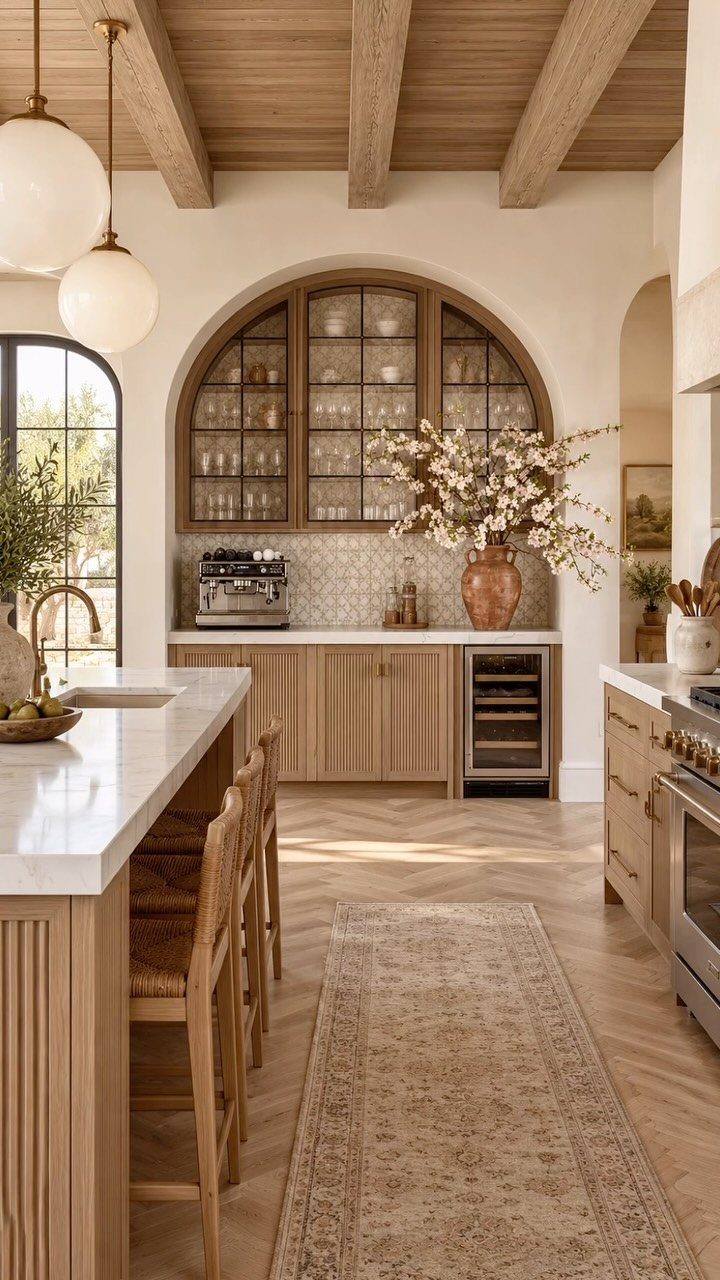
I like pairing the same species in different finishes, matte against satin, or natural against stained, so the grain reads as texture rather than repetition.
Wide-plank white oak floors with white oak cabinets in a different sheen pull this off without fighting each other.
If your floors are already in and you love them, pick a cabinet stain that sits two steps lighter or darker on the same warm or cool side.
Two or three wood tones in one kitchen is ordinary; the problem starts when everything lands on the exact same value. Check your samples side by side in daylight, not under store fluorescents, and trust what flattens out.

Water-based wood stain creates rich, even color in 1 coat on most surfaces

Ideal for use on all interior wood projects: furniture, cabinets, doors, trim and paneling
Ideal for use on all interior wood projects: furniture, cabinets, doors, trim and paneling
2. Darker Wood Cabinets with Lighter Wood Floors
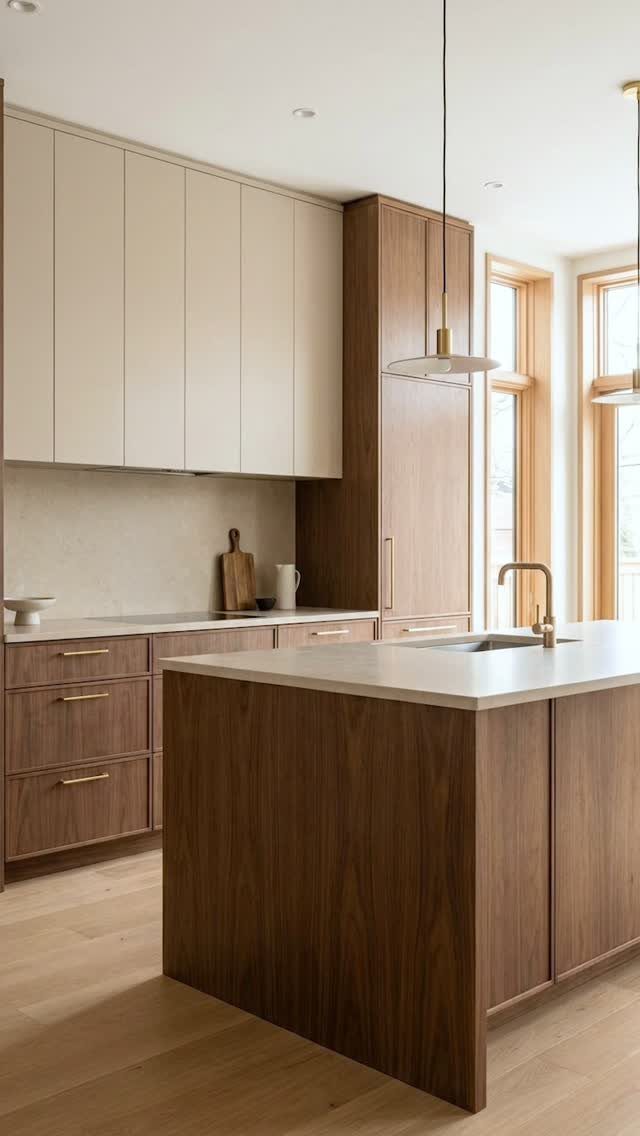
Dark walnut lower cabinets against pale floorboards give a kitchen the kind of depth that single-tone rooms never reach. The contrast does the work; ornate hardware or busy backsplashes are not required to keep the space interesting.
Warm undertones in both materials read as intentional, while mixing warm cabinets with cool floors tends to look accidental unless you bridge them with countertops or tile.
Before you commit, lay a cabinet door on the actual flooring and step back to where the room opens into the next space. The eye needs enough distance for the relationship to register.
For a quieter take, stay inside one color family and vary only the species or grain pattern, a honey oak floor with a darker rift-sawn oak cabinet reads as a gradient rather than a statement.

RICH EVEN COLOR – Minwax Wood Finish is a deep penetrating, oil-based wood stain that provides beautiful color and enhances the natural wood grain in one coat. It’s perfect for interior staining projects such as wood furniture, cabinets, doors and more.

【Elegant Walnut and Black Finish】This modern buffet cabinet features a striking two‑tone walnut and black design, complemented by a scalloped upper edge and gold knobs. It adds vintage French charm to dining rooms or kitchens.

Howard RF6008 Restor-A-Finish, 8-Ounce, Dark Walnut
3. Add Colorful Accents
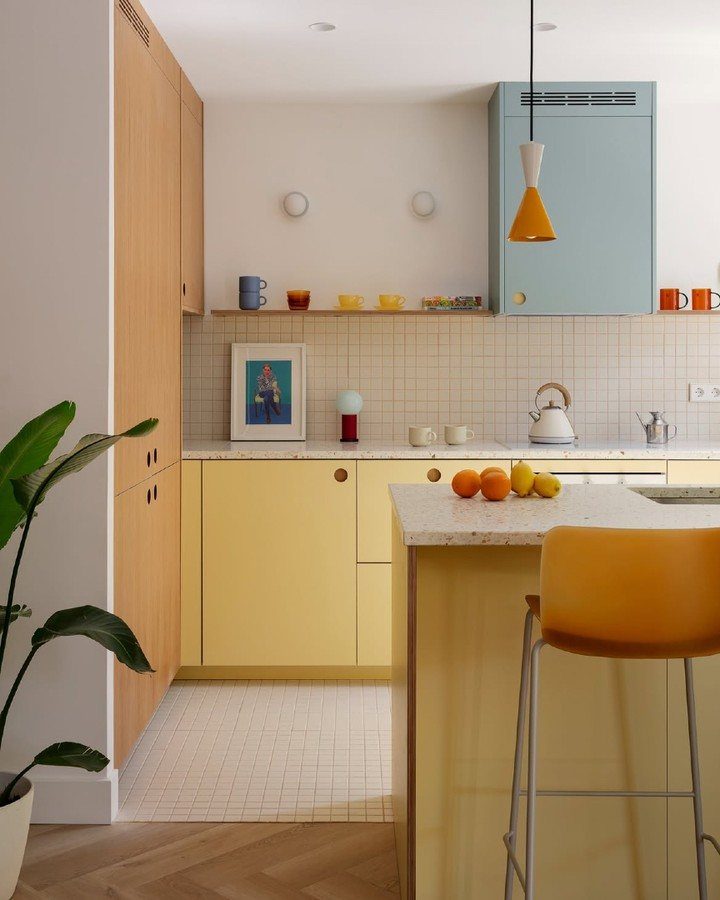
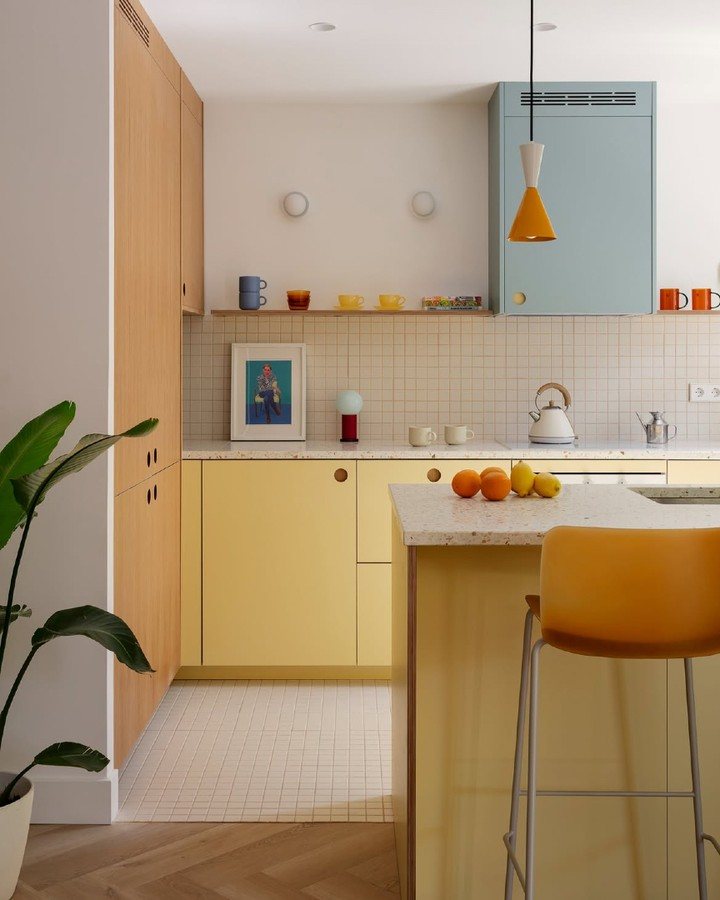
Wood cabinets and floors form a neutral envelope that can handle more color than most people risk. A yellow island or blue range hood against that warm backdrop reads as cheerful, not chaotic, because the wood anchors it.
I would start with one large colored piece, the island base or a bank of lowers, and let everything else stay quiet until you know the color holds up to daily use.
Textiles help: a runner, dish towels, or a few painted stools let you test temperature before you commit to cabinet paint. Neutral floors, beige, greige, or white oak without strong undertones, give you the most freedom.
Flooring that pulls orange or pink will fight a cool blue cabinet no matter how much you love each one alone.

【Premium Thickened Vinyl Flooring Roll】Experience our 1.5mm thick vinyl flooring roll with 5 layers for enhanced quality. It's non-slip, non-fading, and provides thermal insulation. Measuring 23.6" x 118", it covers 19 sq ft without snap-lock installation, making it hassle-free and stylish.
【Premium Thickened Vinyl Flooring Roll】Experience our 1.5mm thick vinyl flooring roll with 5 layers for enhanced quality. It's non-slip, non-fading, and provides thermal insulation. Measuring 23.6" x 393", it covers 64 sq ft without snap-lock installation, making it hassle-free and stylish.
4. Bright Blue Cabinets and Medium Brown Wood Flooring
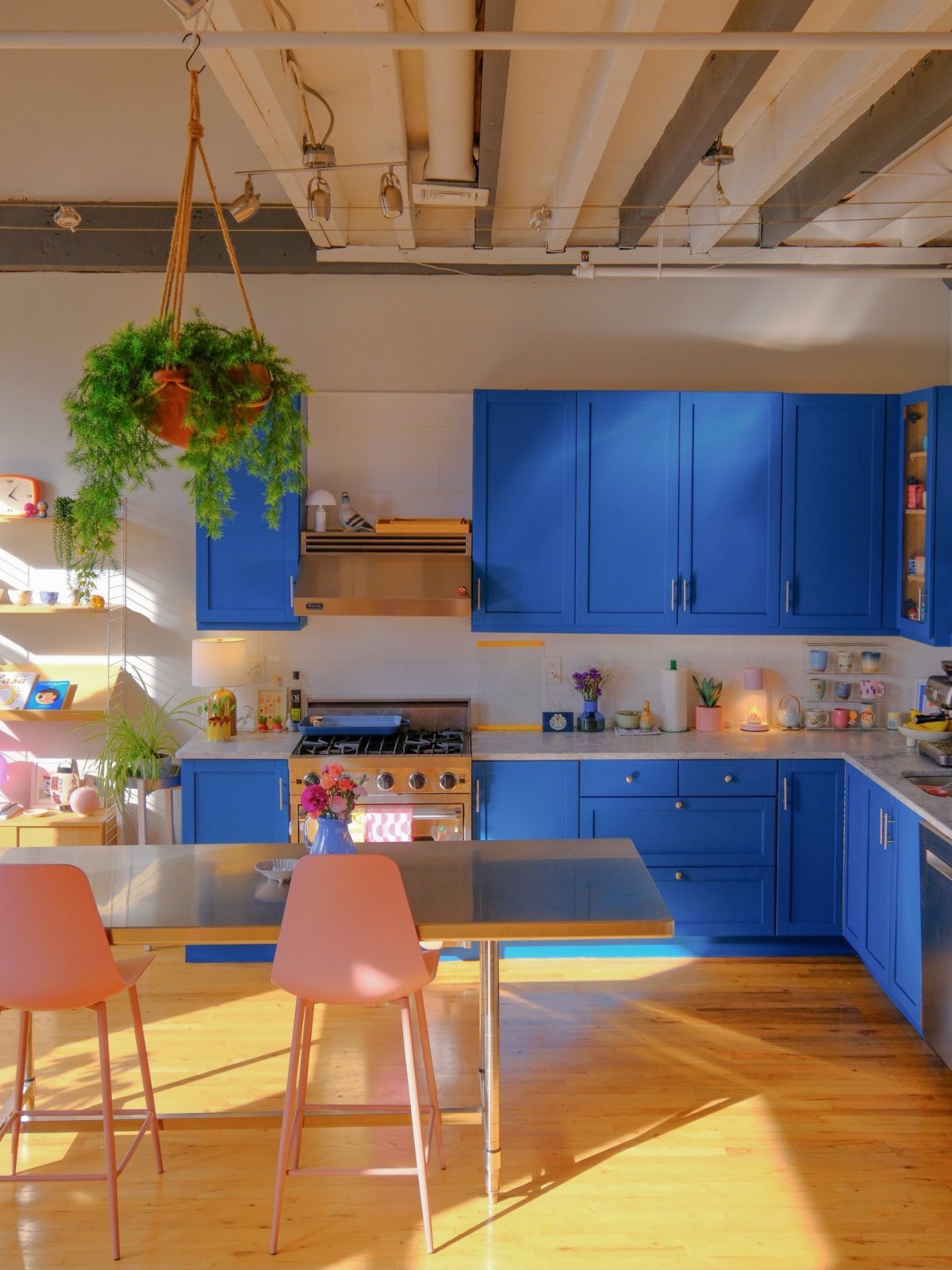
Cobalt against medium brown wood works because the two temperatures check each other. The blue reads crisp, not cold, and the wood stays warm without drifting toward orange.
I would keep countertops light and hardware simple; the pairing itself carries enough energy that competing elements tire the eye fast.
Pink or coral stools bridge the gap between bright blue cabinets and medium brown wood flooring in a way stainless or black never would.
If your floor runs darker than medium brown, the blue needs to brighten to keep the balance. If your floor is pale ash or white oak, a deeper navy holds the weight better than this brighter cobalt.

PREMIUM QUALITY: Assembled by water proof fiberboard and rust - proof hardware fittings. Finished with water proof surface coating & medium density fiberboard (MDF) - a dense, warp-resistant engineered wood. High-quality materials withstand the humidity of the bathroom. Even in the damp bathroom can be sturdy for long-term use.
Seal and Protect Wood Stain Repairs: Includes one matte and one gloss clear coat designed to seal stained touch-up areas while preserving wood color and grain

[Abundant Storage Space]: The large cabinet top and open shelf facilitate the placement of various daily essentials or decorations. Additionally, 2 enclosed cabinets provide you with ample private storage space to keep items in order and out of sight, which is a perfect storage solution for your home.
5. Dark Green Cabinets with Brown Wood Flooring
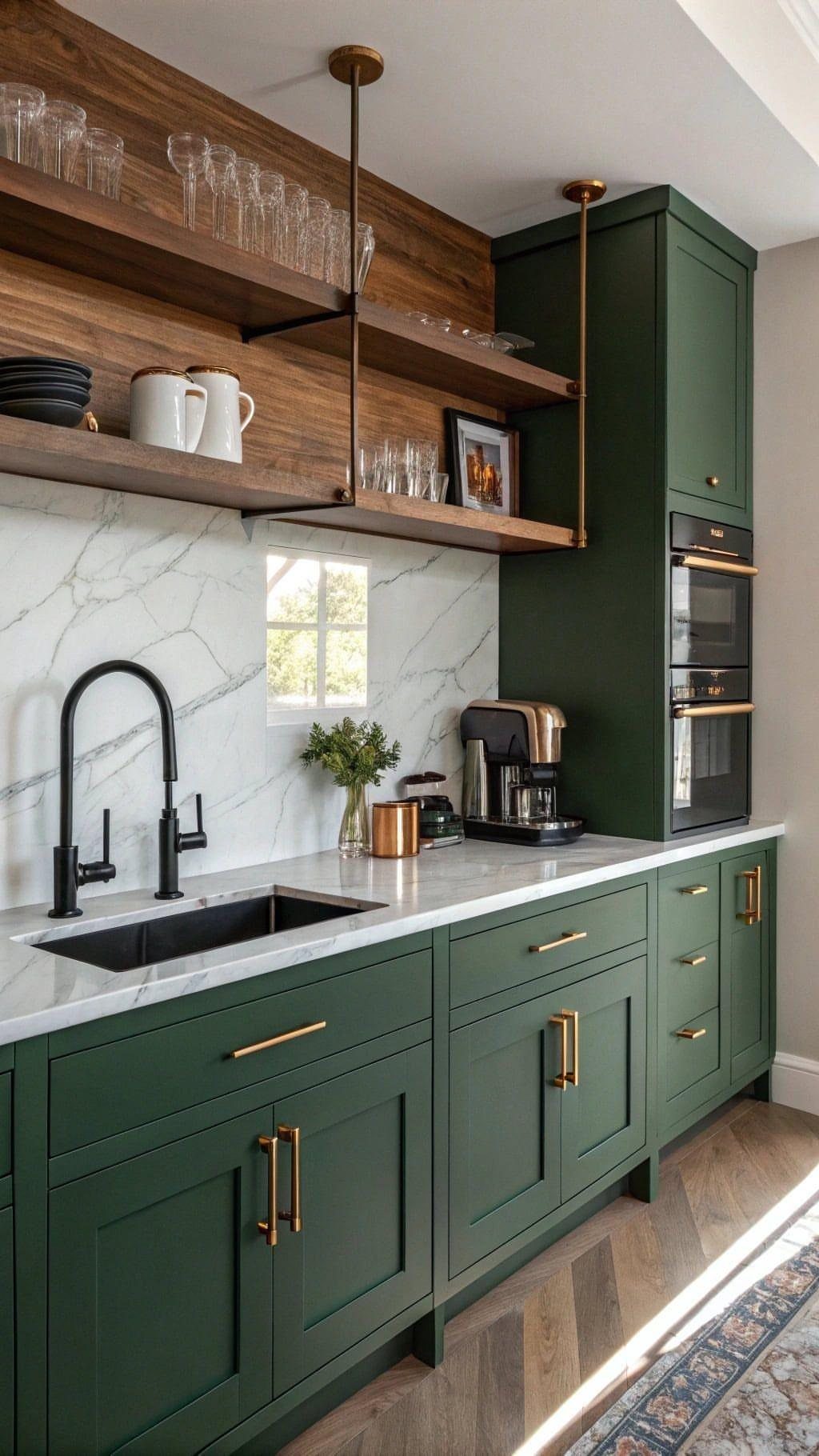
Deep green shaker cabinets with brass hardware against herringbone brown floors give a kitchen the gravity of a library without the gloom.
Marble countertops and backsplash do important work here; they reflect light back into the space so the dark tones do not swallow it.
I would not attempt this in a kitchen with small windows or a single overhead fixture. The green reads as rich only when you can see its variation, and shadow flattens it to black.
Open shelving in wood breaks up the cabinet mass and echoes the floor tone without adding another finish to manage.
If your floor runs cooler or grayer, the green shifts toward something more architectural and less botanical; neither is wrong, but the mood changes.

CONVENIENT SIZE - This Apple Barrel Acrylic Paint comes in a versatile 2 oz size that is great for basecoating, stenciling, and so much more

All-in-One Formula: This furniture paint includes a built-in primer and top coat, providing seamless application on wood, metal, laminate, and more surfaces for a hassle-free painting experience.

[UNIQUE BRUSHED EFFECT: Rust-Oleum Milk Paint makes furniture details stand out. With the unique brushed effect and washed matte look, it turns old furniture into an eye-catching piece that transforms your living space, EASY TO CLEAN, SAFE TO USE: Milk Paint is a water-based formula that cleans up easily with soap and water. The low VOC and low odor formula make it easy to work comfortably indoors, LARGE COVERAGE, FAST RECOAT TIME: Each quart covers up to 125 sq. feet. Dry to the touch in just 30 minutes, able to recoat after 1 hour. Recoat multiple times to obtain desired color, PROJECTS DONE FAST: No need for primers; features excellent adhesion in a one-step buildable coating, making it easy to finish new or vintage pieces fast. One coat creates a semi-transparent look; additional coats customize the look, LET CREATIVITY SHINE: Premium matte finish can be layered with different techniques for a custom look. Try brushing on in a “V” pattern for a vintage, washed look. Go a step further and use light sanding to create a weathered texture]
6. Natural Wood Cabinets
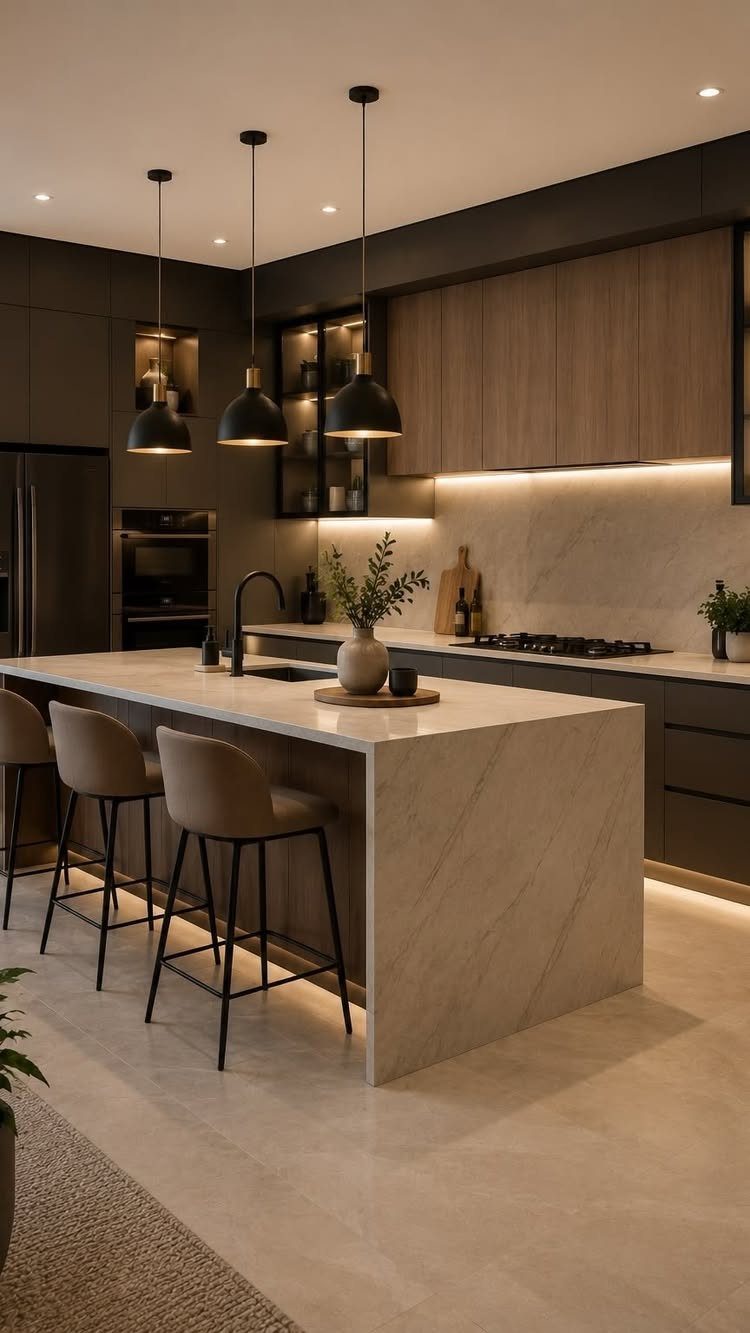
Natural wood upper cabinets keep a kitchen from feeling too finished, too fast. The grain variation gives the eye something organic to rest on, especially when lowers or islands run painted or dark.
I would pair natural wood with flooring that steps away in tone or temperature: cooler floors if the cabinets run warm and yellow, warmer floors if the wood is pale or gray-washed.
Sunlight brings out the red and yellow undertones in wood, so test samples at the time of day you actually use the kitchen. Matte finishes on both cabinet and floor keep the look from tipping into showroom territory.

Water-based wood stain creates rich, even color in 1 coat on most surfaces

Restor-A-Finish is a unique finish-penetrating formula that restores wood finishes while blending out minor scratches, blemishes and abrasions

Restor-A-Finish is a unique finish-penetrating formula that restores wood finishes while blending out minor scratches, blemishes and abrasions
7. Medium Wood Cabinets with Mid-Tone Flooring
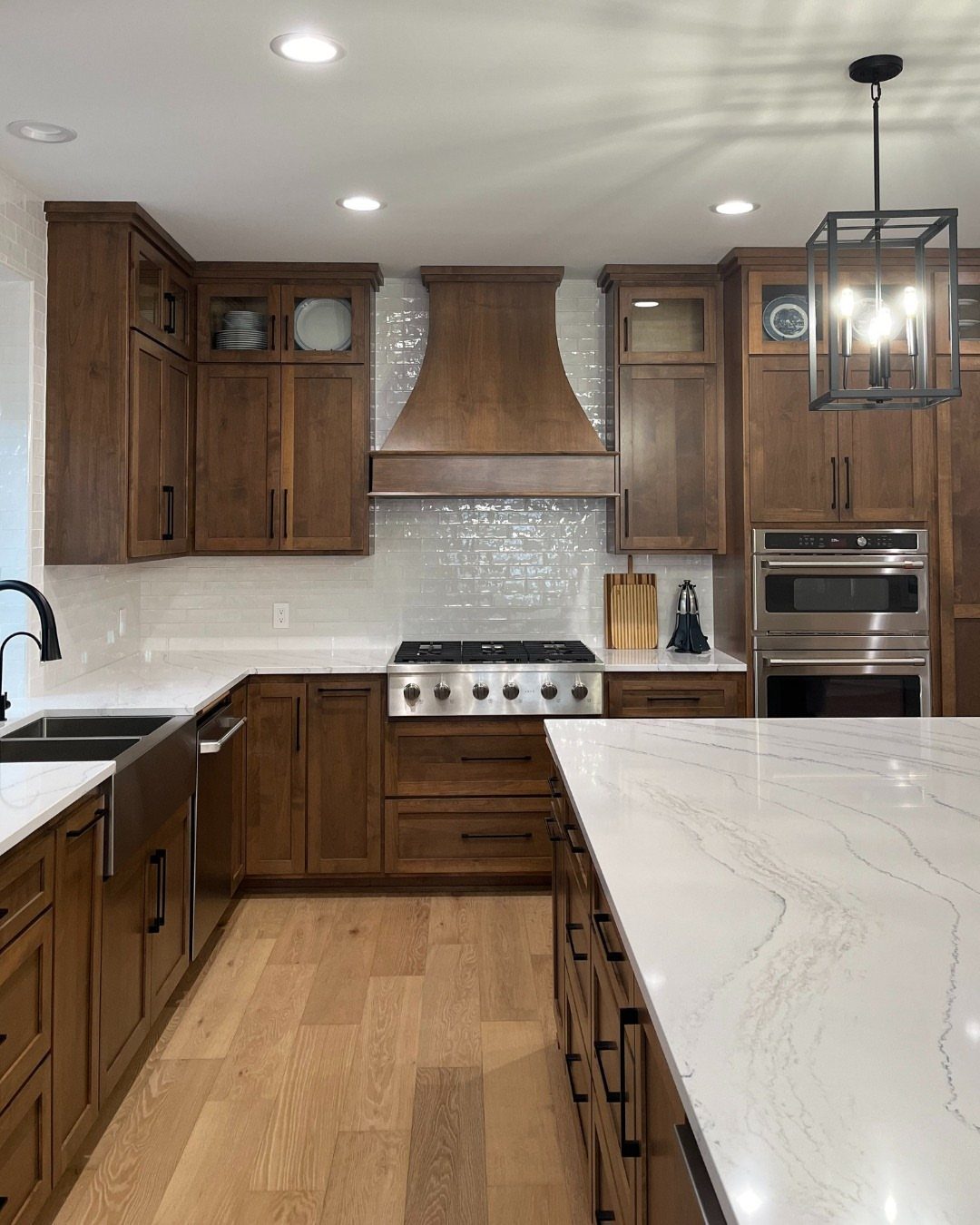
Natural maple cabinets over honey oak flooring hits a middle register that neither shouts nor disappears. The undertones stay close enough to feel intentional, far enough apart to keep the eye moving.
This pairing lives or dies on finish. Satin or matte on both surfaces reads calmer than anything glossy; two competing sheens turn the room into a hall of mirrors.
I would put the money into one good granite or warm quartz counter rather than chasing contrast with the floor.
Transitional and traditional kitchens carry this best. Modern spaces need sharper edges than mid-tone harmony usually gives.
Hardware and backsplash can shift the mood later without tearing anything out. Medium wood cabinets let you move between warm and cool flooring without a clash.
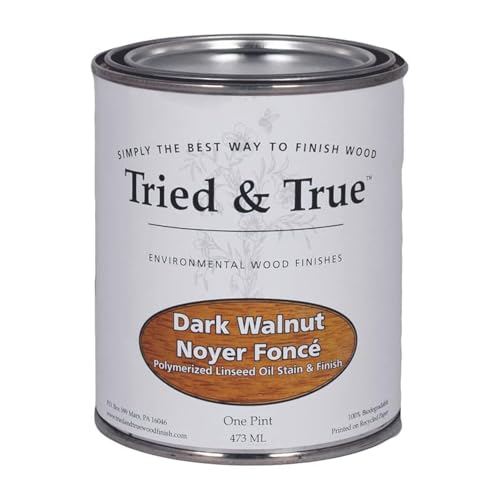
SUPERIOR PENETRATING LINSEED OIL: The Dark Walnut Wood Stain & Finish is a superior blend of penetrating linseed oil and all natural earth pigments. This excellent combination not only offers artistic coloration, but also protection for your wood.

JUST ONE COAT: Our wood stain requires just one coat to provide wood with a natural, matte finish and unmatched texture enhancement, rejuvenating old wood.

RICH EVEN COLOR – Minwax Wood Finish is a deep penetrating, oil-based wood stain that provides beautiful color and enhances the natural wood grain in one coat. It’s perfect for interior staining projects such as wood furniture, cabinets, doors and more.
8. Light Brown Wood Floor and Gray Cabinets
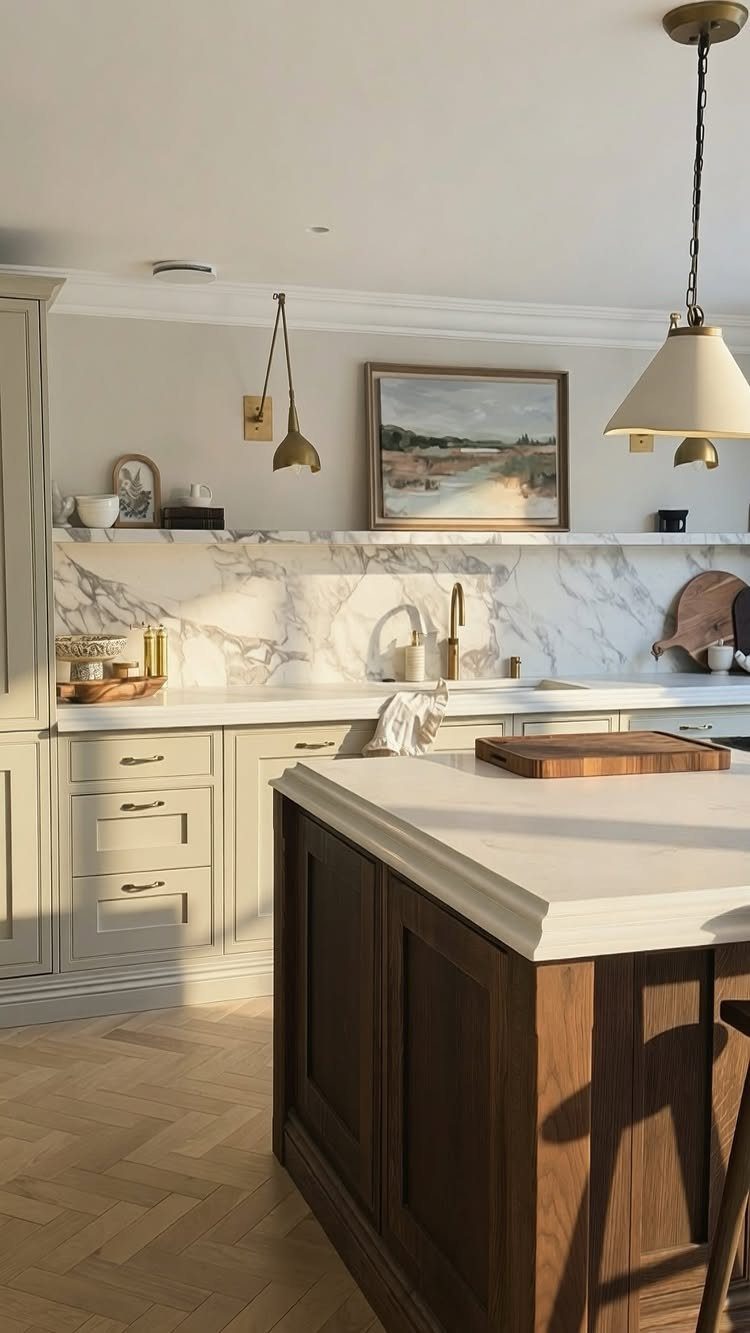
A herringbone floor in light brown against pale gray cabinets borrows from old European kitchens but feels current because the gray stays cool and flat. A dark wood island anchors the composition so the room does not float.
Blonde floors against darker gray cabinets sharpen the contrast further, though that pairing wants more natural light than most kitchens get. I would test a large sample board at the hour you actually cook, not at noon.
Marble backsplash and shelving raise the budget. Painted upper cabinets with the same gray and a simple white subway tile reach a similar calm for less.
This suits renters or first-time owners who want the look of intention without committing to wood-on-wood.

Tips:Due to the different screen materials of different devices, the color of the product you see and the actual product may be inaccurate. Color appearance may vary due to screen calibration, lighting conditions. Please refer to the actual product
【Premium Thickened Vinyl Flooring Roll】Experience our 1.5mm thick vinyl flooring roll with 5 layers for enhanced quality. It's non-slip, non-fading, and provides thermal insulation. Measuring 23.6" x 196", it covers 32 sq ft without snap-lock installation, making it hassle-free and stylish.

9. Wood Cabinets with Light Tile
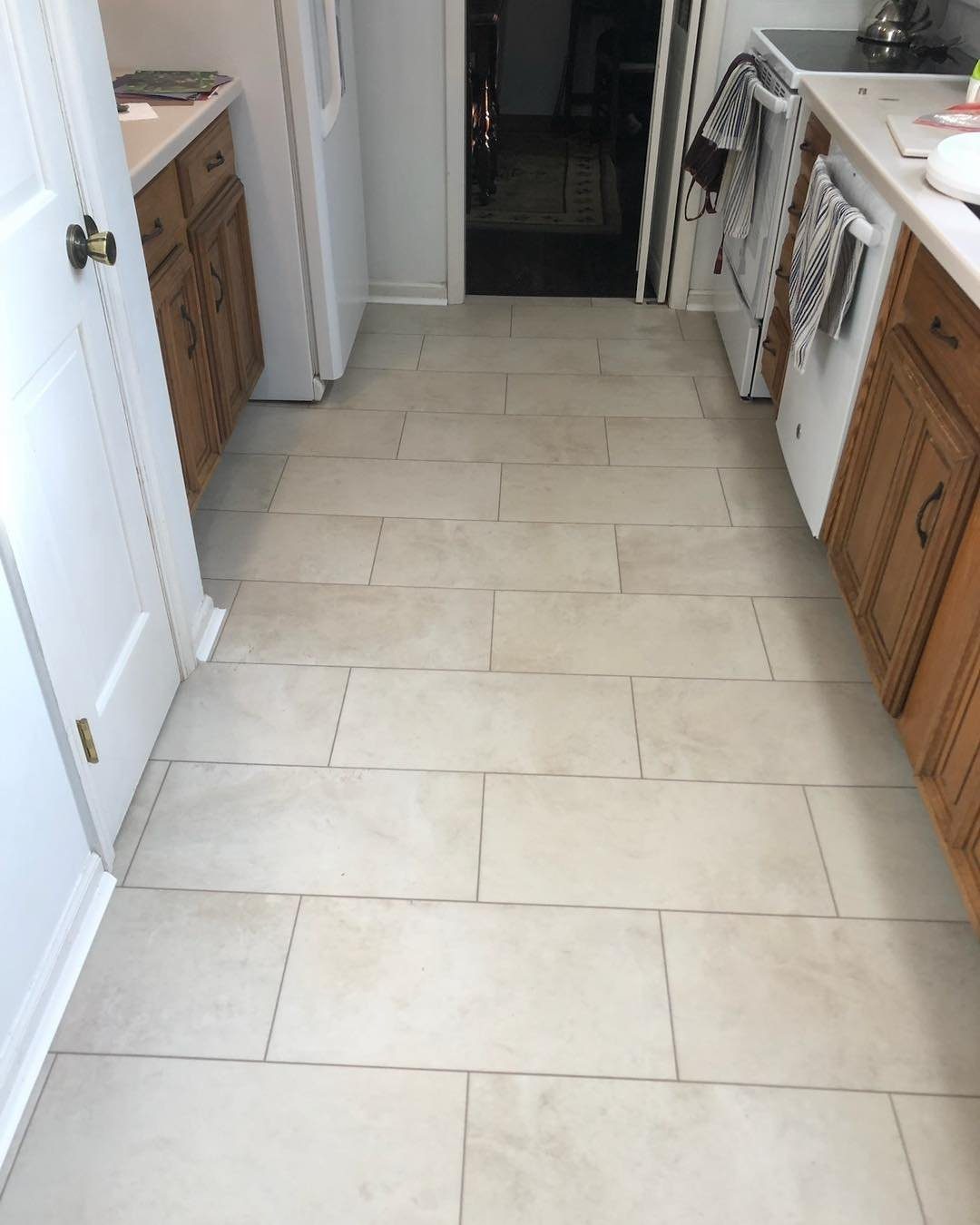
Oak cabinets with large-format beige tile floor the room in something easier to clean and harder to dent than plank flooring. Stone-look texture keeps the tile from reading as bathroom material; visual grain matters more than exact pattern.
Narrow galley kitchens benefit most. Tile runs straight without the fuss of aligning wood grain down a long sightline, and the lighter value opens the walls visually.
I would grout in a tone slightly darker than the tile itself; matching grout disappears and the tiles look like a sheet, which defeats the purpose of the format.
Warm wood uppers with this floor need something cool at the counter level to stop the room from tipping too amber. White appliances do that quietly.

Realistic Wood Look: Brown wood wallpaper with authentic shiplap texture, matte finish brings a vintage yet modern feel to any room, making your space stylish

⭐【Ample Storage Space】Are you still worried about the messy utensils? Now the buffet cabinet can help you keep your dining area tidy and organized. You can place nice-looking cups on the 2 open shelves, and use inside shelves(3 adjustable height) to store canned and boxed foods, plates, and table cloths. Ideal for bread maker or microwave oven on the spacious tabletop.
Realistic Wood Look: Brown wood wallpaper with authentic shiplap texture, matte finish brings a vintage yet modern feel to any room, making your space stylish
10. Wood Cabinets with Marble Flooring
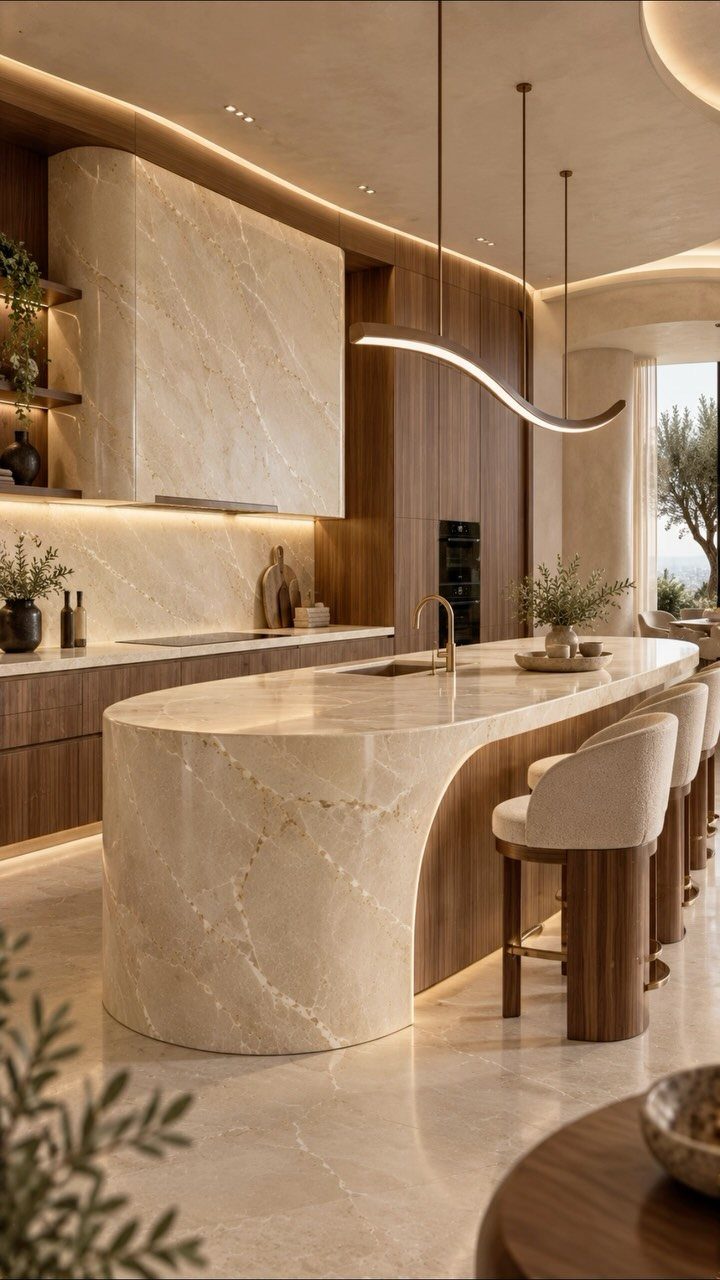
Polished marble flooring with warm wood cabinetry costs more than the other pairings here, and the gloss shows every footprint. The curved island with integrated lighting is a single commission, not a weekend project.
For someone already committed to stone, the combination works because the wood keeps the marble from reading as hotel lobby. The reverse matters too: the marble’s cool veining keeps the wood from feeling like a cabin.
I would limit the polished finish to low-traffic areas; honed marble elsewhere saves the floor from every dropped lemon.
This pairing needs professional install and a budget that can absorb both material and upkeep. It belongs here as a reference point, the version that trades budget for permanence.
Most readers should look at the photo, note the balance of warm and cool, and carry that ratio to materials they can install themselves.


CONVENIENT SIZE - This Apple Barrel Acrylic Paint comes in a versatile 8 oz size that is great for basecoating, stenciling, and so much more

Importance of Lighting
Natural light pulls yellow and red undertones out of wood that you will not see under store fluorescents.
A 3000K warm white LED pulls the grain forward; flip to 4000K cool white and the same board goes flat, almost tinged green. Hold the samples both ways, horizontal and vertical, right where they will live.
Then step to the doorway and look back. The relationship changes at distance.
Durability of Wood
Oak, maple, and walnut resist wear better than most synthetic materials, and both floors and cabinets can be sanded and re-stained rather than replaced. That matters when trends shift or a kitchen simply needs a refresh after years of use.
Regular maintenance extends the lifespan into decades, and the classic look holds resale value where dated materials do not. The upfront cost lands higher, but the replacement cycle does not.
Mixing Wood Species
Pairing different species reads more intentional than matching them exactly. The species can differ; the undertones cannot.
Warm with warm, cool with cool, and let a countertop or backsplash bridge any gap that remains.
Avoiding Clashing Colors
Cabinets usually set the color direction. Flooring should follow it, not fight it.
The clash happens when warm wood meets cool wood with nothing between them, a neutral countertop or tile backsplash can carry that transition, but the safer path keeps undertones on the same side from the start.
Too many competing colors and the room loses its center. Two tones, well related, beat four that strain to connect.
Frequently Asked Questions
What color flooring goes well with wood cabinets?
Pale floors ground a kitchen with light cabinets, and dark cabinets need something lighter underfoot to keep from closing in.
The key is building in enough difference that the eye keeps moving, same species in different finishes, or tones two steps apart on the same warm or cool side.
Should kitchen cabinets be lighter or darker than the floor?
Both can work, but aim for at least a two-shade difference. Heavy floors settle a room, light ones let it breathe.
Dark floors under light cabinets hit hard; light floors under dark cabinets keep the drama without the weight.
Can you mix wood tones in a kitchen?
Yes, mixing wood tones adds dimension and often looks more designer than exact matching. Stay loyal to warm or cool undertones, and let countertops or backsplash tile do the bridging.
A honey oak floor against darker rift-sawn oak cabinets looks like a single story told in two voices.
What’s the most timeless cabinet and floor combination?
White or cream cabinets over natural or medium oak floors outlasts most trends. Painted cream against wide-plank European oak carries an old-house patience that outlasts the current year.
What is the new trend in kitchen floors?
Kitchen flooring is moving toward materials that combine strength with long-term design appeal, resisting spills and moisture while coordinating with cabinetry and countertops. Stone-look tile, wide-plank engineered wood, and wire-brushed European oak are showing up in current remodels.
What makes a kitchen look cheap?
A kitchen looks cheap when everything competes at the same visual level, no contrast to guide the eye, and finishes fight each other on undertone.