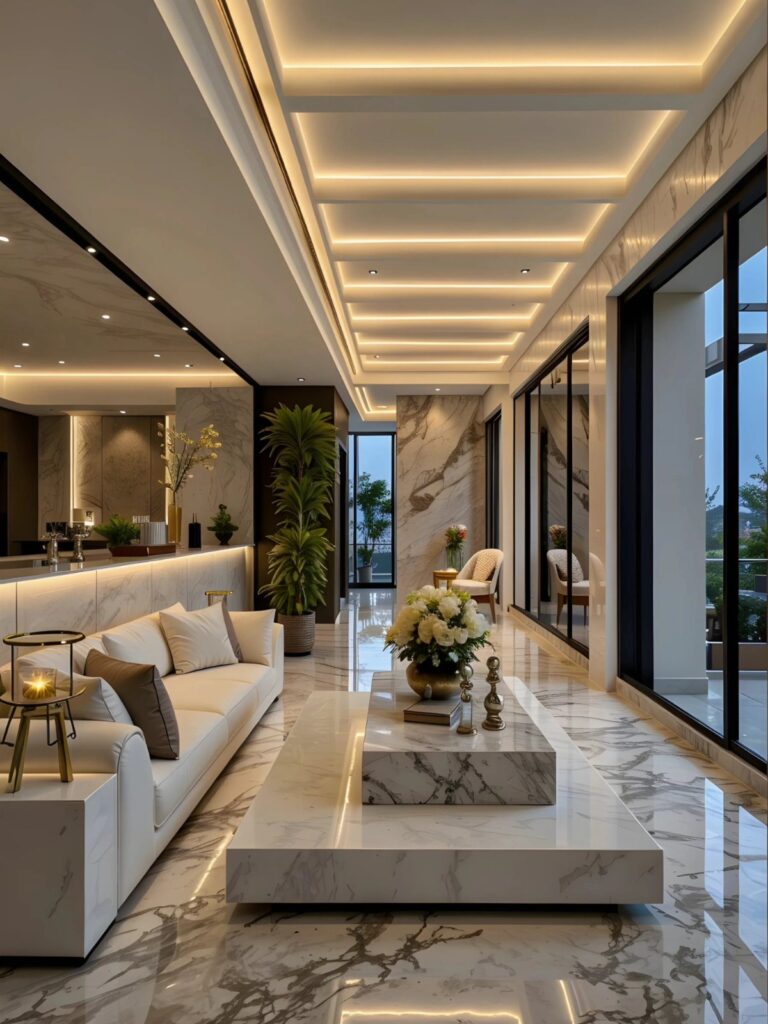
These marble floor living room ideas run from porcelain that mimics stone at a moderate square-foot price up to full custom inlay work that costs more in labor than material.
The deciding factor is not budget alone but who lives in the house: small children, heavy dogs, or shoes worn indoors push you toward honed finishes and porcelain alternatives, while quiet households can carry polished Black Marquina or high-gloss grey.
Statuario marble sits at the top of the residential price range, while the Marmorica porcelain line trades some glamour for less maintenance.
[link-whisper-related-posts]1. Geometric Marble Inlays
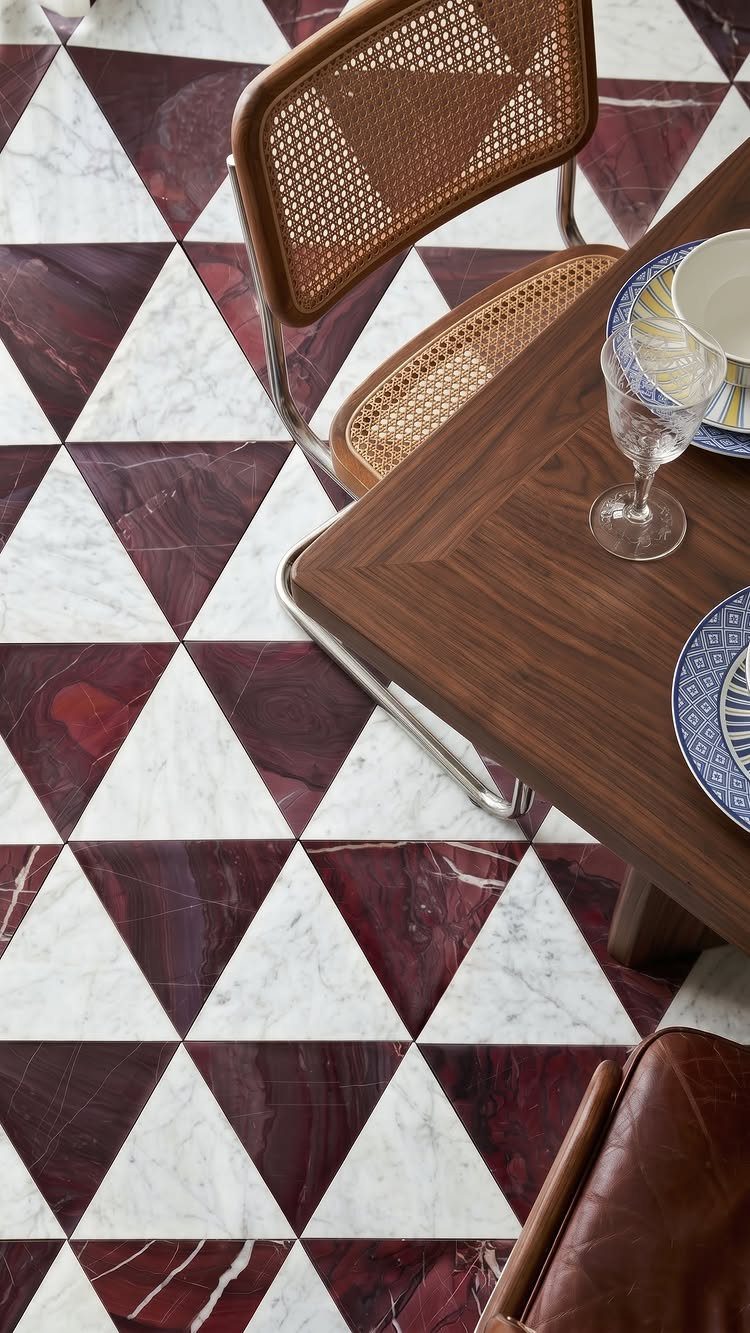
Geometric marble inlays let you build a floor from contrasting stone colors cut into triangles, hexagons, or another repeating shape.
Burgundy and white marble inlay works best when both tones share the same warmth family; stick to that rule rather than chasing maximum contrast.
Custom inlay work runs higher than plain tile because each piece is cut to fit, so budget for both material and labor if you hire it out.
For a living room, a border pattern costs less than a full field and still gives the effect. This one suits renters only in their dreams, but first-home owners who plan to stay put can justify the spend.

Premium Natural Marble: High-quality polished marble mosaic featuring elegant white marble pieces with blue clover-shaped marble inlays for a timeless and sophisticated look.

Nexus Tiles: Refresh your home for a low cost and no hassle with the Nexus Vinyl Floor Tiles. These tiles can be used in any room in your home from the kitchen to the bedroom. No messy glue or adhesives needed. Includes 20 vinyl tiles.
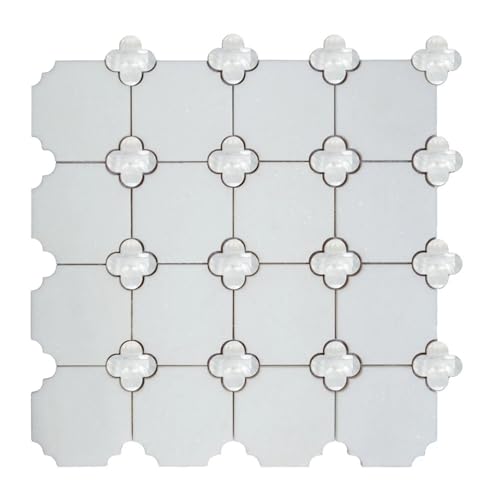
Classic octagon marble design with elegant mother of pearl clover inlays for a timeless, upscale look
2. Monochromatic Marble Floor
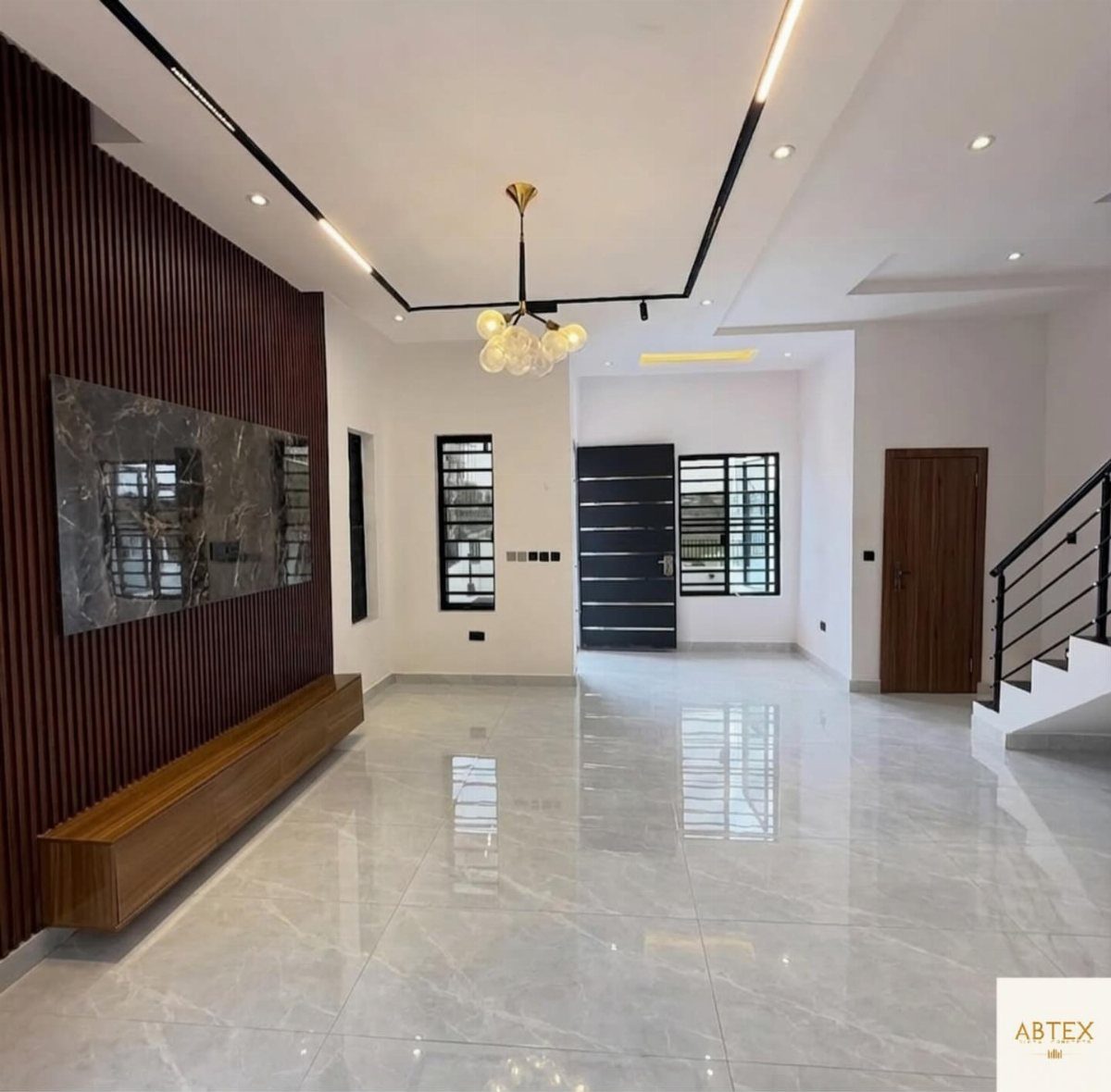
A single-tone marble floor reads as calm because the eye finds no pattern to chase. Large-format grey tiles with matching grout lines that almost disappear read more like a stone slab than tile work.
I would put this in an entry hall or anywhere the first impression matters, since the uniformity reads as intentional and expensive even when the square-foot price is moderate.
Honed finishes hide daily grit better than polished, so consider that swap if you have kids or pets. Glamour and practicality pull in opposite directions here, and only you know which side your household lives on.

Elegant marble veining available in five timeless colors

Elegant marble veining available in five timeless colors

3. Black Marquina Marble
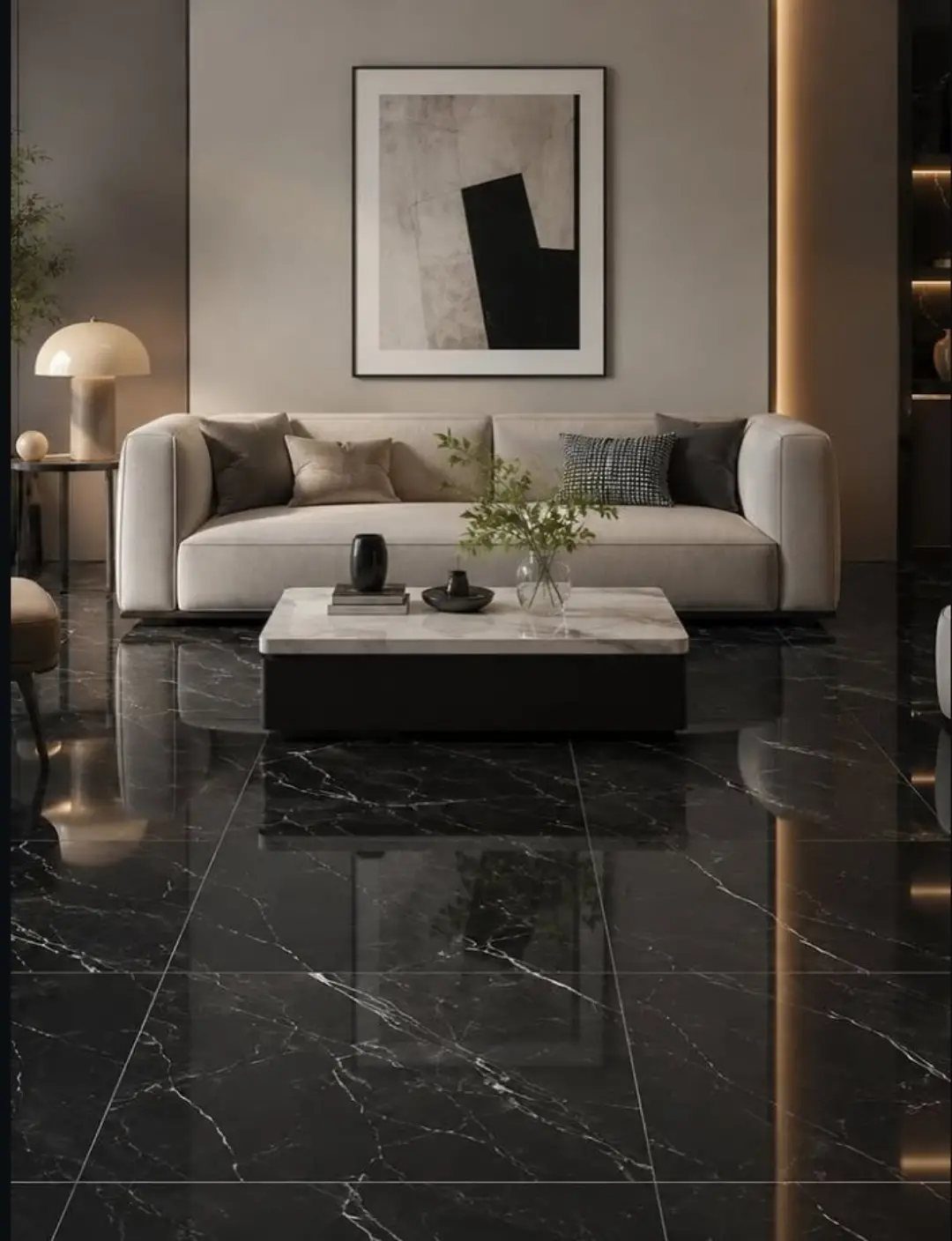
Black Marquina marble turns a living room into something closer to a gallery space. The white veining runs sharp and unpredictable, so no 2 installs look identical; that variation is the point, not a flaw.
Black Marquina marble holds its own against light furniture and pale walls without needing a rug to anchor the seating area.
Maintenance matters more here than with lighter stone: every water spot and dust particle shows, so I would keep a microfiber mop nearby and use felt pads under every leg.
This one works best for households without small children or heavy foot traffic from outdoors.

Natural Marble- Bianco Carrara white marble stone from italian, varies in color, pattern and veins from piece to piece.

Pack of 50 Sqft
4. Marble Medallion Centrepieces
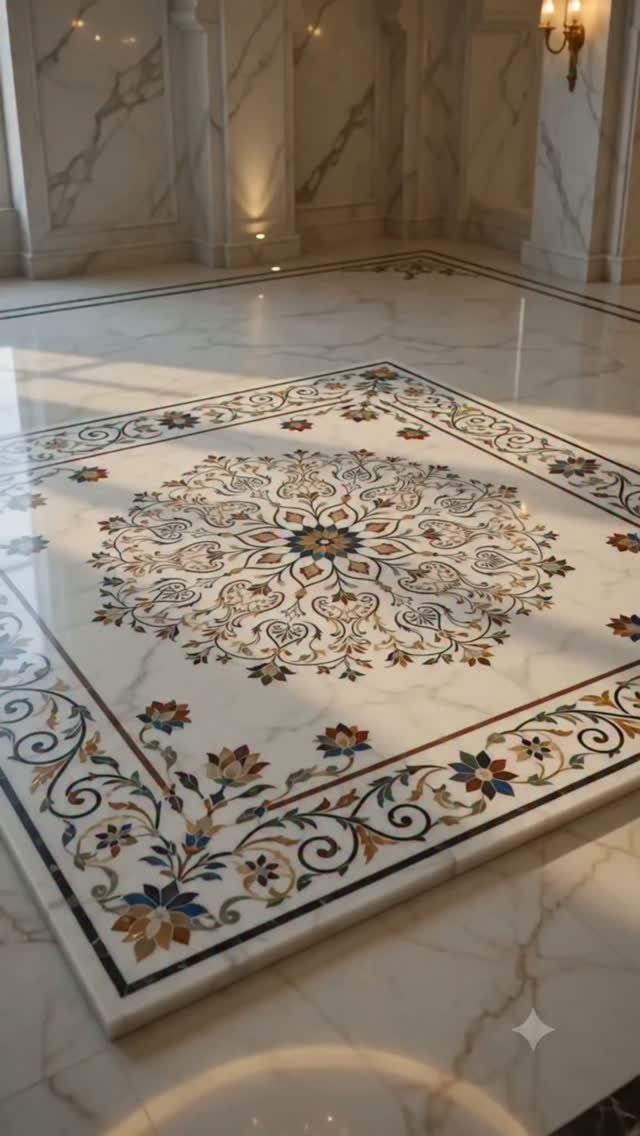
A marble medallion gives a large living room a center to orbit around, the way a chandelier does for a ceiling.
A circular motif set into the field tile, not laid on top, keeps the surface level for walking; that installation method means planning before any tile goes down.
Double-charge porcelain can mimic the look with less worry about staining or cracking under weight, which I would consider for anyone with a piano or heavy credenza.
The idea demands enough open floor to show the full circle, so skip it if your living room is chopped up by walls or already crowded with furniture against every edge.

GENUINE NERO MARQUINA MARBLE: Crafted from natural Nero Marquina marble with a deep black background and distinctive white veining for a luxurious, high-contrast appearance.

Premium Grade Basketweave White Carrara Marble Mosaic Tile w/ Nero Marquina Black Dots. Italian Bianco Carrera White Venato Carrara Honed Large Basket Weave Mosaic w/ Black Dots Wall and Floor Tiles are perfect for any residential / commercial projects. The Carrara White Marble 2 1/4 x 3 1/8 inch Basketweave Mosaic Tile with Nero Marquina Black Dots can be used for kitchen backsplash, bathroom flooring, shower surround, dining room, entryway, corridor, kitchen backsplash, spa, etc.
5. White Marble with Gold Veining

Gold veining in white marble warms up a room that grey-veined stone can leave feeling clinical. The effect depends on lighting: reflected warmth from the television surround brings out the gold, and in natural daylight it can read more subdued.
I would pair this with brass or matte black hardware rather than chrome, which fights the warmth. Statuario marble carries this pattern most reliably, though it sits at the top of the price range for residential stone.
For a budget version, porcelain with printed veining has improved enough to fool most visitors until they kneel down and touch it.
6. Polished White Carrara Marble

Polished white Carrara marble has been the default luxury floor for long enough that calling it a risk would be absurd.
Soft grey veining subtle enough to read as texture rather than pattern pairs with almost any furniture style you already own.
Natural light brings out the depth; in a dim room it can fall flat, so I would budget for better lighting before committing.
Sealing is non-negotiable, and regular resealing in a high-traffic living room is the practical reality behind the glamour. For households that want the look without the upkeep, the Marmorica line of porcelain offers a similar visual with less maintenance.
7. High-Gloss Grey Marble Floor
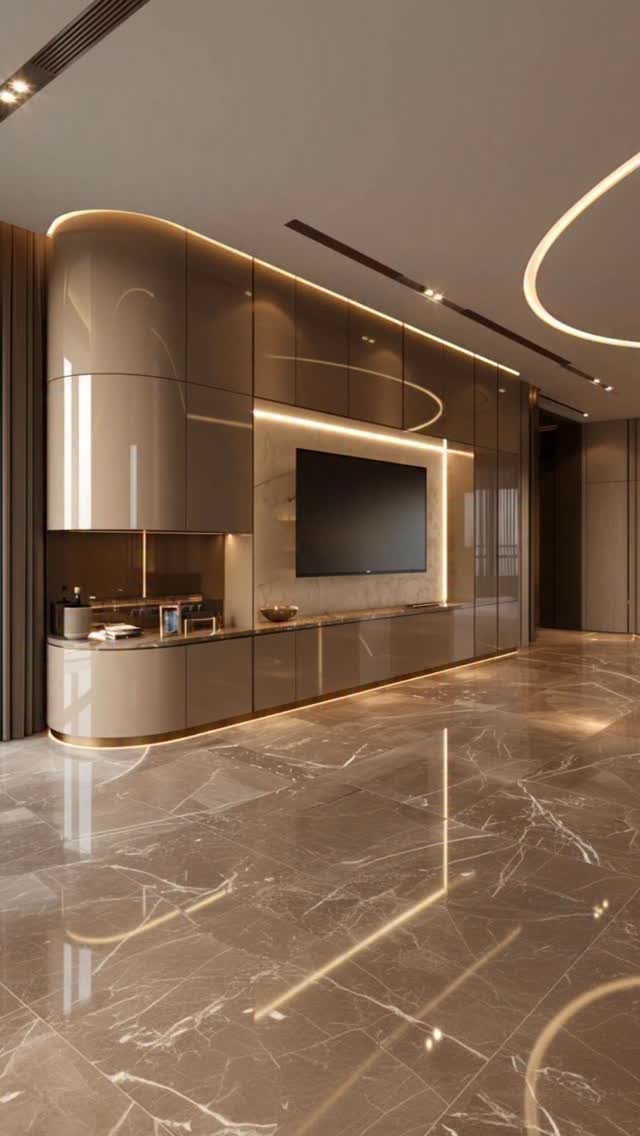
High-gloss grey marble carries light across a room the way matte stone never will.
A polished surface throws back cabinet lighting and doubles the sense of ceiling height, which matters when your living room runs smaller than the ones in shelter magazines.
The finish is the costly part.
Standard grey marble runs less, but polishing to a mirror level adds cost at fabrication. I would put that money toward the largest tiles the space can handle; fewer grout lines keep the gloss continuous.
This surface shows water spots and every sandy footprint.
It suits households without small children or heavy dogs, or owners willing to dry-mop every few days. For the same grey tone with half the upkeep, a honed finish hides wear but loses the light play entirely.
Choosing the Right Marble
Room size matters first. I would push for the biggest format the space can carry, especially in modern or contemporary interiors where the stone itself should do the work.
Natural light changes everything.
Bright rooms handle darker marble without turning gloomy; dim rooms need lighter floors to bounce what light exists. In a north-facing space, I would choose cool whites over bold blacks every time.
Your furniture style sets the marble’s role.
Bold, sculptural pieces need subtle veining so nothing fights. Minimal interiors can carry dramatic veining without looking busy.
Household traffic is the practical check. Scratch-resistant, easy-clean finishes matter most in busy households where feet never stop moving.
Honed or matte surfaces forgive more than polished ones. Softer varieties demand sealing and routine care; factor that time into your decision before you buy.

Grade 1, first-quality marble tile for wall use


Marble Flooring Benefits
Marble carries a natural cooling effect that matters in warm climates. The stone draws heat away from the air, which I would notice most in rooms with afternoon sun exposure.
Durability is the long bet.
Marble that starts out solid can last decades if you stay on top of sealing and cleaning, outlasting trends and most other flooring you could have chosen. The upfront cost spreads across years in a way cheaper floors cannot match.
Resale value is harder to quantify but real enough.
Buyers read marble as a high-end upgrade, even when the actual spend was moderate. It signals intention in a way laminate or vinyl rarely manages.
The versatility is almost a drawback; it works with nearly every design style, which makes choosing harder, not easier. Modern, classic, transitional: marble adapts rather than defines.
Light reflection is the quiet benefit.
Marble bounces both natural and artificial light, brightening rooms that darker materials would absorb. In a dim living room, that quality can matter more than color choice.

Premium Grade Long Octave Rhomboid Diamond Carrara White Mosaic Tile w/ Nero Marquina Black Dots. Italian Venato Carrera White Bianco Marble Honed 1-3/4x3-1/2 Long Octave Rhomboid w/ Black Dots Mosaic Wall & Floor Tile are perfect for any residential / commercial projects. The Carrara White Marble Long Octave Rhomboid w/ Black Dots Mosaic Tile can be used for kitchen backsplash, bathroom flooring, shower surround, dining room, entryway, corridor, spa, etc.

Premium Grade Carrara White & Nero Marquina Black Marble Checkerboard Mosaic Tile. Carrara White Marble Italian Venato Bianco Carrera & Nero Marquina Black Marble Honed 2x2 Checkerboard Mosaic Wall and Floor Tiles are perfect for any residential / commercial projects. 2x2 Checkerboard Mosaic Tiles can be used for kitchen backsplash, bathroom flooring, shower surround, dining room, entryway, corridor, spa, etc.

Premium Grade Octagon White Carrara Marble Mosaic Tile w/ Nero Marquina Black Dots. Italian Bianco Carrera White Venato Carrara Honed 2 inch Octagon Mosaic w/ Black Dots Wall and Floor Tiles are perfect for any residential / commercial projects. The Carrara White Marble Octagon Mosaic Tile with Nero Marquina Black Dots can be used for kitchen backsplash, bathroom flooring, shower surround, dining room, entryway, corridor, kitchen backsplash, spa, etc.
Combining Marble with Other Materials
Marble mixes with wood better than most stone. A wood border or inset strip defines zones without building walls; I would use that trick to separate a seating area from a pass-through in an open plan.
Brass inlays or transition strips add warmth that marble alone can miss. The metal picks up on gold veining in white stone and ties into hardware choices across the room.
Other stones create contrast without clashing.
A marble field with a limestone border reads as intentional, not accidental. Keep both materials in the same warmth family so they relate to each other instead of fighting.
For a focal point, a single marble element commands more attention than a full floor. A Calacatta Viola fireplace surround draws the eye without dominating; the stone’s scale and boldness do the work that panelling and sconces cannot finish alone.
I would reserve strong colors for these moments rather than spreading them across the whole field.

POWERFUL CLEANING: Removes everyday spills, dirt, and grease easily from natural stone, tile, grout, and masonry surfaces, leaving them fresh and spotless without harsh chemicals

Florentine has the elegance of marble, with the durability and low-maintenance of ceramic tile. This timeless style mimics the unique tones of marble with a color palette of crisp whites, neutral tans and fresh grays.

Florentine has the elegance of marble, with the durability and low-maintenance of ceramic tile. This timeless style mimics the unique tones of marble with a color palette of crisp whites, neutral tans and fresh grays.
Marble Flooring Maintenance
Annual sealing is the baseline, not the maximum.
Some sealants now carry 10-year guarantees against stains, which changes the math for busy households. I would ask my stone supplier specifically about the product they recommend and follow the bottle instructions exactly.
Cleaning means mild cleaner only.
Bleach and acid-based products etch the surface; stone cleaners exist for a reason, and Marblelife Marble Cleaner is one I would keep on hand. Harsh chemicals strip both sealant and polish in a single pass.
Felt pads under furniture legs prevent the scratches that daily sliding causes. The polish looks fresh longer with that small habit.
Water spots show on polished finishes faster than on honed. A microfiber mop kept nearby catches them before they set.
The anti-bacterial quality matters less in a living room than in a kitchen, but it is there. Cool to the touch, long-lasting, and with modern sealants far less demanding than its reputation suggests.
Frequently Asked Questions
Are marble floors a good idea?
Marble floors work well in living rooms if you accept the trade-offs. The stone reflects light and holds up for decades, but sealing is non-negotiable and resealing becomes routine in high-traffic spaces.
A honed finish hides the daily grit better than polished marble, something most people don’t think about until they’re the ones sweeping it every morning.
Is marble still in style in 2026?
Custom geometric inlays, center medallions, and honed finishes keep showing up in new installs, which suggests the material is not fading.
Black Marquina for bold statements, white Carrara for brightness, and gold-veined varieties for warmth all have current footing in residential design.
What is the best type of marble flooring for a living room?
White marbles like Carrara or Statuario brighten dim rooms and read as airy; darker stones such as Black Marquina add depth where light is already abundant.
Veined marble brings natural character, while monochromatic large-format tiles with matching grout create a calm, slab-like surface. The best choice depends on your room’s light, your furniture, and how much maintenance you will actually do.