Fancy wood floors run from rustic reclaimed boards pulled out of old barns to mirror-bright high-gloss hardwood that doubles window light across a room.
The right choice depends on whether you want the floor to announce itself or simply hold up under real life.
Hand-scraped boards already carry the marks of living, so another dent from a dog’s claw or a dropped toy just joins the story.
[link-whisper-related-posts]1. Rustic Reclaimed Wood
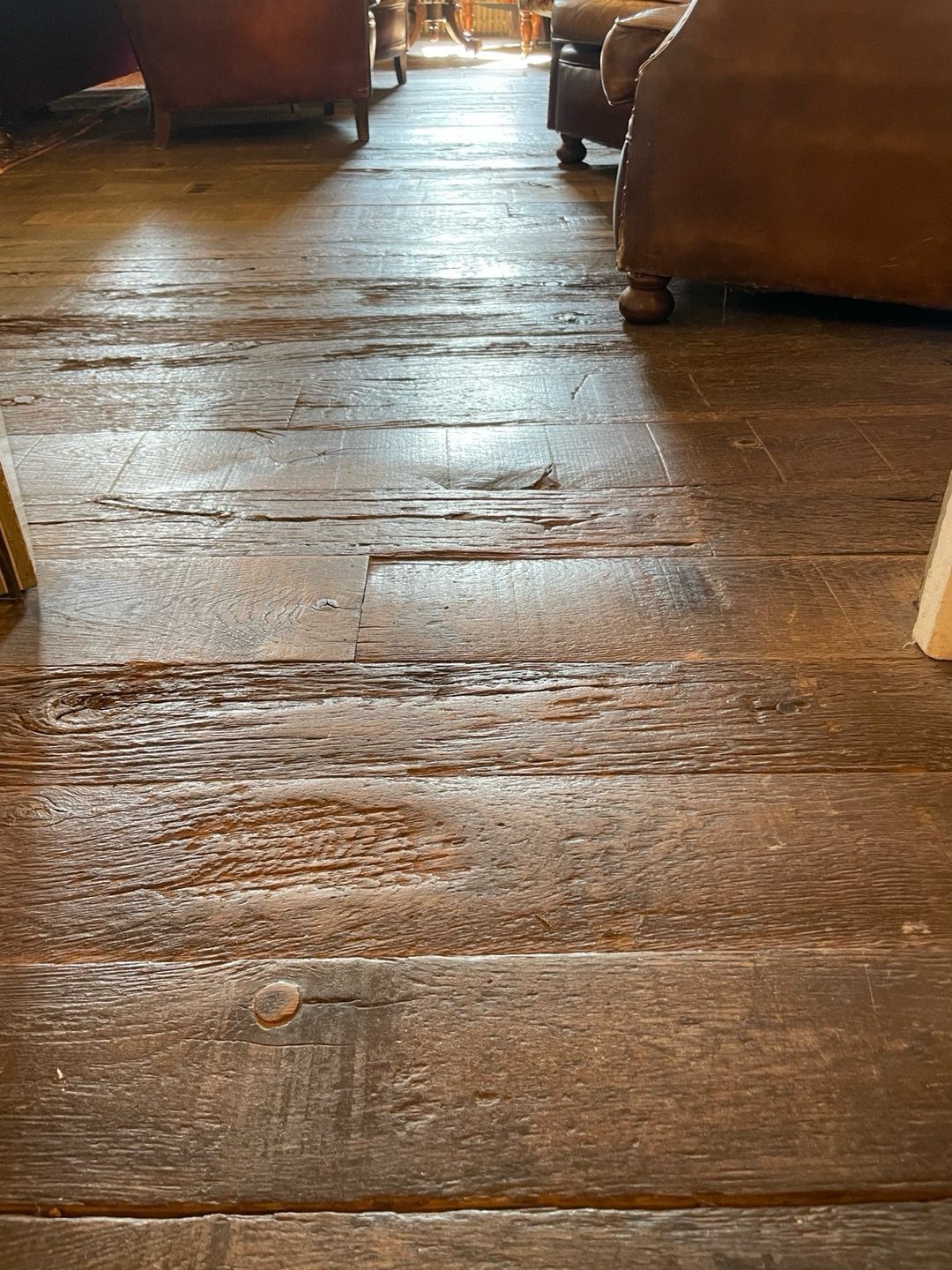
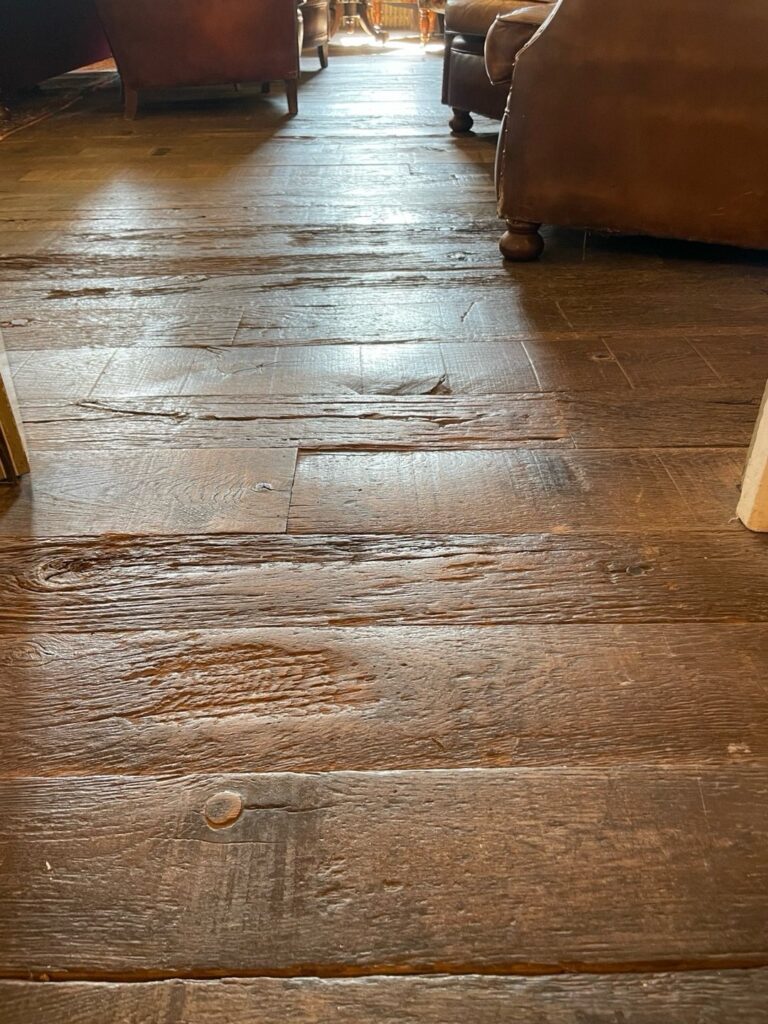
Old boards carry the marks of their first life: nail holes, saw scars, and the soft darkening that only decades of use can create.
That patina is why people choose rustic reclaimed wood, and it is also what makes every floor one of a kind.
The grain sits raised and uneven where a century of feet wore a path, and no two boards carry the same history.
I would check the source before buying. Reclaimed wood from old barns and factories tends to be denser and more stable than material from residential demolition, since it was originally milled for heavy use.
Ask whether the supplier has removed or left the original surface; some sellers plane it smooth, which erases the history you are paying for.
This floor suits someone who wants conversation more than perfection.
The gaps and knots that read as character now will collect dust in a decade, and a dark patina shows scratches less but also hides them less well than you might expect.
For a cabin or a loft with honest wear, it is hard to beat. For a household chasing a pristine look, the maintenance will outlast the romance.

2. Dark Wood Floors
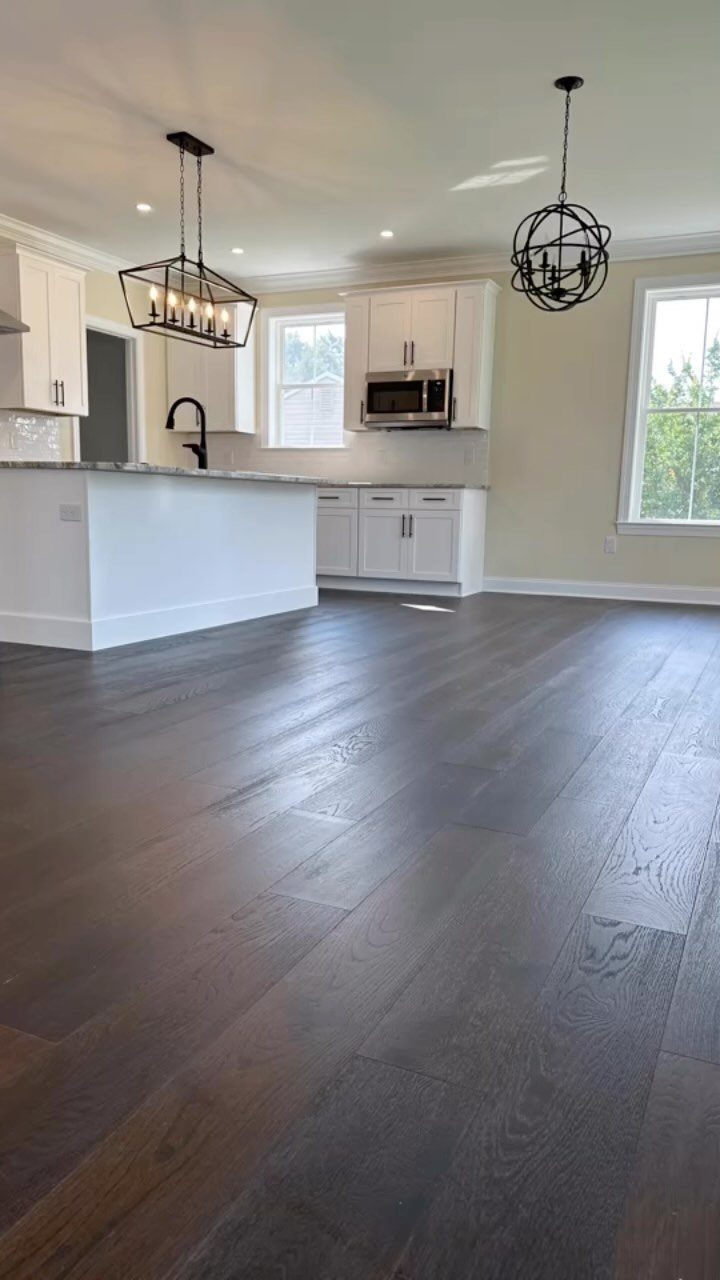
A dark floor against white cabinets reads as intentional, not accidental, and that is the balance to aim for.
It works because the room has enough natural light and enough pale surface above the floor line to keep the space from feeling like a cave.
The stain choice matters more than the wood species here. Traditional stains sit on top of the grain and give a more uniform color; reactive stains work with the wood’s own chemistry and create variation that shifts with the light.
I prefer the reactive kind for dark floors, since uniform dark can read as flat and plastic. A reactive stain will look different on every board, which is either the goal or a problem depending on your temperament.
This option works best in rooms with large windows or generous artificial lighting. In a north-facing bedroom or a basement with small windows, the same floor can feel oppressive once the afternoon light fades in winter.
If your space lacks light, consider going one shade lighter than the sample you love in the showroom.
Use on wood, cork, tile, resilient, and other hard surface floor coverings.

Cord Cover Floor: Dimensions: length 4’, 2" (W) x 0.4" (H); internal channel diameter: 0.47" (W) x 0.24" (H). This cord floor cover can hide one thick 0.43-inch (11-mm) power strip extension cable, or 1 Ethernet cable, speaker cable, floor power cable, etc. Note: Before ordering, please measure the diameter of your cable, to choose the right size.
Floor Cord Cover: Dimensions: length 4’, 2" (W) x 0.4" (H); internal channel diameter: 0.47" (W) x 0.24" (H). This cord floor cover can hide one thick 0.43-inch (11-mm) power strip extension cable, or 1 Ethernet cable, speaker cable, floor power cable, etc. Note: Before ordering, please measure the diameter of your cable, to choose the right size.
3. Herringbone Patterns
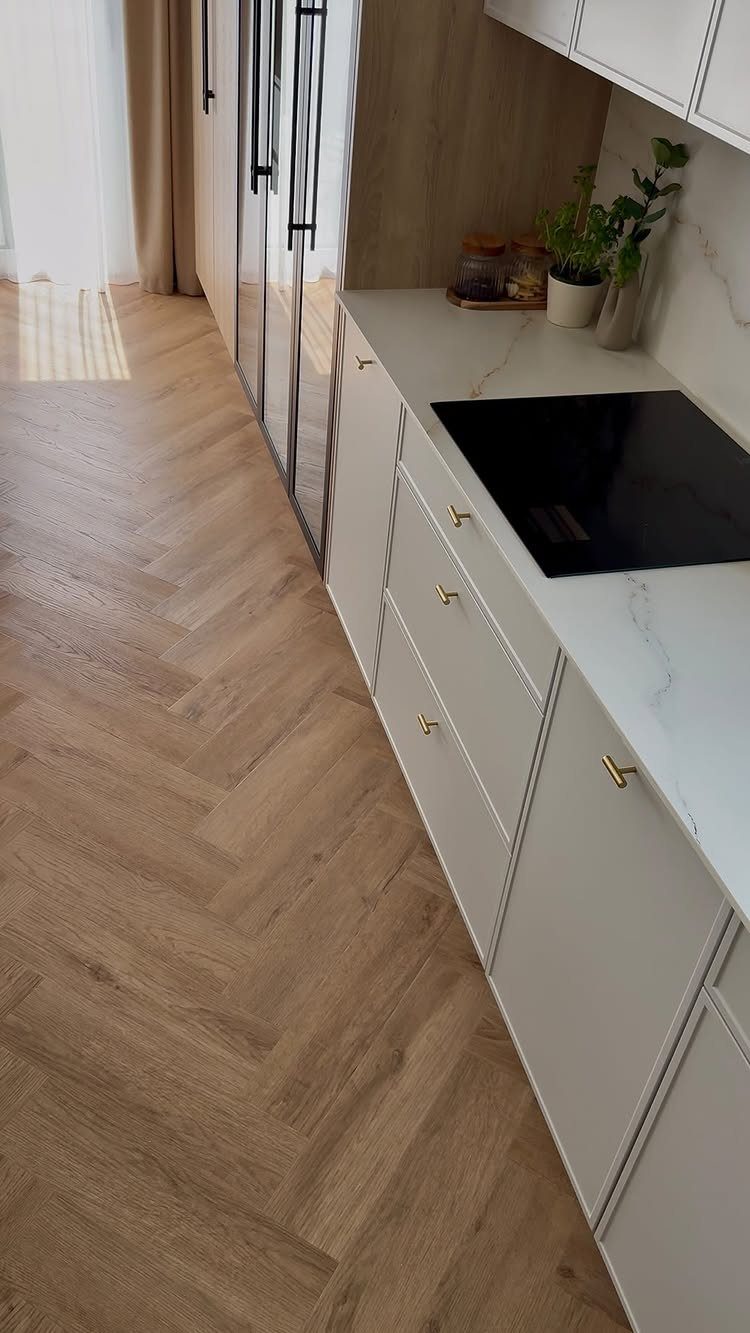
The herringbone angle does something plain plank cannot: it slows the eye and makes a narrow space feel wider than it is. The pattern runs through a kitchen hallway where straight boards would have emphasized the length and the squeeze.
Installation is where this idea lives or dies. Each short piece must be cut at a precise angle, and the starting row has to be perfectly straight or the error compounds with every course.
I would not attempt this as a first flooring project unless you have a table saw with a reliable fence and the patience to check every cut.
The waste factor runs higher than with standard plank, so order more than your square footage suggests and keep a few boards in reserve for later repairs.
This pattern suits entryways and smaller rooms where the geometry gets noticed.
In a large open space, the labor and material cost can feel wasted because the pattern reads as texture from a distance rather than as the deliberate design it is.
For a dining room or a foyer, though, it is one of the few floor choices that reads as dressed up without any furniture in place.

Ideal for use on all interior wood projects: furniture, cabinets, doors, trim and paneling
Ideal for use on all interior wood projects: furniture, cabinets, doors, trim and paneling
4. Walnut Flooring
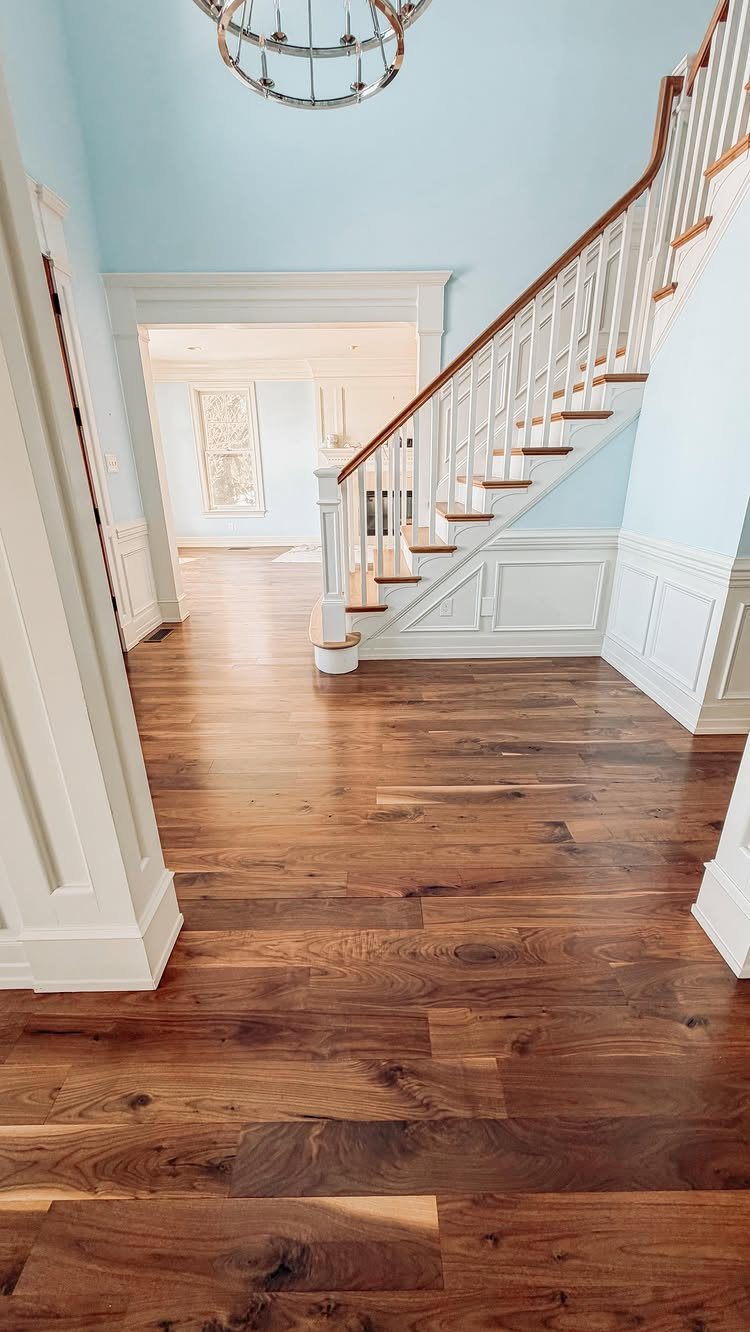
Walnut carries its own color, a depth that stain tries to imitate on lesser woods and usually fails. The color moves toward purple in low light, with grain that stays visible even in the darker boards.
The Janka hardness rating matters less in daily life than the sales copy suggests, but walnut’s resistance to denting does show up in high-traffic areas.
More practically, it does not warp easily with seasonal humidity changes, which means fewer gaps between boards in winter and less cupping in summer.
An oil finish rather than polyurethane keeps that color alive; polyurethane can turn walnut slightly amber over time, which muddies the clarity that makes the wood worth choosing.
I would pick this for a hallway or a formal room where the floor is meant to read as furniture-grade.
In a kitchen with constant water exposure, the maintenance of any wood floor will frustrate you equally, so the premium for walnut is harder to justify.

THIS IS A FLOORING SAMPLE - Cut from an actual full-size Chalet Herringbone White Oak plank so you can see the true color, warm natural oak tone, and wire-brushed texture before purchasing.
5. Wide Plank Flooring
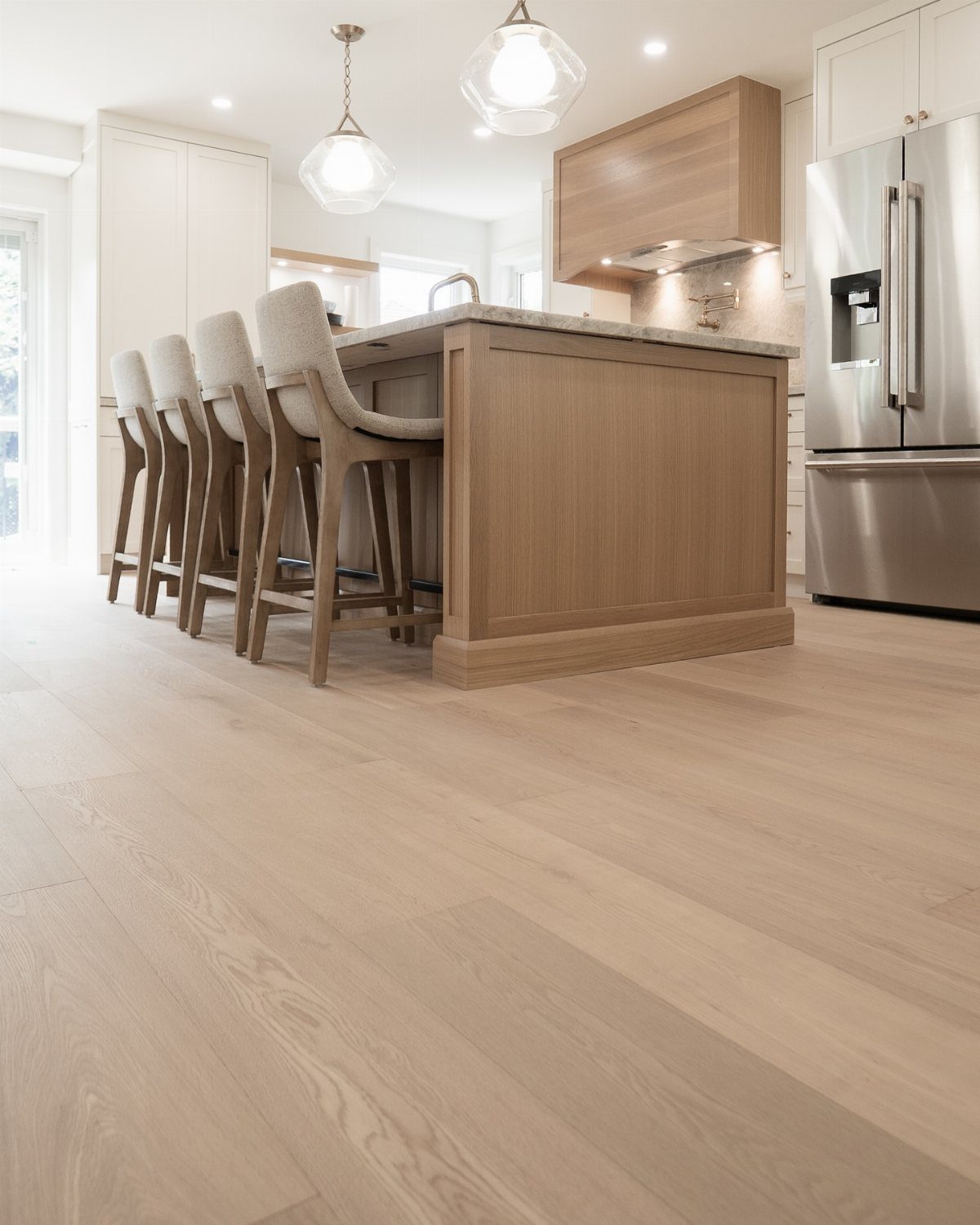
Wide planks do the visual work of making a room feel larger, not because the boards themselves are expansive but because there are fewer seams breaking the floor into grid lines.
The planks run uninterrupted under the island, and the eye travels across them without the stutter of narrow boards.
The width you can install depends on your subfloor and your climate. Solid wide planks need more stable humidity than narrow ones; engineered construction handles seasonal movement better and is what most suppliers now stock in the wider widths.
If you are set on solid wood, check whether your climate stays within a narrow humidity range year-round, or budget for a whole-house humidifier and dehumidifier.
In a small broken-up space with many doorways and corners, the visual effect gets lost in the cuts, and the material cost per square foot is higher for the same result.


This listing is for 2 piece of wood floor samples 8"
6. Parquet Flooring
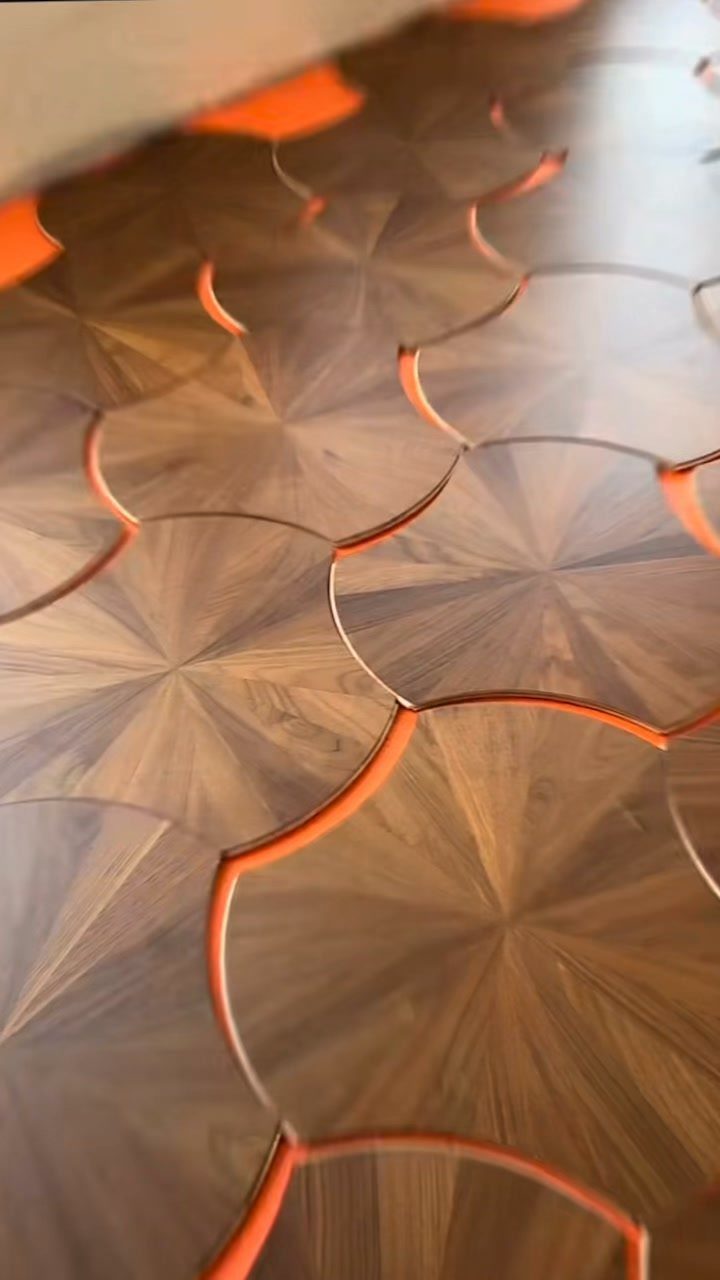
Parquet is not one pattern but a category, and this is one of its more elaborate forms: small pieces arranged into radiating shapes that read as geometry rather than as wood grain.
The effect is closer to a tile floor than to conventional plank, which makes it a specific taste.
The classic European patterns, Versailles among them, were designed for stone but translate to wood with a different feel: warmer, softer underfoot, and more forgiving of the slight unevenness that develops in old buildings.
Custom designs are possible but require a skilled installer; the precision of the cuts and the flatness of the subfloor matter more here than with any other wood floor option.
A gap or a high spot that would hide in wide plank becomes a trip hazard and an eyesore in parquet.
This floor suits a room that functions as a stage: a formal dining room, a hotel lobby, a dressing area where the floor is meant to announce itself.
In a family kitchen or a child’s bedroom, the maintenance and the visual noise would wear thin quickly.

𝐍𝐎𝐓𝐄: Since the length of the peel and stick floor tile wood look is 36Inch (91.44cm), we ship them on a roll to avoid damages. But this bending during shipping will not affect the installation, or you can kindly place heavy objects on the wood vinyl flooring planks for two hours before installation.

🏠 Wood peel and stick floor tile: Thickness is 0.06inch (1.5mm). Size 6 X 36 inch included 18-Planks, made of vinyl, Reclaimed wood flooring peel and stick floor tile waterproof, groutable, non slip, no special tools needed.
7. Hand-Scraped Floors
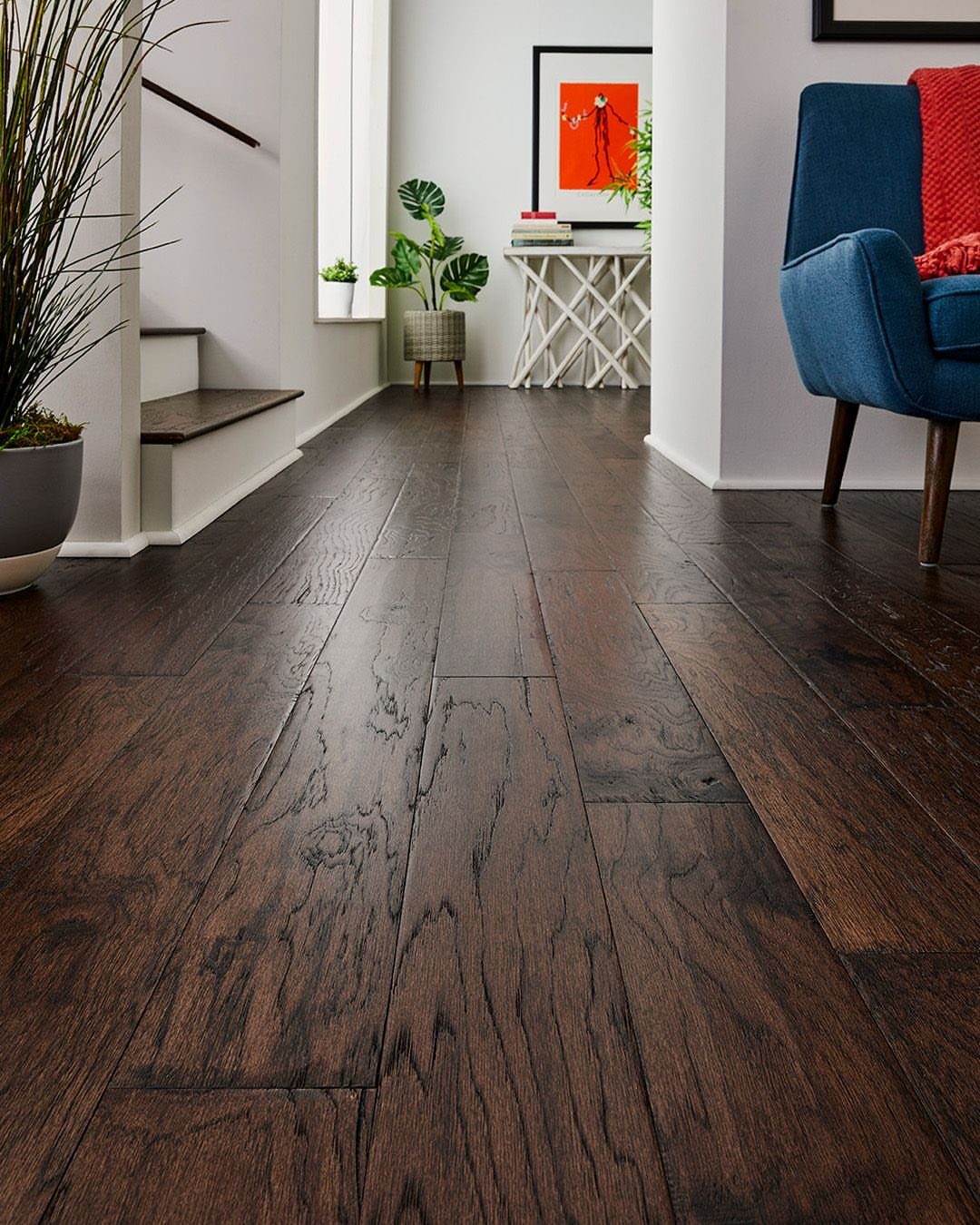
Hand-scraped floors carry the slight unevenness of a blade pulled across the wood by hand, not the perfect flatness of a sander. That texture catches light differently across each board and hides the small dents that come with actual living.
The finish works best in rooms where you want warmth without rustic clutter. A dark stain deepens the shadows in the scraped grooves, so the floor reads as refined rather than barnyard.
If you are buying new, look for planks that were scraped before finishing; post-finish scraping exposes raw wood and needs touch-ups sooner.
Site-finished floors let you control the depth of the texture, but prefinished saves a week of curing time and the smell.
This is the floor for households with dogs, kids, or furniture that gets dragged. The texture already looks lived-in, so the first scratch is invisible, not tragic.

♬【【Wide Application】- Quality black walnut piano casters cups is designed for upright piano and perfect These durable caster cups can also be used on tables,sofas,chairs,curio cabinets,desks and much more furniture.

Solid Wood Piano Caster Cups & Furniture Pads - Crafted from 100% premium solid wood, these Upright Piano Caster Cups feature a felt fabric base, preventing floor damage while ensuring long-term use without fusing to surfaces. Ideal as furniture floor protectors for sofas, dining tables, and wheeled furniture.
8. High-Gloss Hardwood
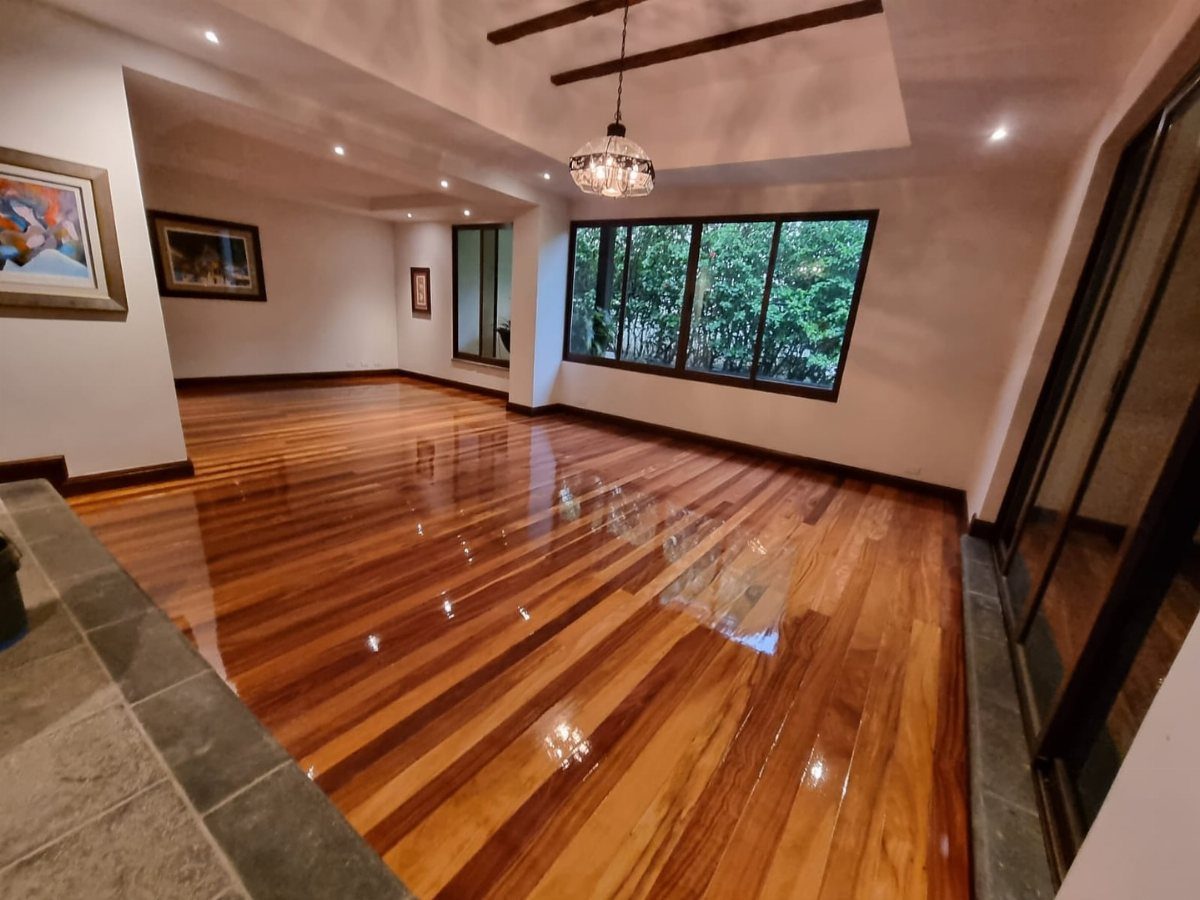
A high-gloss finish turns the floor itself into a reflector, bouncing window light deep into a room and doubling the visual space.
That reflectivity comes at a cost in maintenance. Every footprint, every drip, every grain of tracked grit shows immediately, and the finish scratches more easily than satin or matte.
You will sweep more often and refinish sooner.
For installation, site-finished gloss gives the smoothest result; factory finishes on prefinished planks can look plastic beside it. Budget for a professional sand and coat, because the final polish is unforgiving of unevenness.
I would reserve this for formal rooms that see light traffic: a dining room used on weekends, a sitting room without a direct path from the garage. In those spaces the mirror effect feels intentional and luxurious.
In a busy hallway it becomes a maintenance job you did not sign up for.
Ideal for use on all interior wood projects: furniture, cabinets, doors, trim and paneling
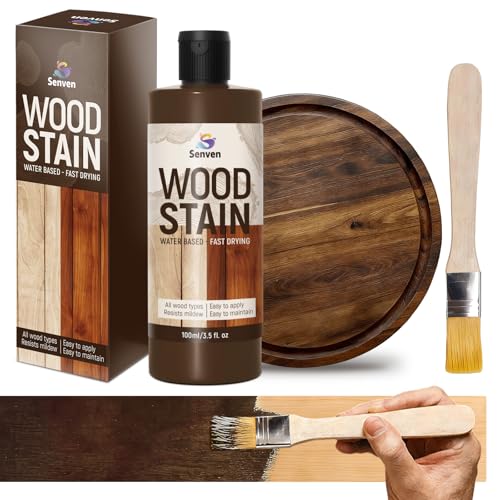
Professional Results: Achieve rich, even color and enhanced wood grain with just a single application. SENVEN wood stain fast-drying, high-concentration formula provides excellent coverage and deep penetration, instantly revitalizing old wood with a natural matte finish

Non-Toxic & Low Odor, Safe for Indoor Use: Breathe easy with our water-based wood stain! It’s non-toxic, environmentally friendly and low VOC formula makes it perfectly safe for indoor projects like kitchen cabinets, bedroom furniture, and more — without the strong chemical fumes found in traditional stains.
Installation Methods
Glue-down installation is standard for parquet, with each tile set into adhesive on plywood or concrete. Face-taping keeps the small pieces aligned until the adhesive cures.
Tongue-and-groove systems work for plank floors and let boards interlock without glue, which matters if you might want to remove them later.

Tips:Due to the different screen materials of different devices, the color of the product you see and the actual product may be inaccurate. Color appearance may vary due to screen calibration, lighting conditions. Please refer to the actual product

【Compatibility Test Required 】- Before using the plank grabber floor fix pro, confirm your floor is a floating floor (not nailed or glued down). This tool is specifically designed for floating floors and works best on them.

Realistic Wood Look: Get the authentic look of real wood with grain texture. These floor planks blend seamlessly into any decor style, adding a touch of timeless elegance to your home.
Cleaning Hardwood Floors
Sweep or vacuum first, with the hard floor setting engaged and any rotating brush turned off. A wet mop with a dedicated wood floor cleaner follows; Bona Wood Floor Cleaner is one that carries a specific recommendation for parquet.
Water mopping and steam cleaners both damage the finish over time. Harsh detergents and homemade mixes are out; the finish is not negotiable.
Vacuum frequency should match your carpet schedule, not less.

THIS IS A FLOORING SAMPLE - Cut from an actual full-size plank so you can see the true color and hand-scraped texture before ordering.

Premium European Oak Construction: 7” wide samples from Flooret’s Silvan Resilient Hardwood Collection—crafted from sustainably sourced European white oak for timeless character and strength.
Choosing Wood Species
Hickory sits at the top of the Janka hardness scale among domestic species, which is why I would pick it for entryways and hallways where grit and heels do their worst damage.
The grain reads as busy, with auburn, copper, and cinnamon tones shifting piece to piece; every board is distinct. It resists water better than most domestic species and needs less maintenance than softer alternatives.
The look is cabin-rustic by default, though the same hardness serves in modern spaces if the tone fits.
Trends in Wood Flooring
Dark stains, wide planks, and textured finishes are the directions current installation leans. The dark stain trend pairs with pale walls and decor; the contrast is deliberate, not accidental.
Wide planks have been pushing out the old narrow-strip standard in new installs. Textured finishes, hand-scraped among them, add surface variation that reads as modern rather than rustic when the stain stays neutral.
These three directions overlap; a single floor can carry all of them.
Frequently Asked Questions
What is the most luxurious type of hardwood flooring?
Engineered wood with a solid wood top layer is often considered the most luxurious option. It gives the appearance and feel of solid hardwood while handling humidity changes better than solid planks alone.
This construction also allows for wider boards that would warp if made from solid wood.
What is the newest trend in hardwood floors?
Dark and dramatic stains are currently trending, along with oil finishes that give a soft reflectivity and can be touched up without resurfacing the whole floor.