Wood tile patterns start with a running bond you can knock out in a day and run up to combinations like wood strip with diamond tile that eat a whole weekend.
A narrow hallway can carry the cut work of herringbone because you see it all at once; a broad living room usually wants the calmer rhythm of running bond.
A third-offset is what most installers call safe for keeping lippage low, though the real number moves once you lay a tape on the actual plank.
[link-whisper-related-posts]1. Herringbone
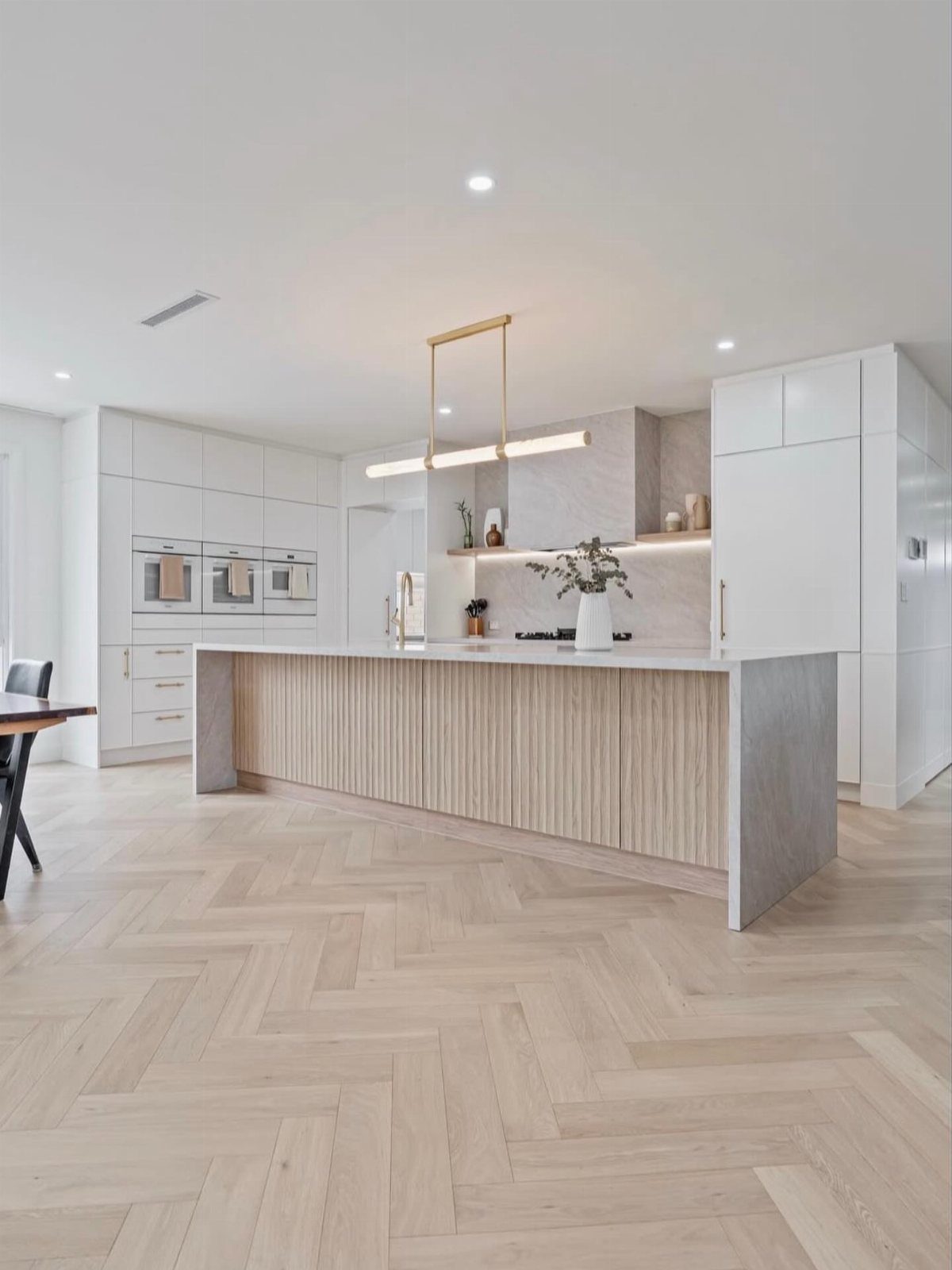
A herringbone floor turns planks into a zigzag that reads as movement rather than repetition.
The 90-degree angle between each pair of tiles breaks up long sightlines, which helps in narrow galley kitchens or entryways where you want the eye to travel.
Shorter planks suit this pattern better; longer tiles fight the geometry and the small gaps start looking like mistakes. The Italian version spares you angled cuts at the ends, so waste stays reasonable for a first-timer.
Entryways and powder rooms reward the extra labor most, since you see the pattern head-on every time you pass through.

Retro Tiles: Retro Floor Tiles give you the expensive hand-painted look without the cost or installation mess. These beautifully designed tiles recreate fresh and inviting patterns that will look stunning in any room. No messy glue or adhesives needed.
2. Running Bond
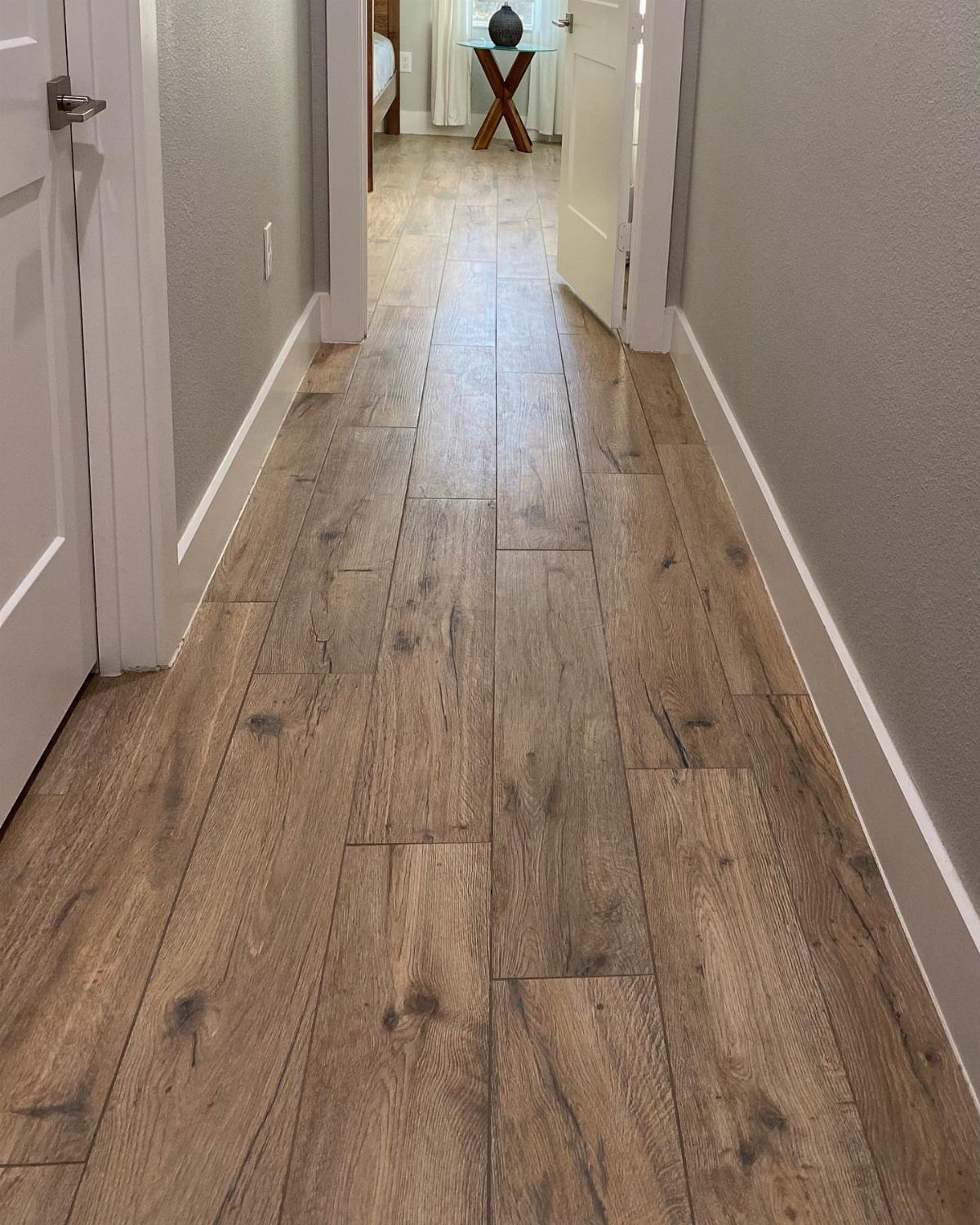
Running bond staggers joints so no two line up across the whole floor, which hides minor height differences between planks better than any grid.
The direction you choose matters more than most people think: run the long side parallel to the longest wall, or the hallway feels like a tunnel.
Mixing plank lengths within the same width adds rhythm without requiring separate purchases, since most wood-look lines sell at least two lengths per color.
Angling this pattern diagonally to walls in a square room burns through cuts fast, and the finished look rarely earns back that saw time. For large open rooms with good natural light, this is the pattern I would default to.

Premium PVC Material - Lightweight, durable, and water-resistant. Not wood, ensuring long-lasting quality and performance.

SEAMLESS TRANSITIONS - Effortlessly bridge the gap between different flooring types with our advanced adhesive technology. No more tripping hazards or unsightly gaps. Achieve a professional finish.
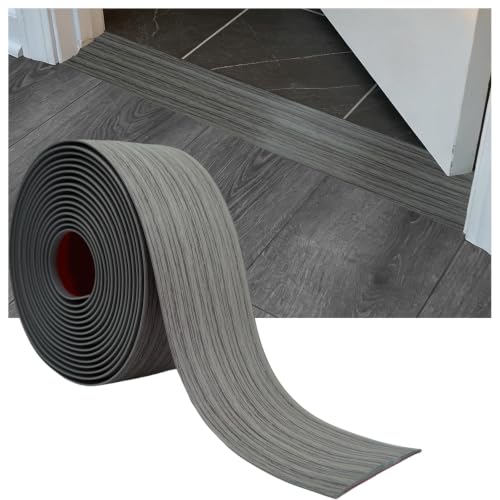
Durable Material:This durable, flexible transition strip is made from high-quality PVC vinyl. Overall Size: 76 mm x 6 m / 3 in x 20 ft (WxL), Maximum Thickness: 3.5 mm / 0.14 in.It perfect for covering carpet transition or floor gaps in doorways and between rooms
3. Offset Rows Wood Tile Pattern
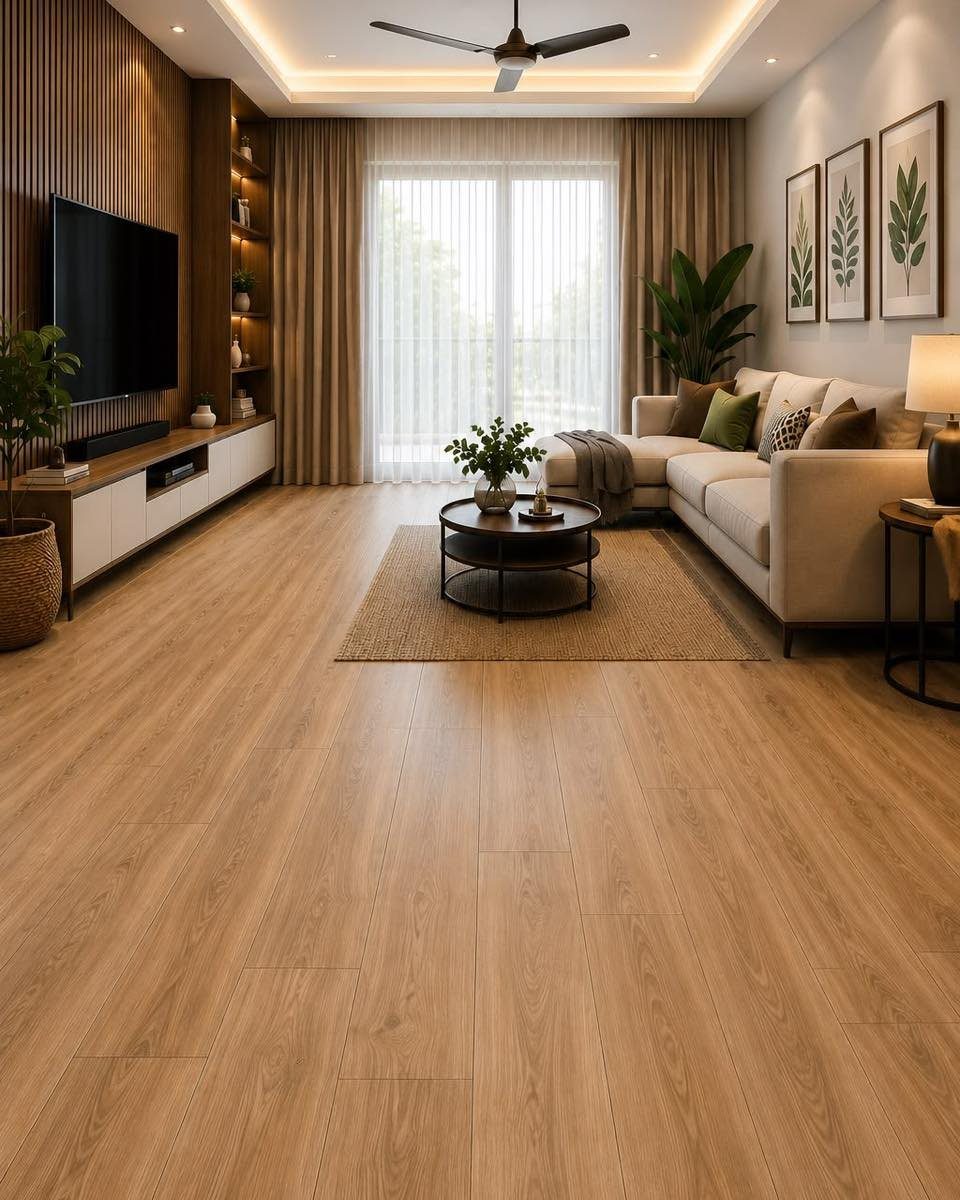
Offset rows keep the staggered joint of running bond but add a fixed mathematical rhythm, typically stepping each row by one-third or one-quarter of the plank length.
The 33% offset has become the practical standard because it minimizes lippage, that slight height difference where one tile edge sits proud of its neighbor.
Bowed tiles, common in fired porcelain, stack their high and low points at 50% offset and telegraph every imperfection; the shorter step breaks up that alignment.
Measuring the actual tile before committing to a fraction matters, since plank length changes what offset lands clean.
Check the first three rows with a straightedge before you cut the fourth; catching a tilt early saves pulling half a floor later.

SaddleSquare3D acts as a tradition 90 Degree Saddle Square and a 45 Degree Miter Saddle transfers marks on adjacent board faces

【Natural Oak Wood Texture with Warm Tone】 Featuring a warm light natural oak tone with natural brown oak grain lines and realistic tree knot details, this vinyl flooring replicates the look of solid hardwood planks. The embossed surface mimics real wood's tactile feel, while the multi-plank design with subtle dark seam lines creates an authentic hardwood floor look. Perfect for adding bright, cozy warmth to any room.
【Natural Oak Wood Texture with Warm Tone】 Featuring a warm light natural oak tone with natural brown oak grain lines and realistic tree knot details, this vinyl flooring replicates the look of solid hardwood planks. The embossed surface mimics real wood's tactile feel, while the multi-plank design with subtle dark seam lines creates an authentic hardwood floor look. Perfect for adding bright, cozy warmth to any room.
4. Wood Plank and Hexagon Tile Transition
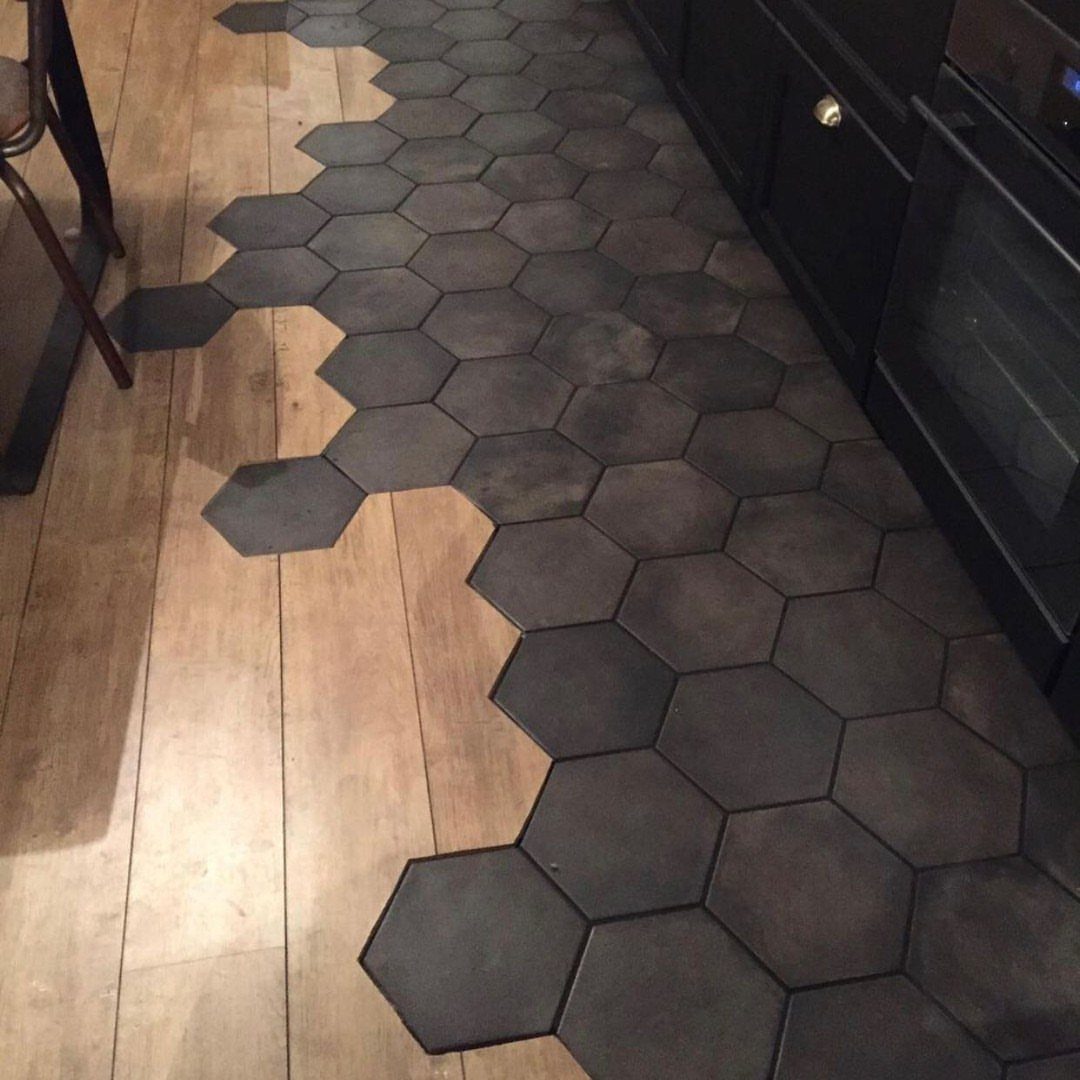
A jagged transition between hexagonal tile and wood plank reads as intentional only if the boundary keeps moving; a straight line between the two materials looks like a mistake you are trying to disguise.
The irregular edge works because the hexagons vary in depth along the joint, creating pockets that read as organic rather than sloppy.
I would lay the wood plank field first, then dry-fit the hex border without mortar until the curve feels balanced from both doorways.
Dark hex against light wood handles the contrast better than matching tones, which blur the boundary into visual mud. This is a pattern for patient installers; the cuts are many and none of them repeat.

Tips:Due to the different screen materials of different devices, the color of the product you see and the actual product may be inaccurate. Color appearance may vary due to screen calibration, lighting conditions. Please refer to the actual product

Nexus Vinyl Tiles: Refresh your home for a low cost and no hassle with the Nexus Vinyl Floor Tiles. Our tiles can be used in any room in your home including the kitchen, dining room, bedrooms, bathrooms, foyers, and basements. No messy glue or adhesives needed. Includes 20 vinyl tiles.

Texture & Durability: Want to refresh your space fast but tired of peel and stick floor tiles that look fake or peel up after days? This one delivers realistic texture and stays put. With upgraded matte craftsmanship, the vinyl flooring replicates authentic wood grain to fit any home decor. and its high-quality multi-layer reinforced PVC makes it 100% waterproof, flame-retardant, scratch and abrasion resistant
5. Wood Strip and Diamond Tile
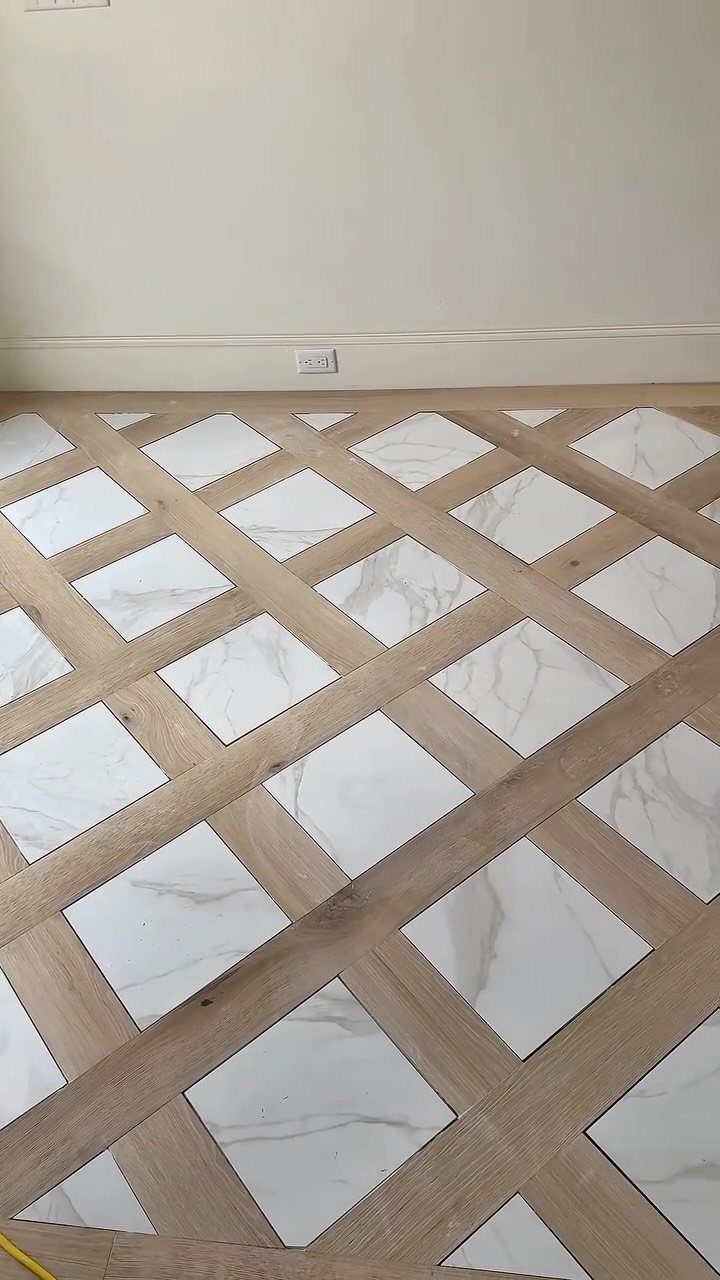
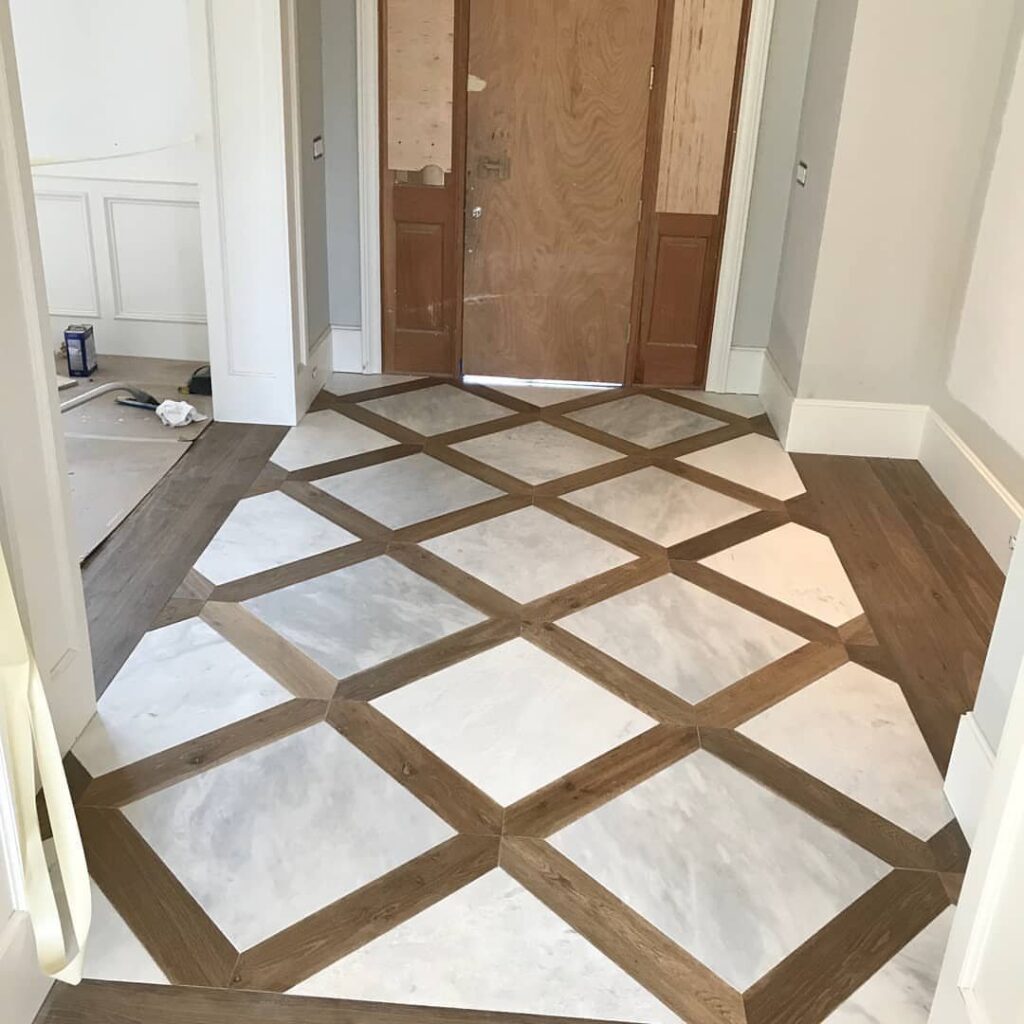
Wood strips laid in a grid with square tiles set diagonally inside each square turn the floor into a lattice of diamonds.
The visible version uses marble-look tile, but the pattern works with any square that contrasts enough with the wood tone to read as geometry rather than noise.
Strip width matters more than tile size here; too narrow and the wood becomes grout line, too wide and the diamonds shrink to postage stamps.
I would mock up one full repeat in the actual materials before ordering, since the math changes fast with different plank widths.
Rooms with simple furniture layouts suit this best; a coffee table or rug centered on the grid completes the effect, while cluttered spaces fight the pattern for attention.

✔ Self-adhesive: Floor cover strips are easy to install. Simply peel off the adhesive back and stick to a smooth surface with high viscosity and long-lasting. There is no need to punch holes in the floor and it will not damage the floor.

UPGRADED RUG GRIP TAPE DESIGN - Our new slot-style design allows your carpet to securely snap into place within the edge trim, preventing any shifting or curling. This innovative feature ensures your carpet stays neat, tidy, and safe, eliminating tripping hazards

Self-adhesive:Floor transition strip are easy to install.Simply peel off the adhesive back and stick to a smooth surface with high viscosity and long-lasting.can be used in doorways, room entryways or any uneven flooring
6. Wood Frame Inset Tile Pattern
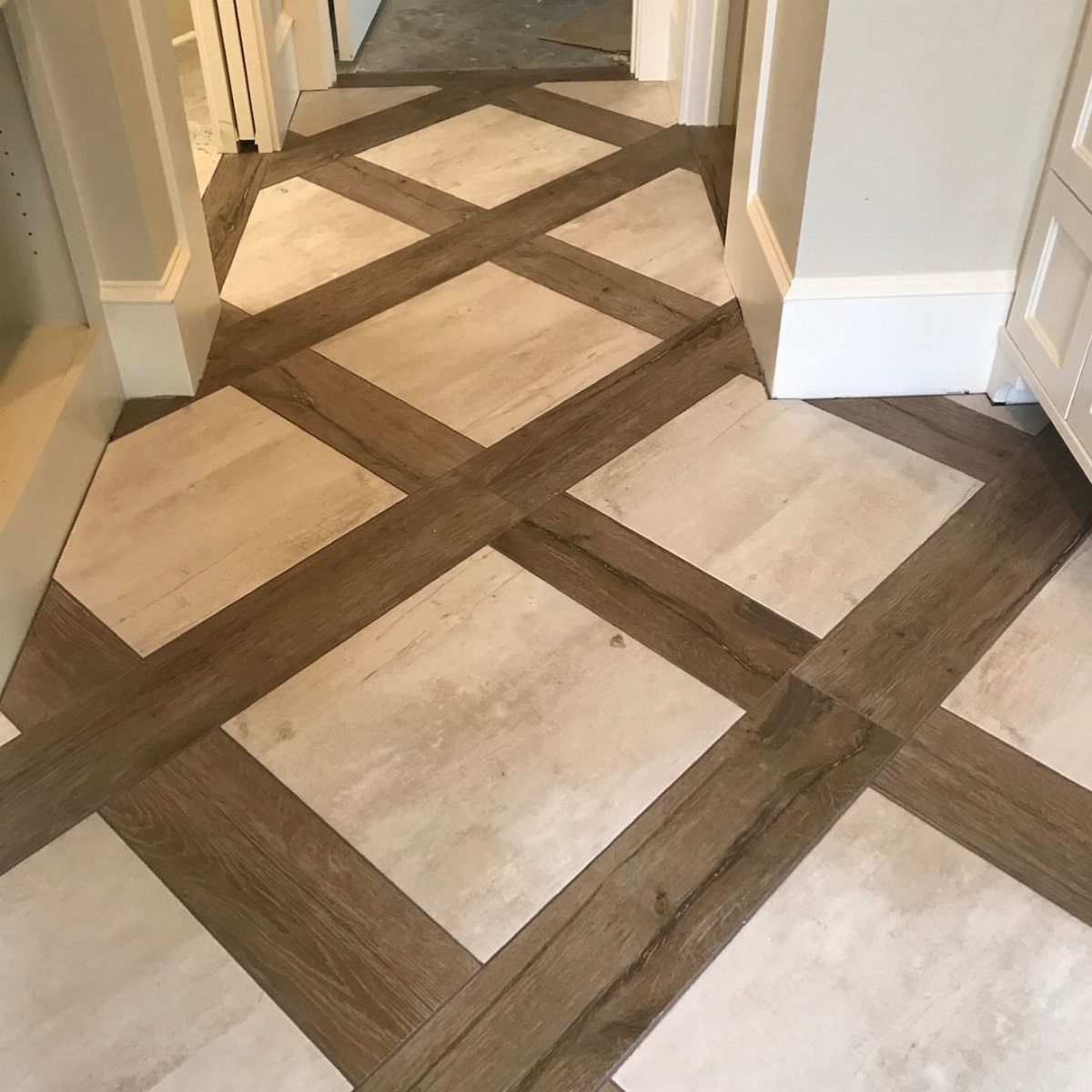
Dark wood strips crossing at angles to frame lighter square tiles give a hallway the feel of a deliberate path rather than merely a route between rooms.
The diagonal grid reads as more formal than a straight basketweave, but the construction is similar: establish the first angle, check it square, then mirror it.
I would start from the center of the longest sightline and work outward; halls narrow at one end will skew the grid if you begin at the closed end.
Light tile against dark wood keeps the inset reading as recessed panel rather than floating island. This pattern demands more cuts per square foot than plain plank, so budget the extra tile and the extra day.

Angle ruler--suitable for woodworking, adjusting angles of , construction, drawing, etc,Carpentry Protractor Tool
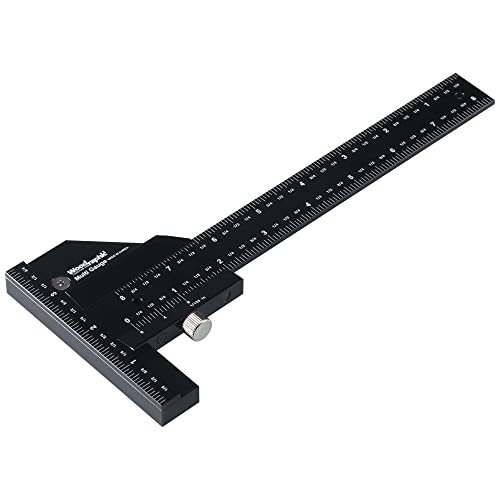
✔️ All-in-One Measuring & Marking Tool Combines layout, thickness, internal and external measurements, and scribing in one compact precision tool.
Benefits of Wood-Look Tile
Wood-look tile gives you the grain and warmth of hardwood without the upkeep that drives owners crazy.
Porcelain stands up to dogs, kids, and dropped pots in a way oak simply cannot, and you never face sanding or refinishing down the line.
The upfront cost runs lower than real wood most of the time, and the savings hold because maintenance stays minimal.
You can run it with radiant floor heating if you want warm feet in January, and moisture is not the enemy it would be in a hardwood kitchen or bath.
Colors range from pale ash to deep walnut, so the tone you pick can open up a small room or cozy up a large one.
Cadore offers the allure of a wood-look product in ultra-durable 14 mm-thick tiles, ensuring a breaking load three times greater than traditional 10 mm-thick stoneware.

Nexus Vinyl Tiles: Refresh your home for a low cost and no hassle with the Nexus Vinyl Floor Tiles. Our tiles can be used in any room in your home including the kitchen, dining room, bedrooms, bathrooms, foyers, and basements. No messy glue or adhesives needed. Includes 20 vinyl tiles.

【Premium Thickened Vinyl Flooring Roll】Experience our 1.5mm thick vinyl flooring roll with 5 layers for enhanced quality. It's non-slip, non-fading, and provides thermal insulation. Measuring 23.6" x 196", it covers 32 sq ft without snap-lock installation, making it hassle-free and stylish.
Common Installation Challenges
Plank tile almost always arrives with some bow to it. The center crowns slightly higher than the edges, which is just how the firing process works.
Pair that with an offset pattern and you get lippage: one tile edge sitting proud of the next, catching socks and showing shadows across the floor. The real fix happens before you set the first tile.
A level subfloor matters more here than with smaller formats. Fast-setting substrate buys you the flat base that keeps the finished surface from looking wavy.
Catching a tilt early means adjusting mortar, not pulling tile later.

【 Durable Brass Material 】 This product is made of high-quality brass to ensure durability and reliability. The surface is anodized, which has excellent waterproof, rust-proof and fade-proof properties for long-term use

After-sales service: please feel free to contact us if you have any problems with your order. We will answer and resolve your questions in 24 hours.

【Multi-Purpose Transition Strips】: Portable entrance reducer great for elderly residential home, carpet to bathroom doorway, sweeping robot, threshold transition between carpet and floor tiles, floor to carpet, carpet to floor and edge trimming decoration.
Tile Size and Format
Plank shapes dominate wood-look tile, but they are not the whole story. Square formats exist for patterns like the strip-and-diamond grid, and specialty shapes such as chevrons give you built-in geometry without cutting standard planks on site.
Large format tiles have grown more common as printing technology improved, letting a single plank carry more realistic grain variation. The format you choose shapes what patterns are even possible.
Herringbone needs rectangular planks. A hex transition needs hexagons.
Match the tile shape to the pattern before you order, because retrofitting the wrong format is not a project you want.
Maintenance and Care
Cleaning wood-look tile is straightforward. Sweep or vacuum the grit that scratches any surface, then mop with whatever cleaner your grout manufacturer allows.
No waxing, no oiling, no annual ritual. The porcelain glaze handles moisture, stains, and the abrasion of daily life in kitchens and entryways that would punish real wood.
Busy households get the look they want without scheduling maintenance around seasons. The only real attention goes to the grout, which darkens with neglect in any tile floor.
Seal it on schedule, and the rest takes care of itself.
Frequently Asked Questions
What pattern to lay wood look tile?
A staggered plank layout reads as traditional hardwood, while herringbone pulls the eye along in tight spots like galley kitchens or long entryways.
Running bond opens up large rooms with steady light, and a 33% offset keeps bowed porcelain planks from showing their high and low spots. The Italian herringbone version keeps waste reasonable for first-timers since it skips angled end cuts.
Is wood tile still in style?
Wood-look tile remains one of the most popular flooring choices for modern homes, with options ranging from classic plank styles to parquet and chevron patterns.
Porcelain versions handle wet areas and high-traffic floors where real wood would fail, and the variety of brown and beige shades keeps the look current.
Wood-look tile has settled in as a practical choice for kitchens, bathrooms, basements, and open living areas rather than a passing style.
What are the downsides of wood-look tiles?
Bowed tiles, common in fired porcelain, stack their high and low points at certain offsets and telegraph every imperfection across the floor.
The 33% offset breaks up that alignment, but you still need to check early rows with a straightedge before the mortar sets.
Grout cleanup takes extra attention too, since raised grain textures cling to residue and demand quick wiping before it hardens.
What is the most realistic tile that looks like wood?
High-quality porcelain with varied grain patterns and textures offers the most convincing substitute for natural hardwood.
Random grain placement sells the look: repeating the same plank in a predictable rhythm is what makes a floor read as tile instead of wood.