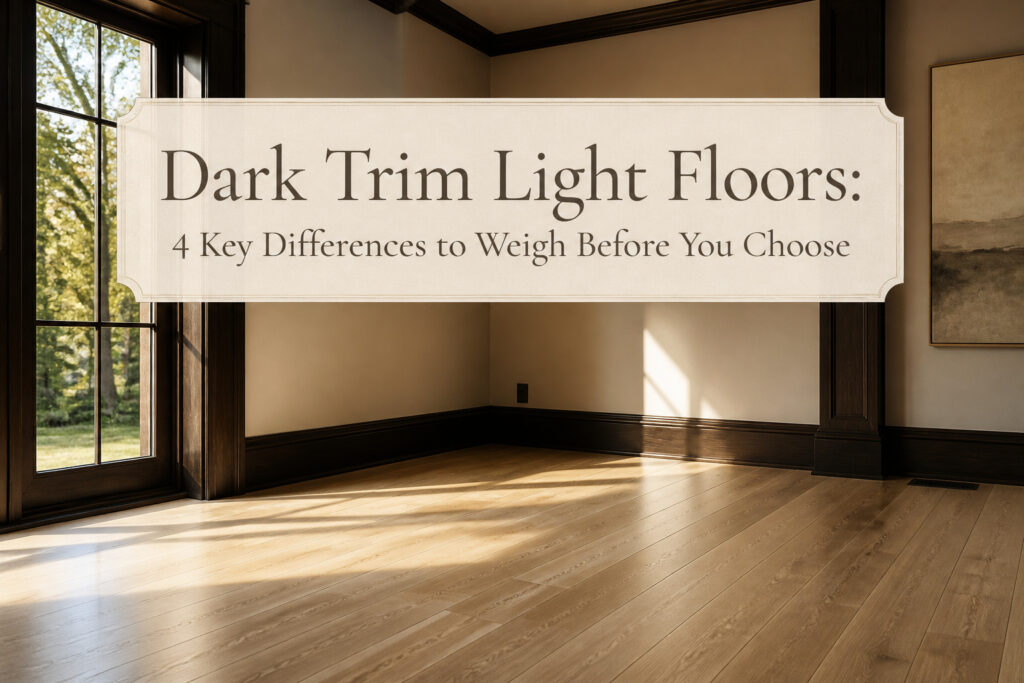
Dark trim with light floors wins for anyone caught between airy openness and architectural weight, though the pairing costs you a weekend of careful prep work.
The condition that flips it: satin sheen on baseboards catches afternoon sun at the wrong angle and exposes every brush stroke, so you need semigloss and a 2-foot test patch across three daylight conditions before committing.
I learned that the hard way with Benjamin Moore Advance in Black Panther, an $87 gallon that covered a 12 by 14 living room after I sanded my first attempt back to bare wood.
[link-whisper-related-posts]Visual Impact and Room Size
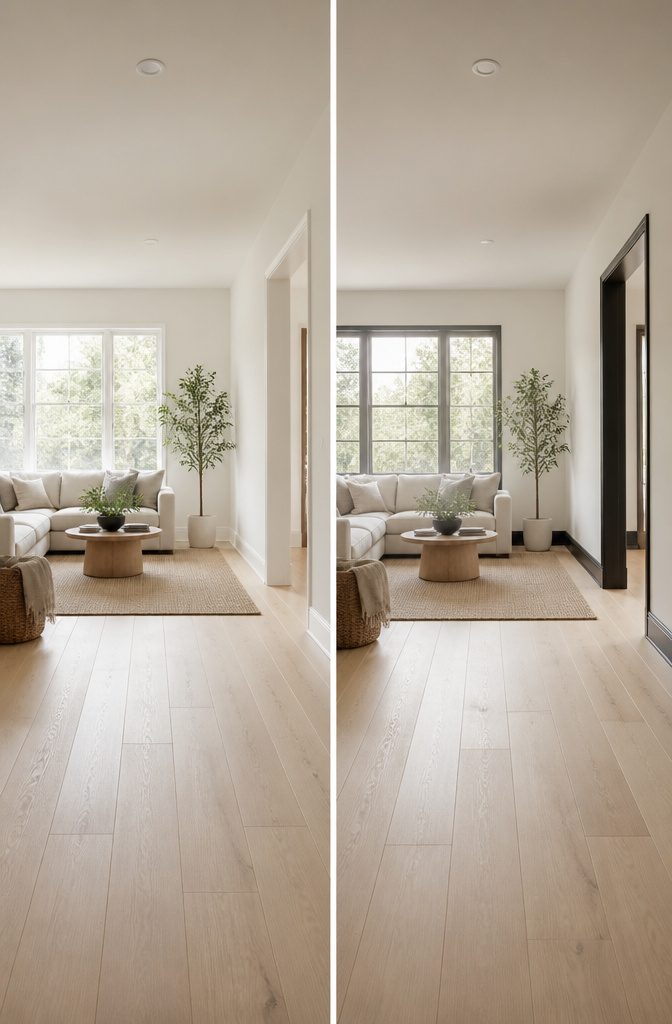
Light floors reflect more light back into the room, which pushes the walls outward visually and keeps a space from feeling boxed in.
Dark floors do the opposite; they absorb light and pull the perimeter inward, creating intimacy that helps when a room feels too cavernous.
The dark trim light floors pairing splits the difference in a useful way: the base stays bright and expansive while the trim at eye level and below adds weight that keeps the room from floating away.
That anchoring effect matters more than most people expect. Dark floors with light walls can make every board seam and transition line stand out in high contrast, which breaks the floor into stripes and chops the space up visually.
Dark trim with light flooring keeps the contrast vertical, where the eye reads it as frame rather than division.
The result reads larger than dark floors throughout, because the light ground plane stays continuous and the dark elements read as border rather than bulk.
| Combination | Spatial Effect | Best For |
|---|---|---|
| Light floors, dark trim | Open floor, anchored walls | Mid-size rooms that need definition without closing in |
| Light floors, light trim | Maximum expansion, minimal contrast | Small rooms needing every visual inch |
| Dark floors, light trim | Intimate, grounded; seams more visible | Large rooms that feel impersonal |
| Dark floors, dark trim | Enclosed, dramatic | Very large spaces or rooms with abundant natural light |
Ideal to fill gaps, nicks and scratches on wood, laminate and vinyl flooring

Premium PVC Material - Lightweight, durable, and water-resistant. Not wood, ensuring long-lasting quality and performance.
Cleaning and Upkeep
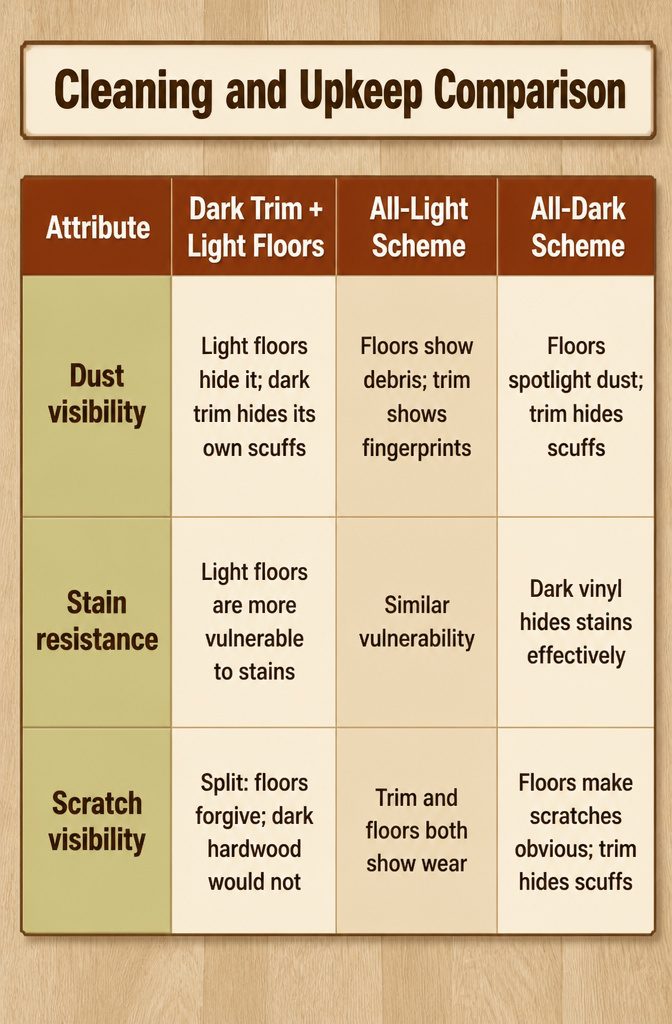
Light floors carry the heavier cleaning load in this pairing, but not by much. Satin finish on any hardwood hides dents and scratches better than gloss; that matters more than the stain color itself.
Dust sits visibly on dark hardwood floors, while light oak or pine forgives a few days of traffic. Dark trim behaves the opposite way: scuffs and fingerprints that plague pale painted trim disappear into espresso or charcoal boards.
| Attribute | Dark Trim + Light Floors | All-Light Scheme | All-Dark Scheme |
|---|---|---|---|
| Dust visibility | Light floors hide it; dark trim hides its own scuffs | Floors show debris; trim shows fingerprints | Floors spotlight dust; trim hides scuffs |
| Stain resistance | Light floors are more vulnerable to stains | Similar vulnerability | Dark vinyl hides stains effectively |
| Scratch visibility | Split: floors forgive, dark hardwood would not | Trim and floors both show wear | Floors make scratches obvious; trim hides scuffs |
Dark vinyl earned its spot in basements and playrooms because stains vanish into it.
But vinyl scratches show against the intense tone, and the room feels smaller. The split scheme keeps the spacious feel of light flooring without sentencing you to wipe fingerprints off white baseboards every Saturday.
Screen and recoat hardwood every three to four years either way; sun through windows fades light natural wood faster than it does ebony, so the maintenance cycle matters more for the floor than the trim.

ALL-IN-ONE PAINT AND PRIMER: Saves time and effort by priming, sealing, and finishing in one step for smooth, efficient coverage
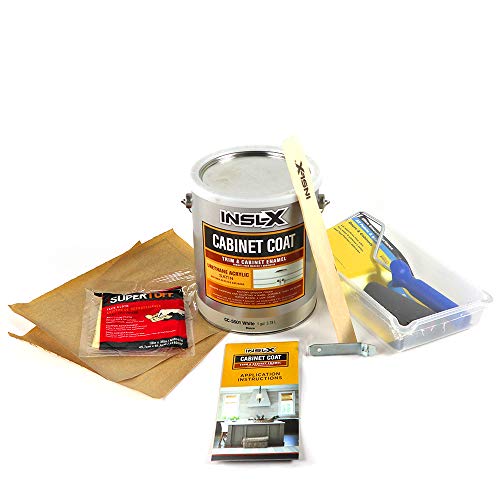
The ultimate acrylic cabinet paint for a “factory-like” finish when refurbishing kitchen and bathroom cabinets, shelving, furniture, trim, and crown molding.

Furniture and Decor Compatibility
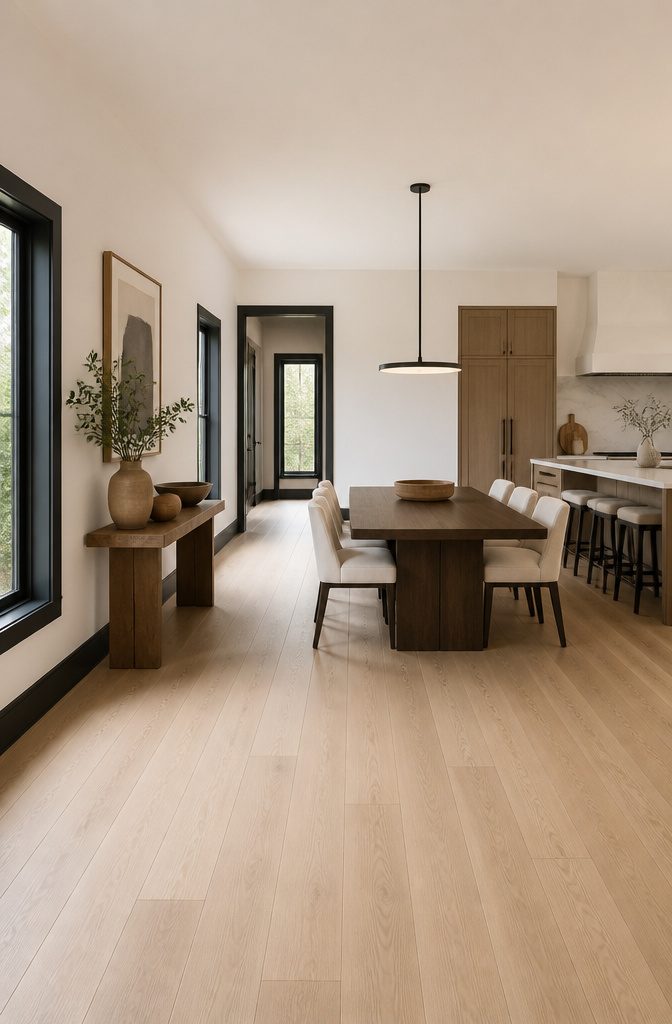
A dark floor against pale walls and furniture gives you instant contrast that reads as depth, almost like a stage set.
The light pieces float; the floor anchors them. Flip that to light floors, and the room opens up, airy, modern, the furniture settling in rather than levitating.
Dark trim with light floors works differently than either single-tone scheme. The trim becomes a frame, a visual baseboard that grounds whatever you put in the middle.
A charcoal oak chair rail or baseboard against bleached pine floors holds both a walnut dresser and a white linen sofa equally well. The contrast is built in, so your pieces do not have to supply it.
Light floors give you more flexibility with wood tones in furniture precisely because they stay neutral. A mid-century teak credenza, a farmhouse pine table, a blackened steel console: none of them fight with pale oak underfoot.
That same freedom comes with a catch. Lighter natural hardwoods fade more quickly than darker hardwoods, so the floor you match your oak dining table to this year may shift warmer and paler by year five.
Dark floors keep their color longer; ebony or mahogany holds steady while natural pine or oak drifts with sun exposure.
Screen and recoat every three to four years slows it, but the fade is still a factor if you are building a room around a specific wood tone match.

Use for a variety of indoor and outdoor project surfaces including wood, metal, plaster, masonry or unglazed ceramic

Use for a variety of indoor and outdoor project surfaces including wood, metal, plaster, masonry or unglazed ceramic

Easy Renovation: The white paint pen features a built-in brush head, requiring no additional tools—simply open the cap and apply. It quickly covers and repairs surface imperfections, creating a clean, like-new finish with ease. Ideal for non-professionals tackling home improvement projects
Atmosphere and Mood
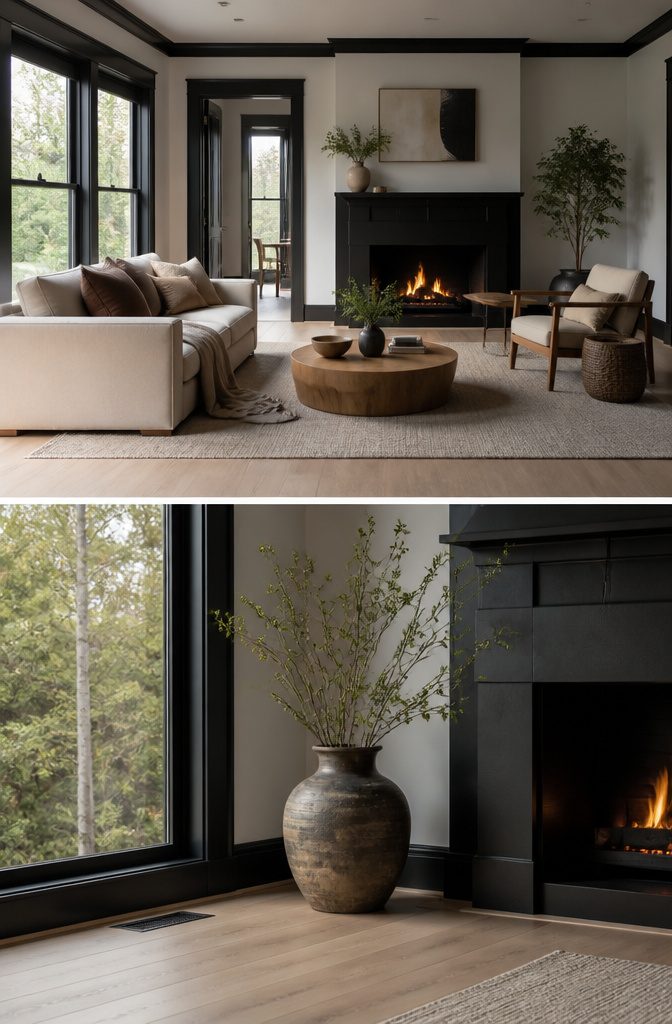
Dark floors pull a room inward, creating a cozy, intimate atmosphere when you balance them with the right lighting and wall colors. Light floors do the opposite, reflecting light outward to make a space feel airy and open.
The pairing of dark trim with light floors sits in a useful middle ground: the trim adds weight and architectural definition, while the pale flooring keeps the room from feeling heavy or closed off.
I noticed this most clearly in a friend’s recent update, where black window casings against bleached oak gave her living room a layered, intentional look that neither all-dark nor all-light combinations achieve.
The combination works both ways, warming up a stark modern space or giving traditional rooms a cleaner, more current edge without stripping their character.

Provides floor with stain-resistance from food and drink spills and tracked-in dirt.
EASY TO USE | READY TO USE: Quick and easy application - Apply to clean, dry hardwood floors for a renewed finish and lasting polish

Clean, Shine & Restore: Professional hardwood floor cleaner and polish bundle removes dirt, grime, and scuffs while restoring the natural beauty of finished wood floors without leaving a sticky residue.
Wood Types and Materials That Work
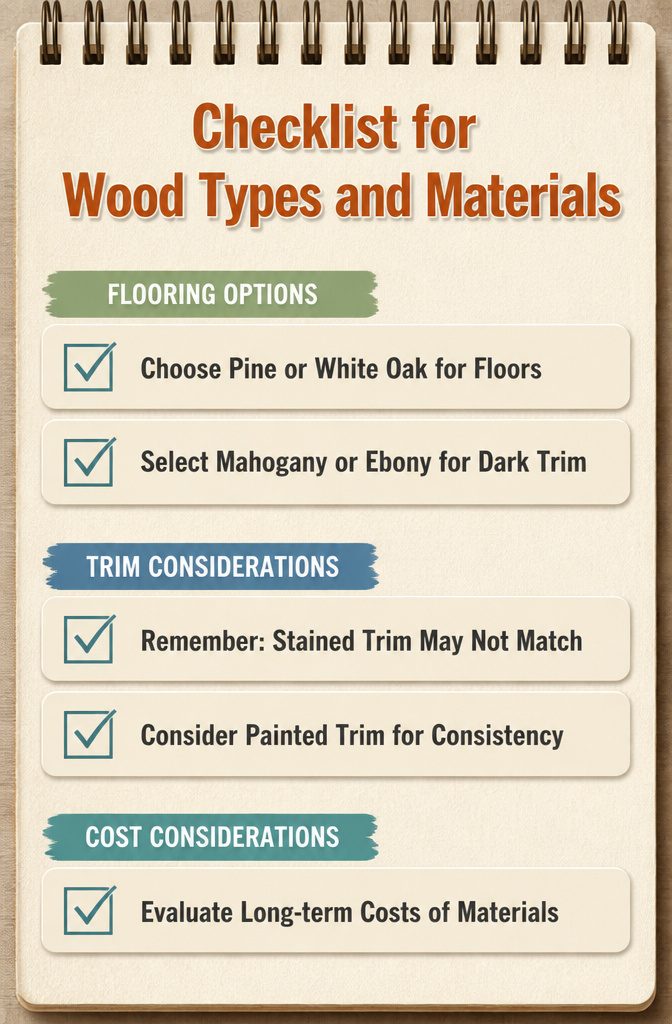
Wood species matter more with dark trim light floors than most pairings, because the contrast is already doing visual work and every undertone shows.
- Pine or white oak for the floors keeps the space open. Pine runs warmer and softer underfoot, which is nice in bedrooms but dents faster. White oak holds up better in entryways and kitchens where traffic is heavy. Either one enlarges a smaller room the same way, so the choice is really about how hard you live on the floor.
- Mahogany or ebony for dark trim grounds the room without going black. Mahogany carries red undertones that read traditional; ebony reads cleaner and more modern. Both make a large room feel smaller and cozier, so reserve them for spaces that can handle the weight.
- Stained trim never matches flooring exactly across different species. Oak trim stained to match mahogany baseboards still looks like oak in afternoon light. I stopped trying. Painted dark trim wins for consistency because the color is uniform, the grain stops competing, and touched-up dings disappear.
- Painted trim also costs less long-term. You are not paying for premium hardwood just to stain it darker, and touch-up paint beats matching stain on a chipped door casing.
【Multi-Purpose Water-Based Paint】: Vigorder white touch up paint requires no sanding, primer, or multiple coats—achieve a perfect finish in just one step. Easily refresh furniture, door frames, and other painted surfaces

✅【PREMIUM WHITE PAINT HOME REPAIRS】 Our white paint is specially formulated for quick touch-ups on household surfaces. This white paint works perfectly to cover small chips, scratches, scuffs and stains on walls, cabinets, wooden doors and furniture. Unlike bulky large cans of wall paint, this compact white paint is made for spot repairs instead of full-room painting.

🎨 All-in-One Wall Paint Touch-Up Kit: Everything you need in one kit—specially formulated white paint for wall, roller brush, detail brush, gloves—just unseal, attach, and apply. This high-quality white wall paint delivers smooth, streak-free coverage for stains, scratches, and scuffs. Ideal as a wall paint touch-up solution for quick drywall paint repairs after kids' messes or moving in.
What the 2023 Trend Actually Shows
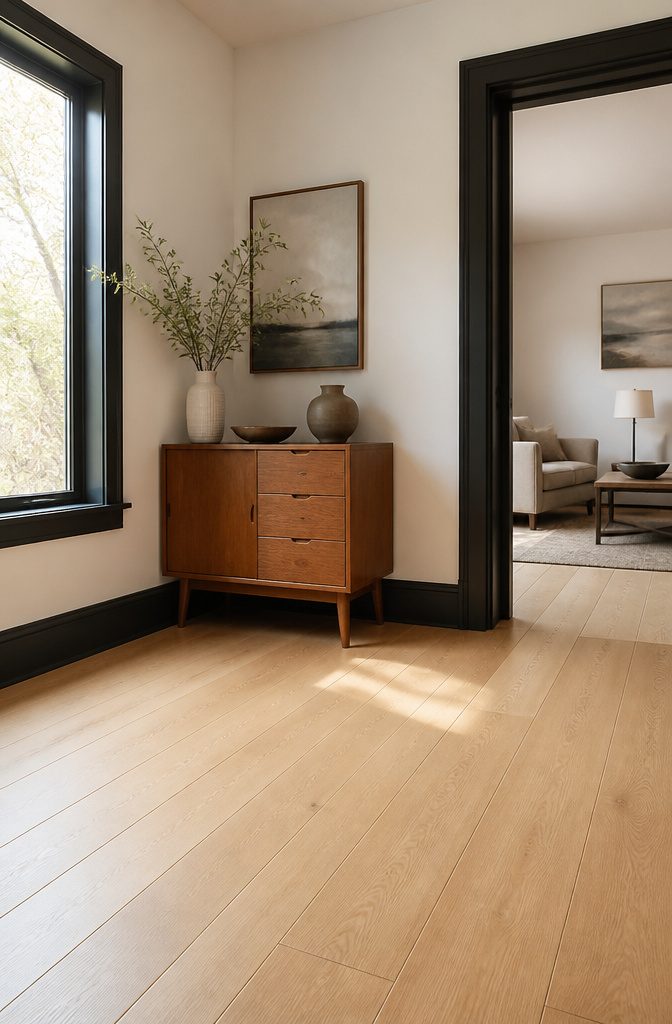
Dark floors still hold their place in 2023, but the all-dark look has started to feel dated in ways that the dark trim and light floor pairing simply hasn’t.
The difference comes down to where each trend borrowed from. One rode a wave; the other pulled from actual architecture.
I noticed this first in a friend’s 1920s bungalow. Her original oak floors had been lightened by decades of wear, but the window trim and baseboards stayed that deep, almost-black brown.
The combination felt settled, not staged. That is the shift worth tracking: dark trim with light floors outlasts the all-dark floor trend because it references classic millwork rather than following a cycle.
For renters, this matters practically. You usually cannot swap out flooring, but trim is paintable in a weekend.
A gallon of deep charcoal or soft black on baseboards and door casings gives you the contrast without touching the floors your lease covers. The maintenance burden shifts too.
Dark floors show dust and pet hair constantly; dark trim hides it. Light floors forgive what dark ones broadcast.
The YouTube walkthroughs from owners working with dark wood note the same split. They solve light absorption with rugs and wall color, but the ones who started with light floors and added dark trim seem to skip that problem entirely.
The light surface already does the reflecting. You are adding definition, not fighting gravity.

Use on wood, cork, tile, resilient, and other hard surface floor coverings.

DAP Dynaflex 230 sealant is Silicone tough with superior flexibility and crackproof performance

【Durable Material】The floor transition strip is made of high quality PVC material, durable and flexible. The size of laminate floor joining strip is approx. 39.4in long, 2in wide and 0.13in thick, which is not easy to trip over with its suitable size and proper height.
My Own Weekend’s Mistakes and Fixes
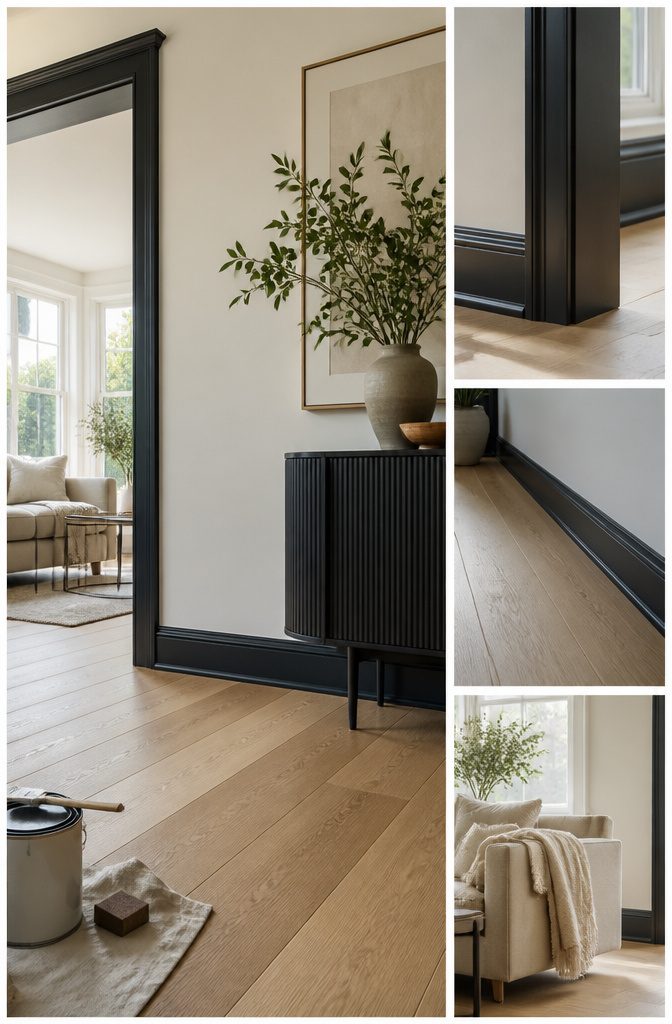
Satin sheen on baseboards was my first mistake with dark trim light floors; I thought it would hide scuffs, but it showed every one.
By Saturday evening, the afternoon sun hit them at exactly the wrong angle and every brush stroke showed up like a neon sign. The contrast with my pale oak LVP was supposed to look crisp; instead it looked careless.
Sunday morning I sanded back to bare wood and started over with Benjamin Moore Advance in Semigloss, color Black Panther.
The higher sheen actually reads smoother to the eye, and the $87 gallon covered all the trim in my 12 by 14 living room with enough left for touch-ups.
Total project sat around $340 including putty, sandpaper, and a second angled brush after I ruined the first one by rushing the cleaning.
What I had not accounted for was how the light floor bounced color upward. The trim looked almost navy in morning light, pure black by dusk.
If I did it again, I would paint a 2-foot test section and live with it across three daylight conditions before committing. That single change would have saved me eight hours and the cost of a second can.
Frequently Asked Questions
Is the era of dark floors over?
No.
In 2023, dark floors still radiate timeless elegance and generate striking contrast, but the all-dark look has started to feel dated. The dark trim light floors pairing outlasts that trend because it references classic millwork rather than following a cycle.
Which is easier to maintain, dark or light floors?
It depends on what you are cleaning. Light floors hide dust and forgive a few days of traffic, while dark floors spotlight every speck.
Dark trim behaves the opposite way: scuffs and fingerprints vanish into espresso or charcoal boards that plague pale painted trim. The split scheme balances the burden.
How does wood color influence room size perception?
Light-colored wood like pine or white oak reflects more light back into the room, pushing walls outward visually and enlarging a smaller space.
Dark wood absorbs light and pulls the perimeter inward, making a vast room feel more intimate. Medium-sized rooms can handle either or a walnut stain in between.
What type of flooring goes well with dark trim?
Light floors pair best with dark trim.
Pine or white oak keeps the space open and bright, while the trim adds weight and architectural definition at eye level and below. The contrast stays vertical, where the eye reads it as frame rather than division.
Should baseboards be lighter or darker than floors?
Darker trim against light floors anchors the room without closing it in.
The base stays bright and expansive while the trim adds weight that keeps the space from floating away. Dark floors with light trim have the opposite effect, absorbing light and making seams more visible.
Are dark wood floors out of style?
Dark wood floors themselves are not out of style, but the all-dark floor trend has begun to feel dated.
Pairing dark trim with light floors avoids that problem by borrowing from actual architecture and classic millwork rather than riding a trend cycle.