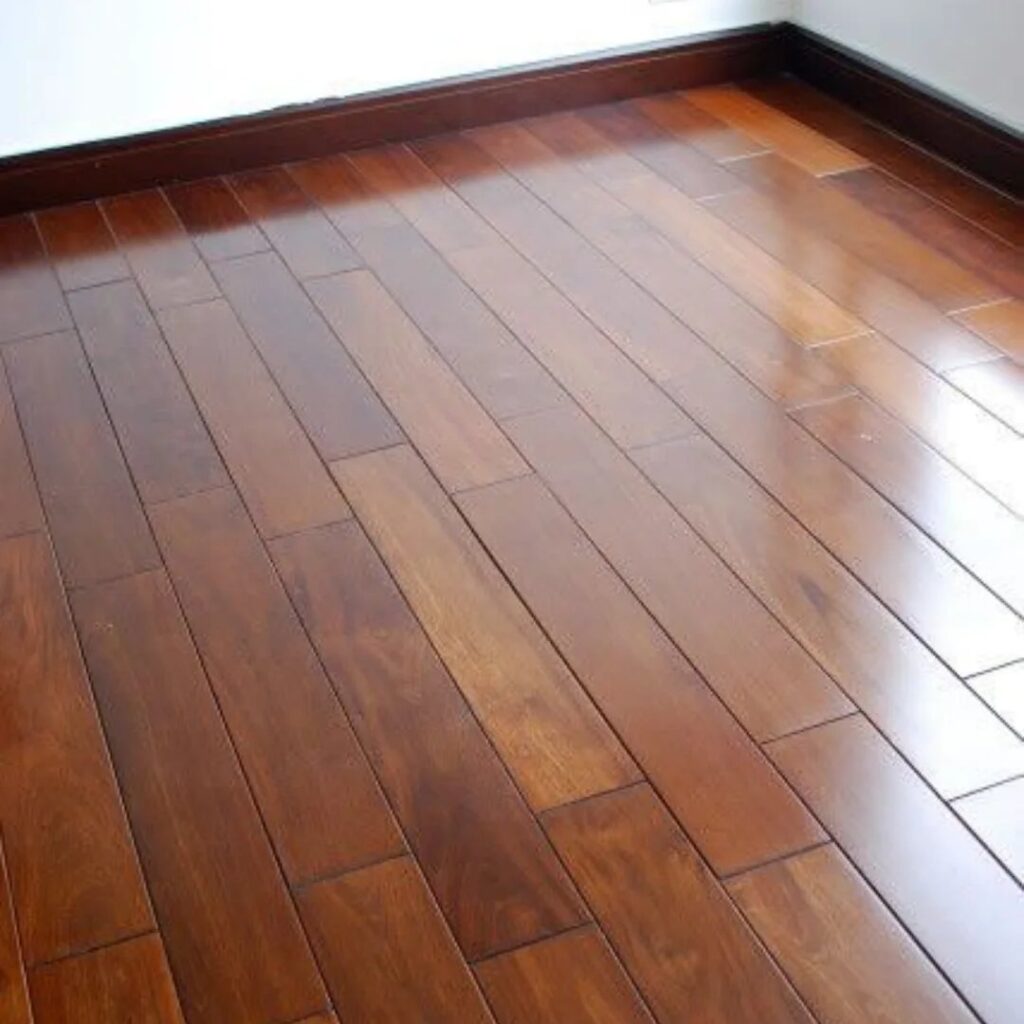
A random wood floor pattern can mean planks staggered across a Saturday install or small blocks laid in a basket weave that needs careful attention at every corner.
The deciding factor is how much precision your room and your patience can handle: a forgiving subfloor lets you hide behind variation in a random length layout, while a flat one invites the tight geometry of herringbone or chevron that shows every line.
Herringbone alone shifts from 90-degree overlaps to mitered 45-degree seams, and that single angle change doubles both the material waste and the installation complexity.
[link-whisper-related-posts]1. Herringbone Pattern
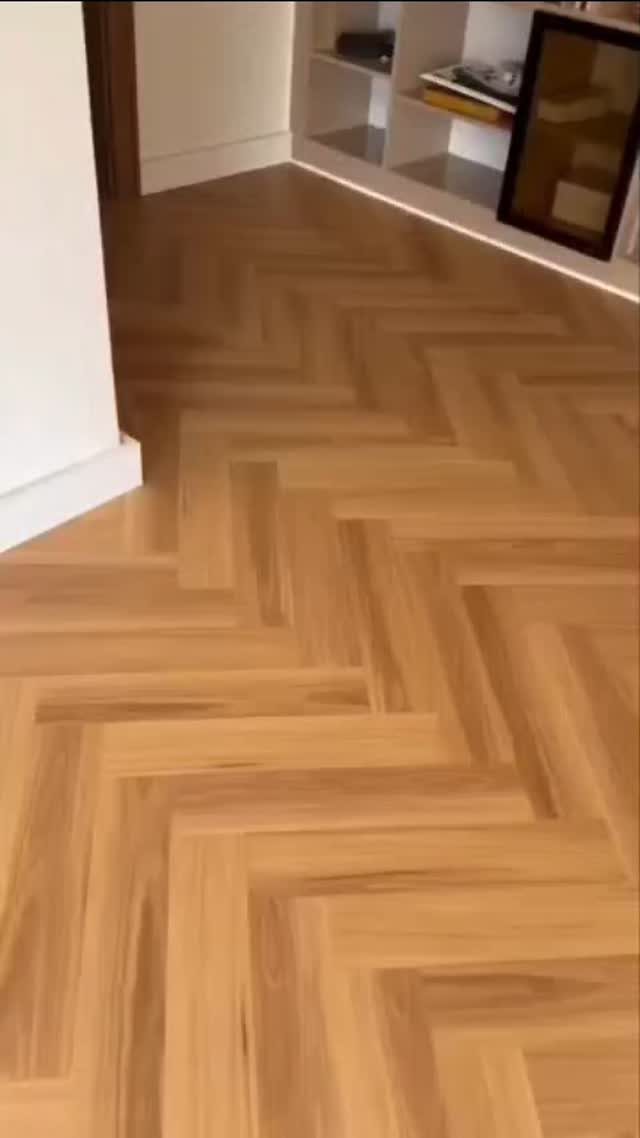
Roman builders laid bricks in this zigzag for roads; centuries later, French parquetry brought it indoors. The planks meet at 90 degrees and overlap rather than miter, which distinguishes it from chevron.
That joint hides minor imperfections in the cut and lets the eye travel along the grain.
I would angle this toward anyone who wants elegance without matching a chevron budget.
The 90-degree layout plays light across the floor in a way straight planks cannot, and it works in rooms large enough that the repeat does not feel cramped.
Installation takes patience; each block is laid individually, so labor runs higher than a standard plank job. For a smaller space, I would scale down the plank width rather than the angle.

【Premium Thickened Vinyl Flooring Roll】Experience our 1.5mm thick vinyl flooring roll with 5 layers for enhanced quality. It's non-slip, non-fading, and provides thermal insulation. Measuring 23.6" x 118", it covers 19 sq ft without snap-lock installation, making it hassle-free and stylish.
【Premium Thickened Vinyl Flooring Roll】Experience our 1.5mm thick vinyl flooring roll with 5 layers for enhanced quality. It's non-slip, non-fading, and provides thermal insulation. Measuring 23.6" x 393", it covers 64 sq ft without snap-lock installation, making it hassle-free and stylish.
2. Chevron Pattern
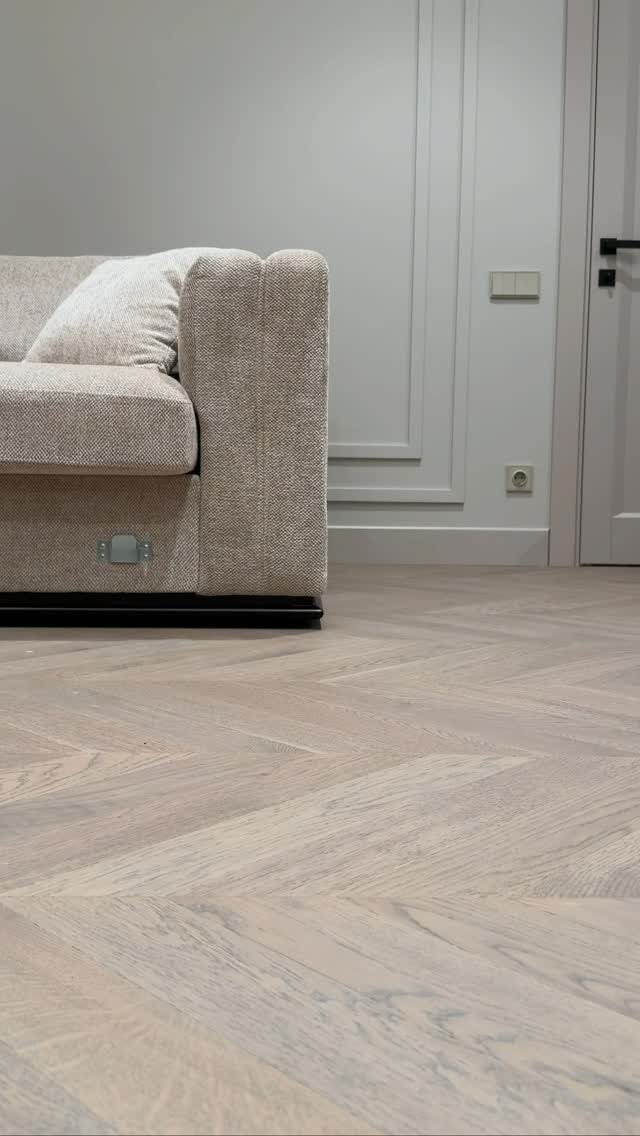
The ends are miter-cut at 45 degrees, creating one continuous V across the floor. That single seam draws the eye straight through the room, which makes a space feel larger than its square footage.
Manufacturers now sell planks pre-cut to this shape, so a homeowner with a nail gun and a weekend can manage what once required a master joiner.
Angled cuts leave more waste than straight ones, and the longer plank sections eat up extra material, so this pattern still costs more than herringbone.
I would run this parallel to the longest wall for a calm effect, or diagonally if the goal is drama.
Either way, the symmetry reads more modern than herringbone, and it suits someone who wants the look of precision without the formality of parquet.

Stylish - Authentic wood looking and grain texture, adding timeless features to your home
3. Random Length Wood Floor Pattern
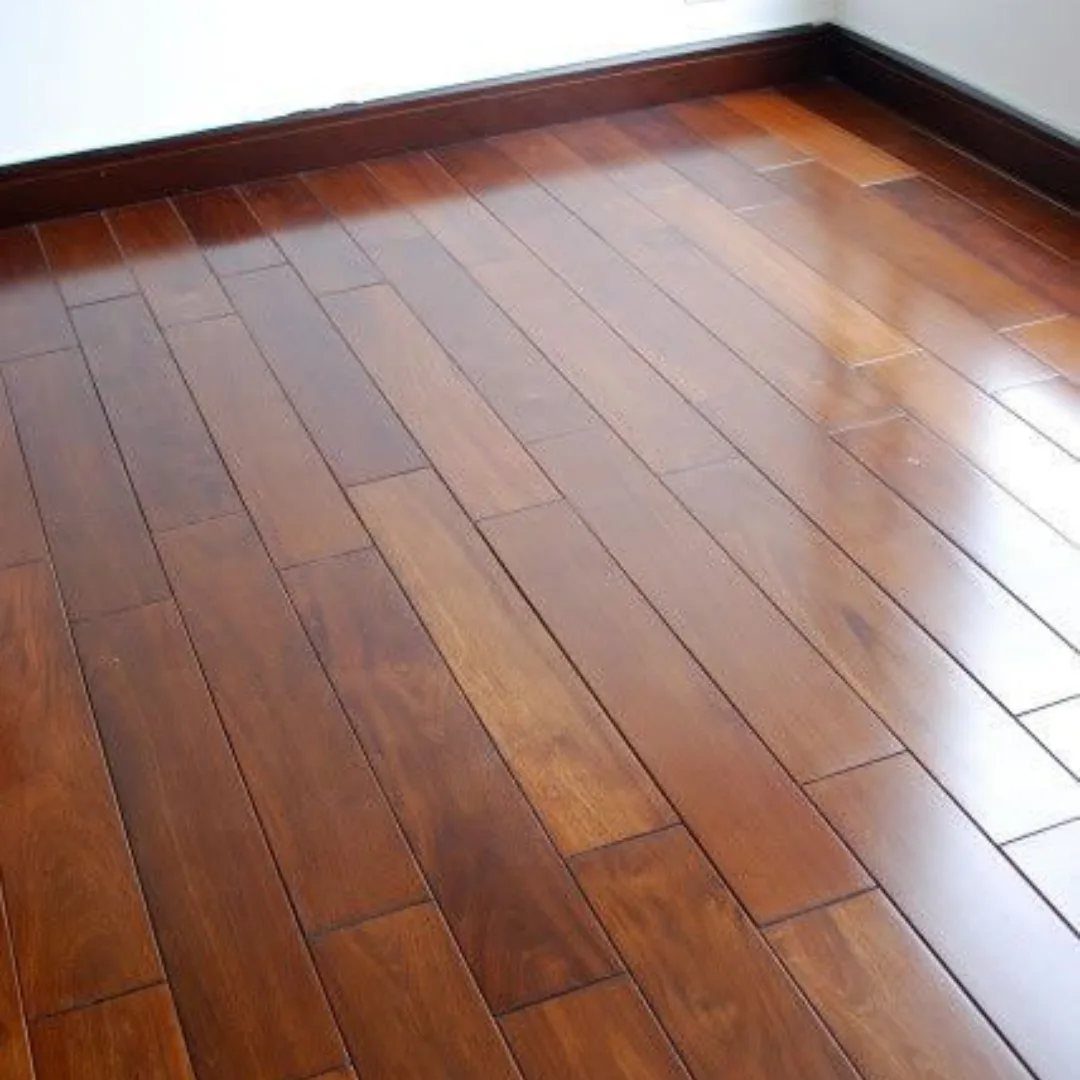
This is the floor most people already live with and never name. Planks of varying lengths stagger in a running bond, no two joints lining up, and the result is the most forgiving install in wood flooring.
The pattern hides subfloor irregularities, shrinks the appearance of gaps that open with seasonal movement, and lets you buy mixed-length bundles that cost less than uniform material.
I would pair random lengths with random widths if the supplier offers them; the added variation reads as texture rather than chaos, and it suits farmhouse through Scandinavian interiors without changing anything else in the room.
A weekend install is realistic for anyone competent with a saw and a flooring nailer.

Timeless Elegance: Parquet flooring adds a touch of sophistication and warmth to any room with its intricate patterns and rich wood tones.

🏠 Wood flooring: Thickness is 0.06inch (1.5mm). Size 12x12 inch included 4 Tiles, made of vinyl. Light brown beige tan Laminate wood flooring, waterproof, removable, groutable, non slip, no special tools needed.

Wood Grain Floor Mat (36 Tiles): Provides comfort and cushion to hard floor surfaces with a classic faux wood finish. Includes 36 floor mat wood grain tiles to enhance the comfort and appearance of your space
4. Basket Weave Pattern
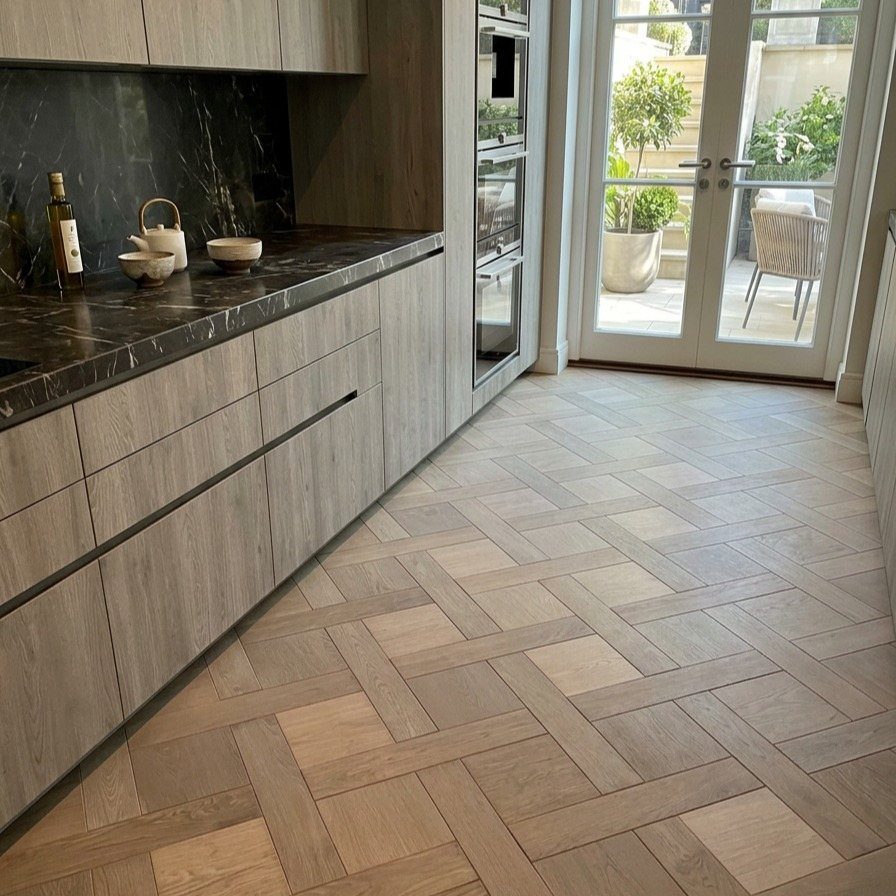
Pairs of planks run perpendicular to each other in alternating squares, creating a surface that looks woven underfoot.
Shipbuilders first used the interlock for strength underfoot, and Arts & Crafts bungalows later borrowed it for the same reason; the pattern still carries that solid, hand-built feel.
Wire-brushed or hand-scraped finishes emphasize the tactile quality, and maple’s tight grain shows the geometry most cleanly. The dense pattern scuffs and dirt less obviously than long runs of plank, which matters in a kitchen or entry.
I would check that my subfloor is flat before committing; the small units telegraph humps that longer boards would bridge.

Premium Design-Led Aesthetic: Authentic wood visuals in extra-wide 9” x 72” planks deliver a high-end, modern finish that elevates any space. Enhanced-Beveled edges highlight each plank for a premium look.
5. Wood Parquet Geometric Pattern
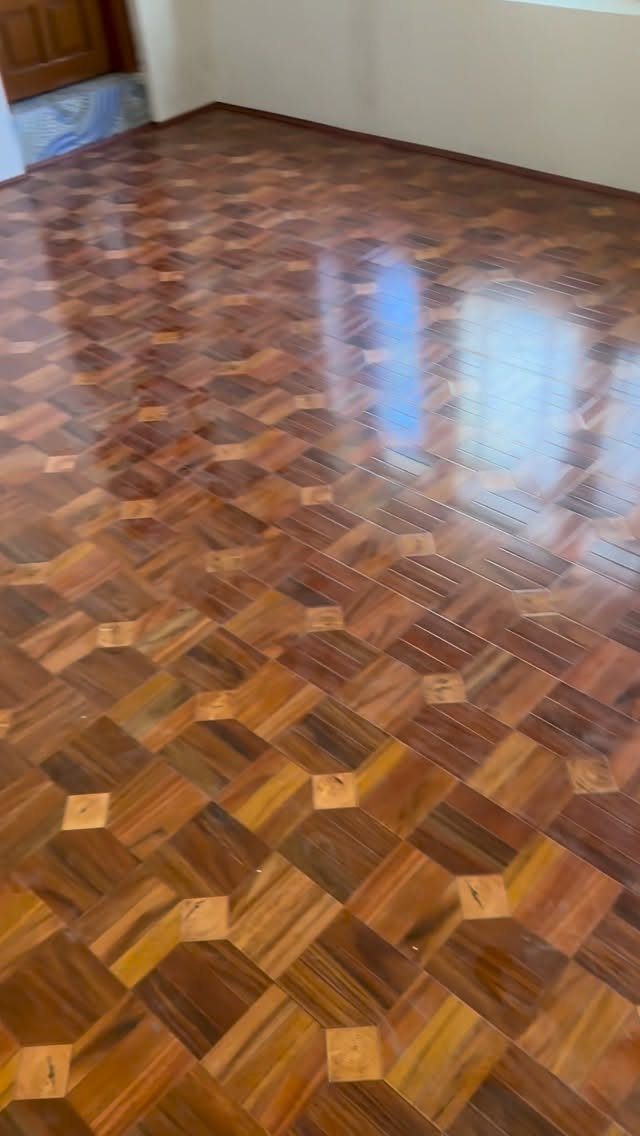
Small blocks of light and dark wood form repeating motifs, octagons and squares, and the contrast comes from the species themselves, not from any stain or finish applied after.
Parquet was first laid in French chateaus to mask wavy old subfloors, and the same busy geometry still distracts the eye from minor unevenness in aging homes.
A gloss finish this reflective needs constant care; scratches catch light immediately, and refinishing means finding someone who can sand around delicate borders without chewing through the pattern.
I would reserve this for a formal room where the floor is meant to read as art, and I would keep furnishings minimal to let the geometry breathe.

Tips:Due to the different screen materials of different devices, the color of the product you see and the actual product may be inaccurate. Color appearance may vary due to screen calibration, lighting conditions. Please refer to the actual product
【Premium Thickened Vinyl Flooring Roll】Experience our 1.5mm thick vinyl flooring roll with 5 layers for enhanced quality. It's non-slip, non-fading, and provides thermal insulation. Measuring 23.6" x 196", it covers 32 sq ft without snap-lock installation, making it hassle-free and stylish.

Installation Complexity
Herringbone and chevron both demand more from the installer than a straight run of plank. Herringbone needs each block set individually at 90 degrees, and the cuts hide imperfections but still take time.
Chevron needs every end cut at 45 degrees, and even with pre-cut planks and a nail gun, your layout lines have to be right or the whole thing drifts.
A standard plank floor can be knocked out in a weekend; these patterns stretch to several days even for someone who knows the saw.
Basket weave and parquet geometric break the room into small units, which means more cuts, more seams, and more chances for a hump in the subfloor to telegraph through.
Random length is the exception: staggered joints forgive an uneven surface and a less-than-perfect eye.

Authentic Wood Look: American Oak’s honey hue carries a classic bright warmth through your space; Features beautiful wood-look grain and realistic knots across rich variations of blonde

Stylish - Authentic wood looking and grain texture, adding timeless feature for your home.
Aesthetic Impact
A diagonal layout at 45 degrees pulls the eye corner to corner and stretches a square room. Chevron does something similar with its continuous V, though the symmetry reads stricter than a true diagonal.
Herringbone, with its overlapping 90-degree blocks, moves light differently; the grain shifts direction block by block, so the floor changes as you walk across it.
Random length is the quietest choice. It does not announce itself, which is why it works across farmhouse to Scandinavian spaces without fighting the rest of the room.
Basket weave reads as solid; the interlock gives it a planted look, and a wire-brushed or hand-scraped finish makes that texture something you feel underfoot.
Parquet geometric wants to be looked at, not walked past, and minimal furniture lets the pattern hold the room.


Premium and Durable: Made of high-quality pure nylon material, durable construction, impact resistant, corrosion-resistant, resistant to bending. Processed with digital machine tools, each plane is guaranteed to be perfectly flat to protect the floor from damage.

𝐇𝐞𝐚𝐯𝐲-𝐃𝐮𝐭𝐲 𝐅𝐥𝐨𝐨𝐫𝐢𝐧𝐠 𝐑𝐨𝐥𝐥: Engineered with a premium 1mm thickness, this vinyl roll is significantly more substantial than standard decorative stickers. Weighing 3.0 lbs, its heavyweight construction ensures the material stays flat and provides a durable, professional-grade finish that easily withstands high-traffic area wear
Cost Considerations
Pre-cut chevron planks save on skill but not on the bill for wood.
Herringbone costs less than chevron, but both cost more than simple patterns.
For anyone weighing the two against each other, the gap between herringbone and chevron is real but narrower than the jump from either to a basic running bond.

It usually suitable for a classical European style living room, its colors can complement the luxurious carvings and heavy texture of European classical furniture, such as sofas with gilded lines and velvet fabrics, creating a luxurious and atmospheric atmosphere together

Premium Design-Led Aesthetic: Authentic wood visuals in extra-wide 9” x 72” planks deliver a high-end, modern finish that elevates any space. Enhanced-Beveled edges highlight each plank for a premium look.

40 Mil Wear Layer - Twice the commercial standard thickness
Material Waste
Standard plank floors call for 10% extra ordered for cutting and waste. Diagonal and complex patterns push that to 15%.
The 45-degree angle in a diagonal layout trims usable length from every board that meets a wall, and the offcuts pile up faster than they do in a straight run.
Chevron’s mitered ends and longer plank sections compound the issue; the geometry demands more board feet per square foot installed.
Random length is the clear saver here: mixed-length bundles use material efficiently, and the stagger tolerates odd cuts without ruining the pattern.
For a budget that needs to stretch, the math on waste matters as much as the price per square foot.

【Premium Thickened Vinyl Flooring Roll】Experience our 1.5mm thick vinyl flooring roll with 5 layers for enhanced quality. It's non-slip, non-fading, and provides thermal insulation. Measuring 23.6" x 393", it covers 64 sq ft without snap-lock installation, making it hassle-free and stylish.

Retro Tiles: Retro Floor Tiles give you the expensive hand-painted look without the cost or installation mess. These beautifully designed tiles recreate fresh and inviting patterns that will look stunning in any room. No messy glue or adhesives needed.
Frequently Asked Questions
Is there a pattern to hardwood floors?
Hardwood floors can be laid in several distinct patterns, each with its own visual effect. Straight planks run parallel to walls and suit most rooms, while herringbone and chevron arrange boards at angles for more movement.
Random length planks stagger joints in a running bond, and parquet uses small blocks to form geometric motifs. The pattern you choose changes how large the room feels and how much labor the install demands.
What is the pattern of random stagger flooring?
Random stagger flooring uses planks of varying lengths laid so no two end joints line up, creating an informal running bond.
The only fixed rule is that each joint must sit well away from the nearest joint in the neighboring row, which keeps the floor structurally sound and visually balanced.
Mixed-length bundles often cost less than uniform planks, and the irregular layout draws the eye away from any unevenness underneath.