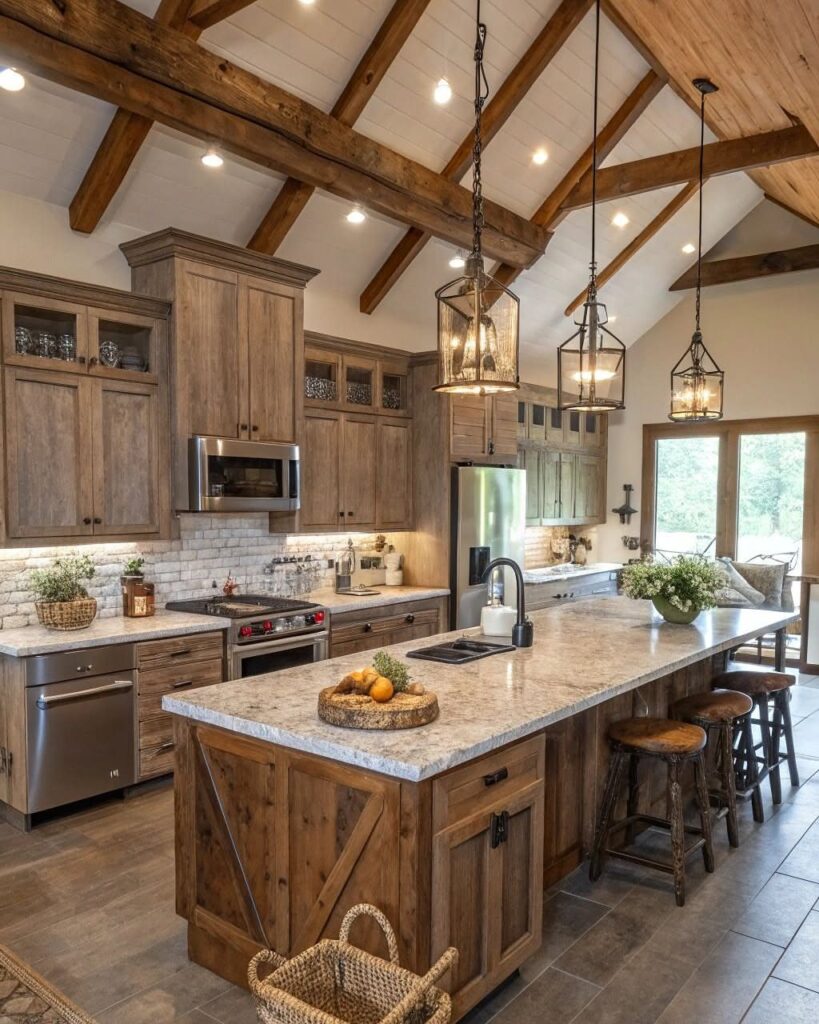
These ideas run from a few dollars for chipped estate-sale plates to a full kitchen of reclaimed wood cabinetry that takes serious patience and a bigger budget.
The one that fits depends on whether you rent or own, whether you have a weekend or a month, and whether you want a quick swap like open shelving or a full project like exposed wooden ceiling beams.
Aged brass on a bridge faucet grows more interesting over time; chrome stays guest-ready without polishing.
[link-whisper-related-posts]1. Farmhouse Sink
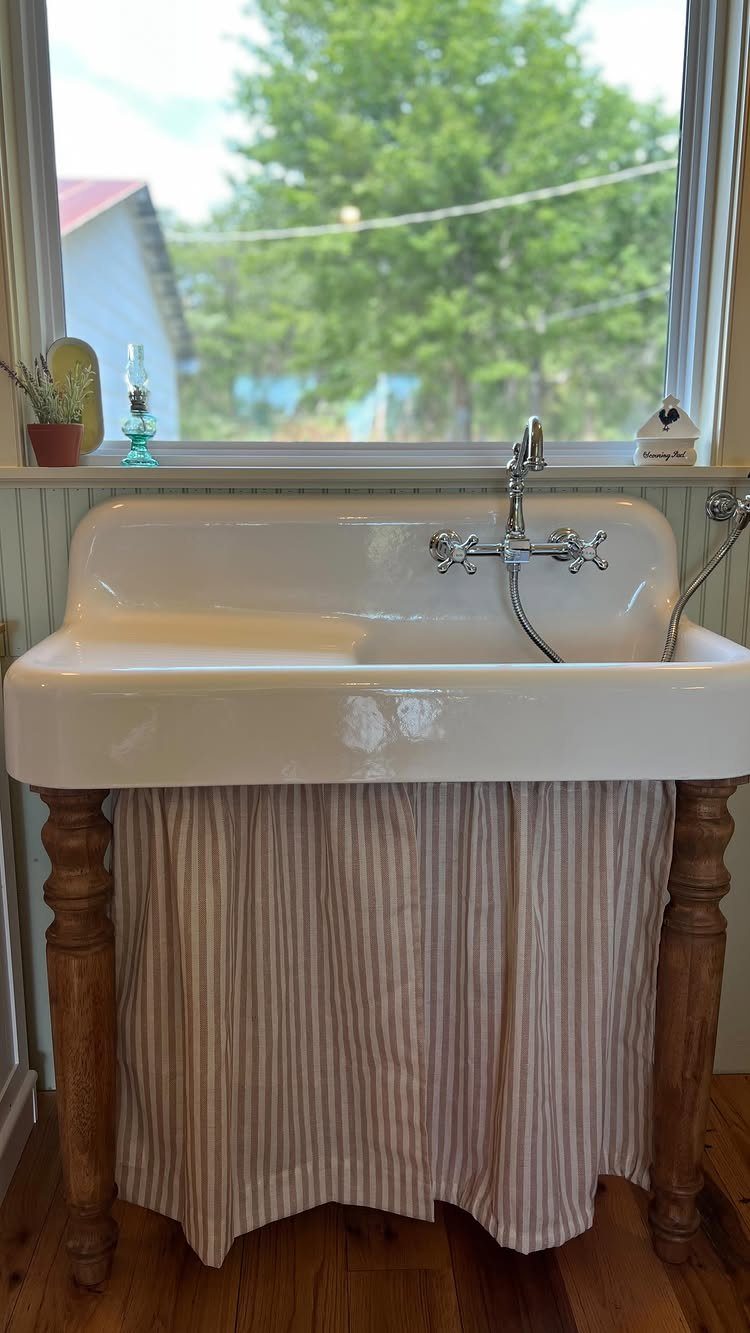
A deep ceramic apron-front sink becomes the visual anchor of a farmhouse kitchen, especially when set beneath a window. A white porcelain Belfast sink with an attached drainboard holds up to decades of daily use.
For renters or first-home owners, this is a splurge that pays back in function. The basin handles everything from sheet pans to produce rinsing without splashing.
Aged brass or unlacquered bridge faucets start shiny and grow more interesting over time; if you prefer less maintenance, a polished chrome finish stays consistent.
Weight is the real problem. These sinks run heavy even before water hits the basin, so the cabinetry underneath needs reinforcement.
A standard base cabinet works if you add support blocking underneath. Installation costs add up fast if you hire it out, though timing it with a countertop replacement saves money.
I’d pick aged brass for a kitchen that sees real cooking, chrome for one that needs to stay guest-ready without polishing.

【Smooth Front Heavy Duty Fireclay Sink for Kitchen】The front of the farmhouse apron sink 33 Inch is smooth, with a pure white glaze, making the farm sink look gorgeous and easy to clean.It is a heavy-duty fireclay sink weighing over 70 pounds, It is recommended to have two people move together.

【Made of Fine Fireclay】Miuara farmhouse sink is made of fine fireclay fired at extra high temperature above 2600℉ for 26 hours, it’s very hard and sturdy. And the solid core construction makes the fireclay sink drop in superior strengthen and durable to withstand heavy use, which is highly resistant to stain,heat,crack and scratch. Miuara farm sink is classic and gorgeous!
2. Butcher Block Countertops
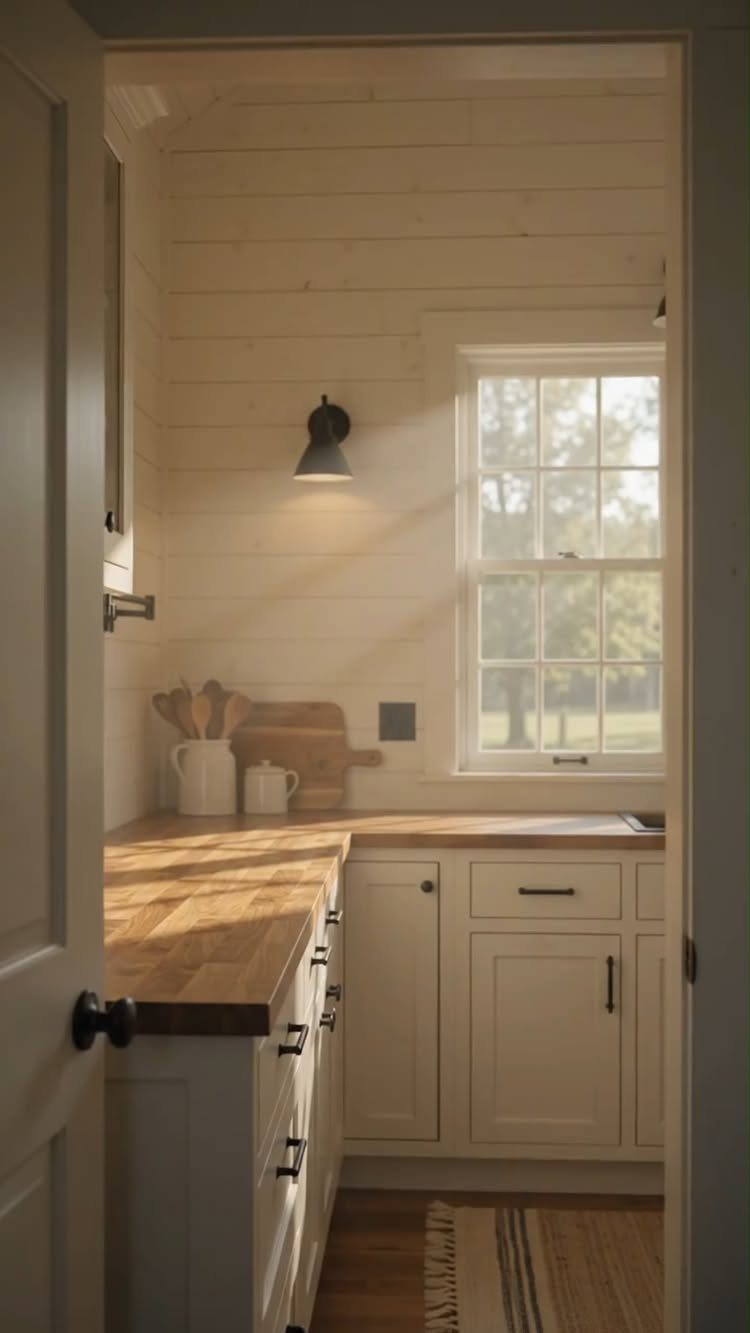
Butcher block brings warmth that stone and laminate cannot match, and it softens the clinical edge of white shaker cabinets. The light maple or oak surface ages with use, developing character where synthetic materials would just wear out.
This is one of the most approachable countertop upgrades for a weekend project. Unfinished stock runs cheaper per square foot; prefinished options cost more but save the sealing step.
You will need to oil it monthly and sand out burns or cuts when they happen.
Reclaimed wood adds more variation in tone and grain if you can source it locally. Either way, keep a separate cutting board; the countertop is not meant to be your daily chopping surface.

PREMIUM BIRCH HARDWOOD: Crafted from 100% solid birch wood, the butcher block countertop offers a light golden tone and even grain, beauty and functionality. It is a perfect addition to add the warmth of wood to your home.

SOLID HARD MAPLE WOOD: 100% genuine North American hard maple hardwood featuring dense edge-grain construction. Built for heavy-duty kitchen chopping, active workbench tasks, and structural countertop use without warping

UNFINISHED SOLID WOOD TABLE TOP: This butcher block countertop is crafted from durable Hevea wood of the maple family with natural grains; A trusted material known for strength and longevity, ideal for a wood countertop, desk top, or DIY projects
3. Farmhouse-style Faucets
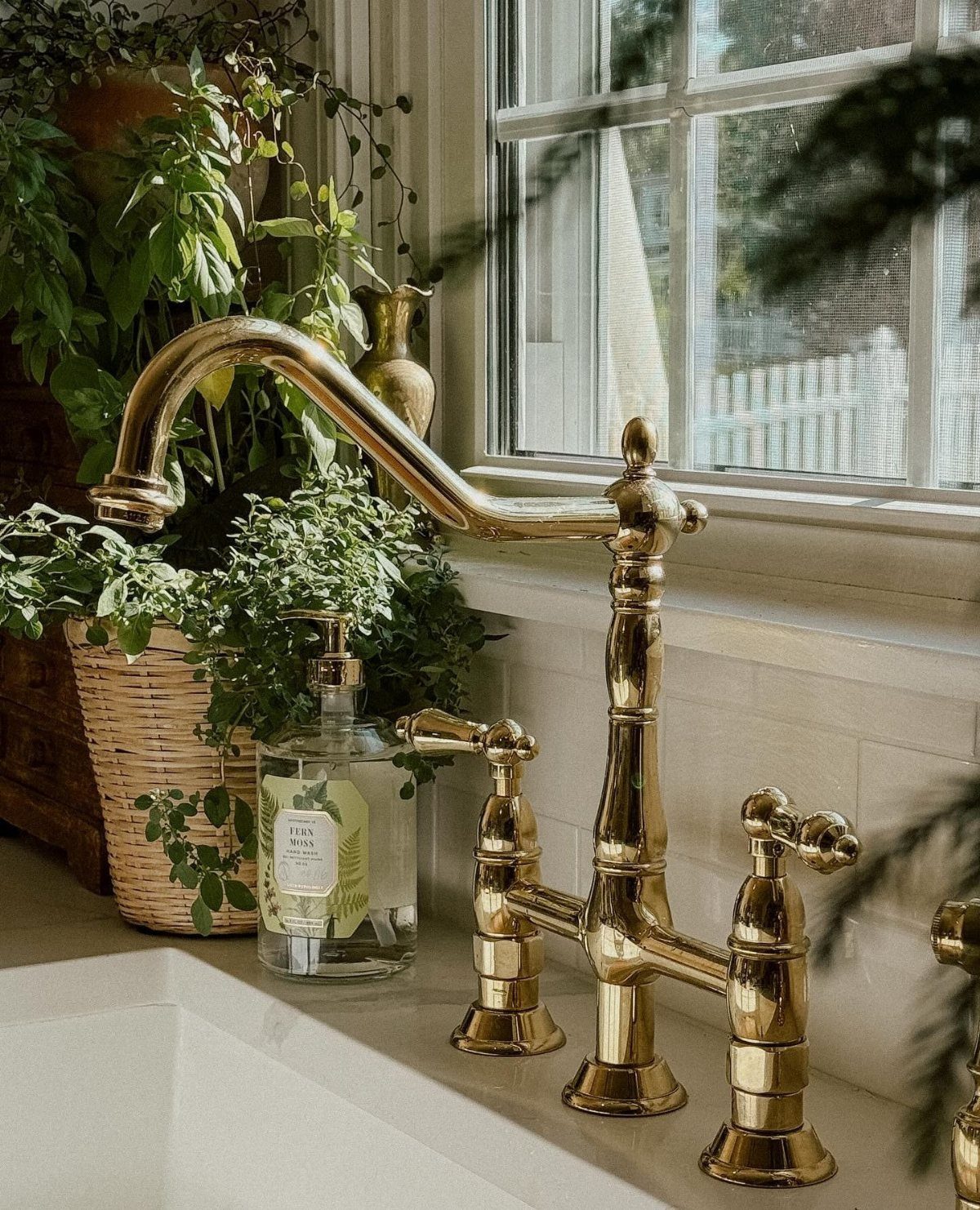
A bridge faucet with two separate handles reads more deliberate than a standard single-post model, and in polished brass it picks up other warm metal moments around the room.
This style of faucet carries enough presence that competing elements feel cluttered, so potted herbs and simple labeling are the right instinct.
Vintage-inspired designs work best when the finish has some variation. Polished brass shows every water spot; aged or living finishes hide them and improve with time.
Cross handles suit a more traditional kitchen, lever handles a slightly updated take.
Installation requires two or three holes in your countertop or sink deck, so check your setup before ordering. A bridge faucet with a side spray adds function without breaking the silhouette.
For a rental where you cannot change plumbing, even a new set of handles on an existing faucet leans toward this look on the cheap.

ELEGANT HERITAGE DESIGN : Long lasting finish with a vintage bridge silhouette adds sophisticated charm to your kitchen décor.

【Solid Brass Construction】Crafted from premium brass material, this heavy-duty bridge faucet (weighing 4.8 Lbs) resists to rust and corrosion, ensuring water safety. Multi-layer brushed nickel finish is fingerprint and scratches resistance, and easy to match with most kitchen decors.

【Solid Brass Construction】The heavy-duty bridge faucet is made of premium solid brass and weighs 7.76 IBS. It resists rust and corrosion, ensuring water safety and a long lifespan. Low-key in a pure black finish, easy to create a classic kitchen decorating style.
4. Open Shelving
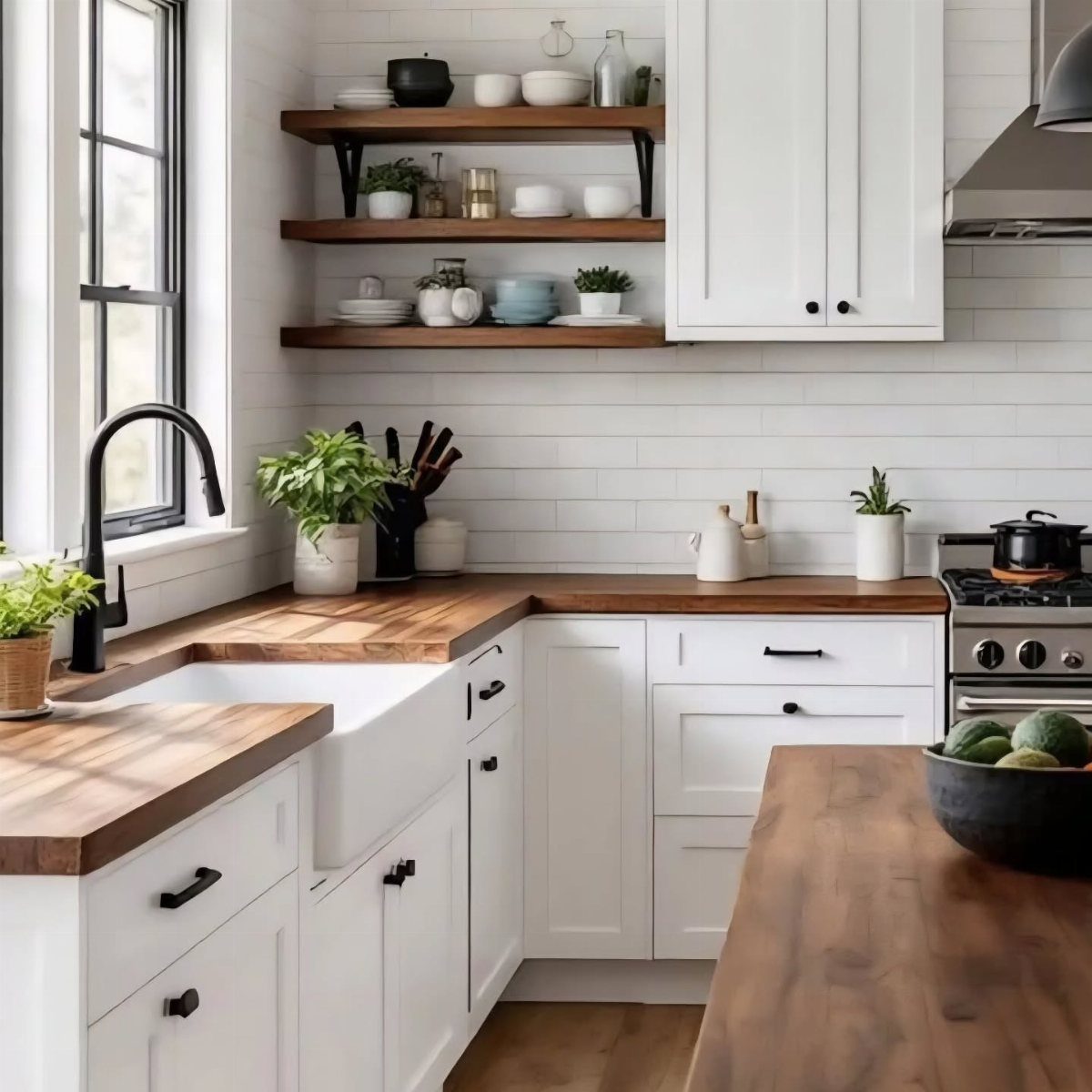
Open shelving replaces the closed box of upper cabinets with something more immediate: your dishes become the decoration. A three-tiered arrangement against white subway tile works when the objects themselves carry color and texture.
The risk is dust and grease settling on everything you own.
This suits someone who uses their dishes regularly enough that they cycle through before grime builds up, or who does not mind running a load through the dishwasher before company arrives.
For a rental with ugly existing cabinets, removing a few doors and patching hinge holes costs nothing and achieves a similar effect.
Measure your tallest items, add 2 inches, and space shelves accordingly. Solid wood brackets painted to match the wall disappear better than ornate iron supports.
Dishes and small plants fill the shelves; keep the plant count low unless you want to wipe soil from your plates.

📦【Spacious & Flexible Storage System】This versatile storage cabinet offers the perfect balance of open display and hidden organization. It includes 3 roomy open shelves and 2 barn-door cabinets, plus adjustable interior shelf that lets you customize the height for books, decor, kitchen goods, or media. Everything has its place—neat, accessible, and out of sight.

Generous Storage Capacity: The farmhouse arched bookcase, sized at 27.6"L x 11.9"W x 69.7"H, offers 5 spacious open shelves for displaying books, decorations, and treasures, plus 2 large drawers with full-extension metal ball-bearing glides for easy hidden storage access

Right-Angle Corner Design: Featuring a 90° structure that fits snugly into any corner, this cabinet makes full use of often overlooked space. Suitable for the bathroom, living room, or dining area, it keeps toiletries, decor, and tableware neatly organized
5. Vintage-inspired Pendant Lights
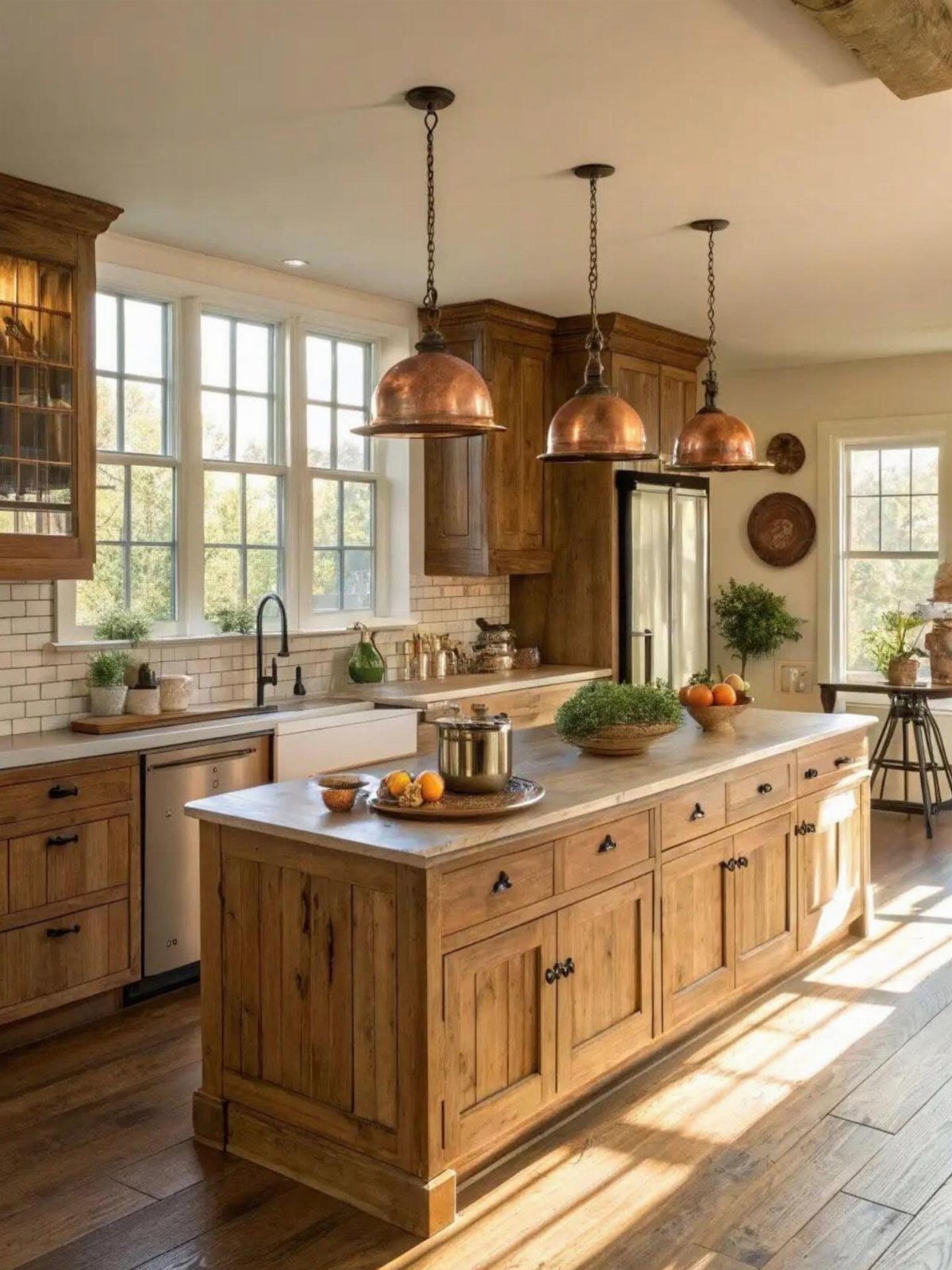
Lighting sets the mood in a farmhouse kitchen more than any single piece of furniture, and vintage-inspired pendants do the heavy lifting over an island or sink.
Copper pendants throw a warmer tone than nickel or chrome would, which matters in a room with abundant wood cabinetry.
The choice depends on your ceiling height and your tasks. Lower ceilings need shorter pendants or flush mounts; an island where you actually prep food needs brighter bulbs than one used only for casual dining.
Brass and glass lanterns give glow; blackened steel gives more presence.
Check your electrical box location before falling in love with a specific fixture. Swagging a pendant to center it over an island is possible but looks improvised.
For renters, plug-in sconces on a switched outlet achieve some of this warmth without an electrician.
The right pendant is the one that fits your wiring, your ceiling, and the actual size of your island; scale matters more than style here.

Item Description: Heritage Timber Reclaimed Axed Cut Faux Wood Beam, 3-Sided (U-Beam), 3 1/2"W x 3 1/2"H x 72"L, Warm Caramel Finish

RECLAIMED WOOD ACCENT: Real reclaimed and recycled wood, naturally-weathered wood paneling adds a beautiful, rustic accent to your walls

Item Description: Heritage Timber Rustic Sawn Faux Wood Beam, 3-Sided (U-Beam), 3 1/2"W x 3 1/2"H x 72"L, Kona Brown Finish
6. Modern Appliances with Vintage Features
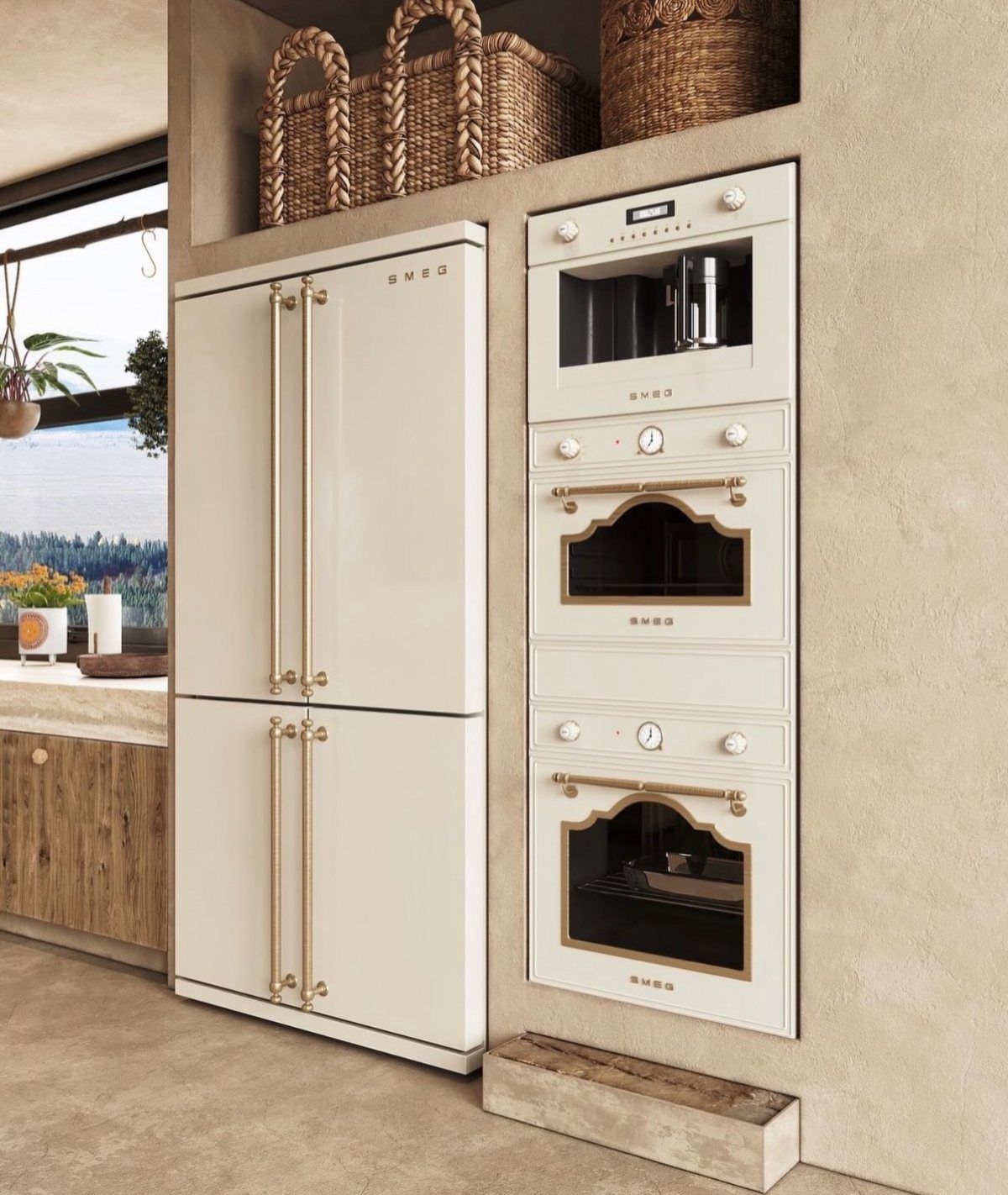
A cream-colored Smeg with arched window details and brass handles borrows from midcentury appliance design without asking you to give up frost-free cooling or consistent oven temperatures.
Recessed into a textured plaster wall is the right context: this appliance wants to be the charming thing in a room, not competing with other statement pieces.
The cost runs two to three times equivalent plain appliances, so this suits someone who values the visual continuity more than features like smart connectivity or the largest cubic footage.
For a tighter budget, one statement appliance, the refrigerator, carries the look while standard panels hide the dishwasher.
The retro handles and window details read differently in a kitchen full of actual antiques versus one with IKEA cabinets.
In a mixed space, pick up the brass tone in your hardware or lighting so the appliance does not float alone. If you move often, remember: these units are heavy and the styling is specific.
They do not blend into a mid-century or minimalist rental the way stainless steel would.

Superb Fireclay Manufacturing Technology - Has ultra-fine and high density material structure, Lordear fireclay white farmhouse kitchen sink can be crack/impact/chip-resistant. Advanced glazing technology and fired at 2900 ° F which can achieve non-porous, smooth, glossy surface. Real Fade/ discoloration/stain resistant, super easy to clean. Our glossy white sink can keep Shinning even after many years of using

Premium Fireclay Farmhouse Kitchen Sink: Sarlai white farmhouse sink is constructed from natural fireclay, a special clay that is fired at 2400°F for extreme resistance to heat, chipping, scratch, and discoloration. This material creates a durable and reliable foundation for long-term daily kitchen use.

1. 33 Inch White Fireclay Farmhouse Kitchen Sink: Crafted from premium natural fireclay and fired under extremely high temperatures, this white fireclay farmhouse sink deliver exceptional sturdiness and long-lasting performance. It features great heat resistance, scratch resistance, and anti-discoloration, staying in perfect condition for years.
7. Kitchens That Flow Into Dining Areas
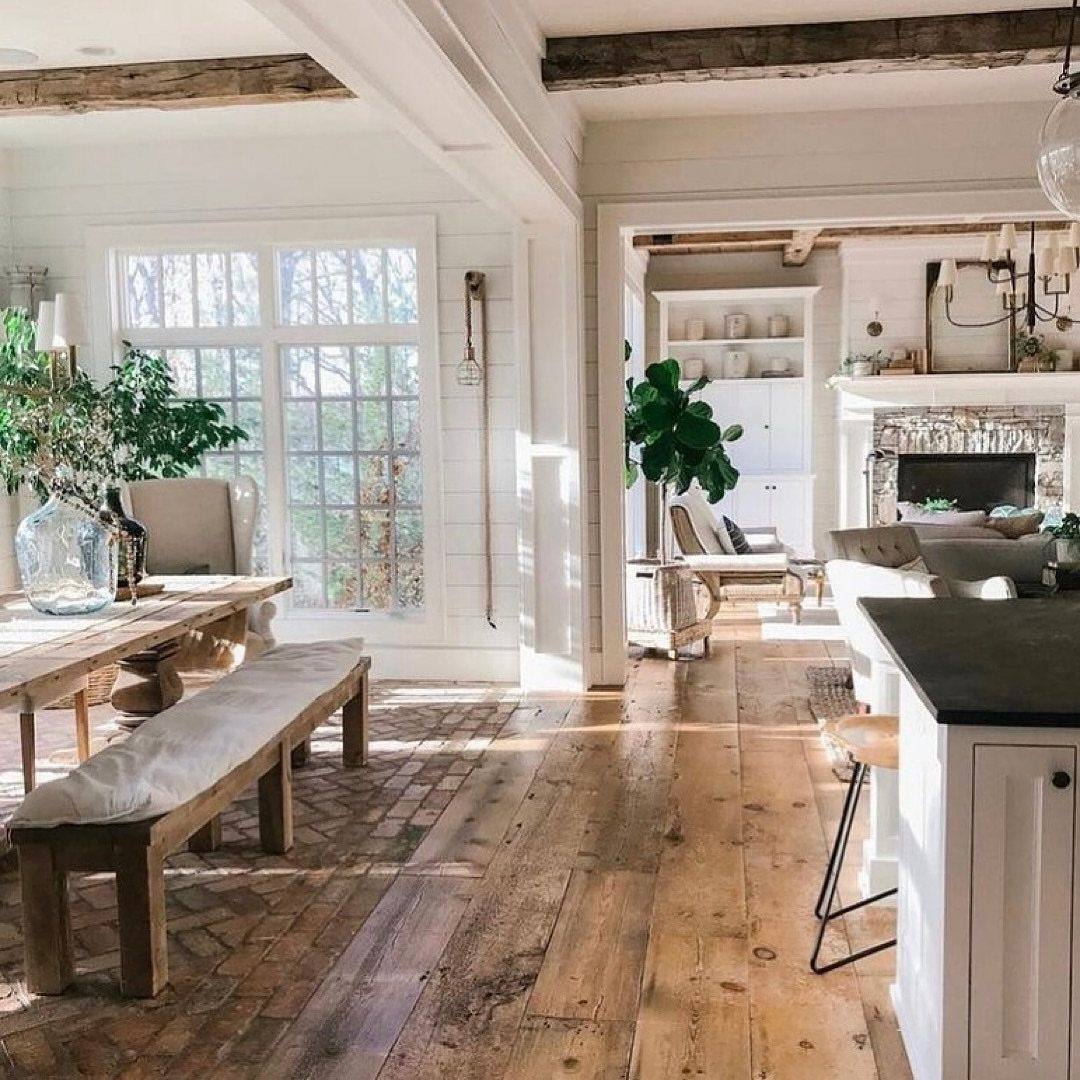
A kitchen that opens straight into the dining area turns cooking into something people do together instead of apart.
Brick flooring that runs under both spaces without a threshold makes it feel like one room instead of two zones forced together.
Wood beams overhead repeat the same tone as the dining table, so the eye travels easily from the counter to where people sit.
If your layout allows it, skip the peninsula that blocks the path. A counter running along one wall keeps sightlines open and still gives you storage below.
You lose hidden mess; you gain conversation that flows as easily as the space does.

**USA Sourced Solid Hard Maple Hardwood** – Made of premium American hard maple, dense, hard & stable grain. Resists scratches, warping and cracking for long-lasting indoor use.

STANDARD 6FT KITCHEN ISLAND COUNTERTOP: At 72" x 25" x 1.5" thick, this is the most versatile size for standard kitchen island tops, laundry room counters, and DIY workbenches. Solid birch hardwood — not bamboo, not MDF, not laminate

𝐃𝐔𝐑𝐀𝐁𝐋𝐄 𝐒𝐎𝐋𝐈𝐃 𝐖𝐎𝐎𝐃 𝐂𝐑𝐀𝐅𝐓𝐒𝐌𝐀𝐍𝐒𝐇𝐈𝐏: Made from expertly crafted solid hevea wood with a sturdy 1.5-inch thickness. Each butcher block showcases distinctive wood grain and natural strength, adding lasting value to kitchens, dining areas, or workspaces.
8. Rustic Decor Accessories
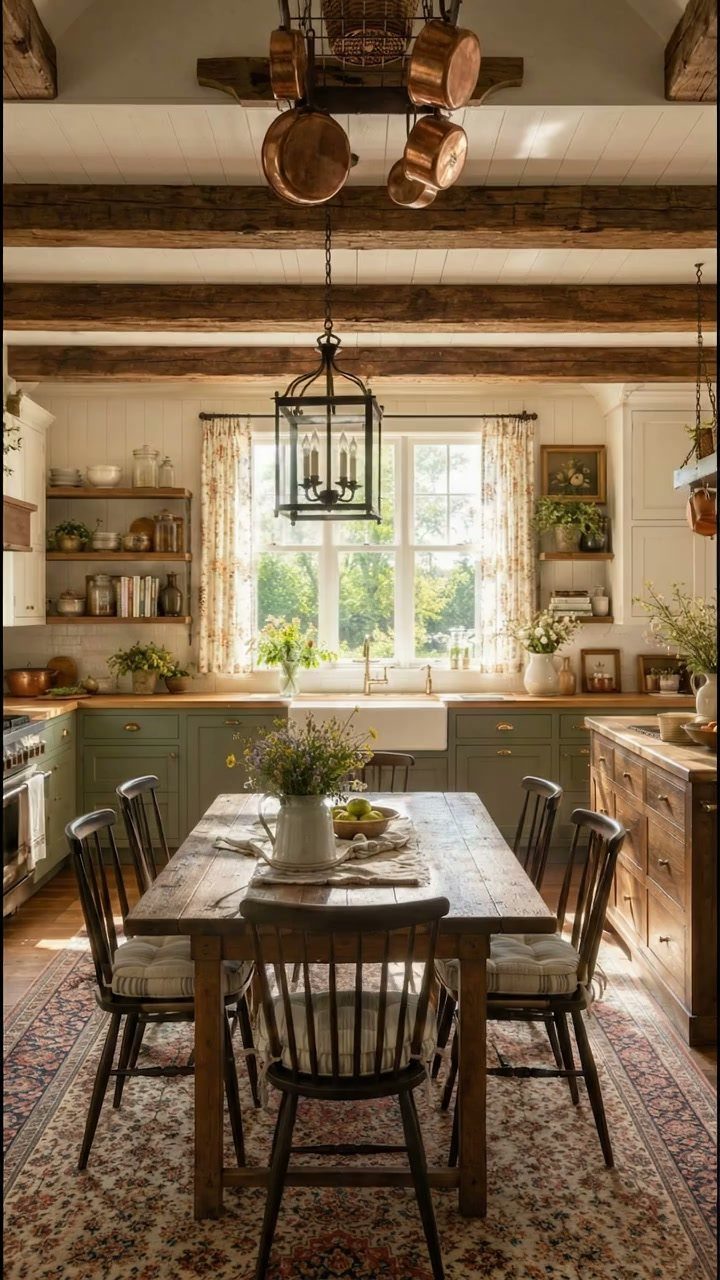
Green cabinets set off warm metal, and woven textures on the table soften the whole thing.
Ceramic canisters on open shelves, a basket for linens, a pitcher that never sees water: these are the pieces that turn a kitchen into a farmhouse kitchen.
I would not overthink matching. The best collections grow from things found one at a time, a flea market here, a hand-me-down there.
Spend your money on the one piece you will use daily; let the rest accumulate.

【Solid Brass Construction】The heavy-duty 3 hole brass kitchen faucet with pull down sprayer main body is composed of brass, stainless steel arc spout, and ABS kitchen faucet head. Bridge faucet for kitchen sink features a oil rubbed bronze finish that resists rust, corrosion, and leaks, and is easy to maintain and clean.

3 Function Kitchen Faucet: The transitional bridge kitchen faucet with 3 modes: stream, spray, and high pressure sweep modes. Stream for gentle cleaning, spray for rinsing, and high-pressure sweep for tough food residue. With 1.8 gpm are compliant with California water efficiency regulations

ELEGANT HERITAGE DESIGN : Long lasting finish with a vintage bridge silhouette adds sophisticated charm to your kitchen décor.
9. Weathered Wood
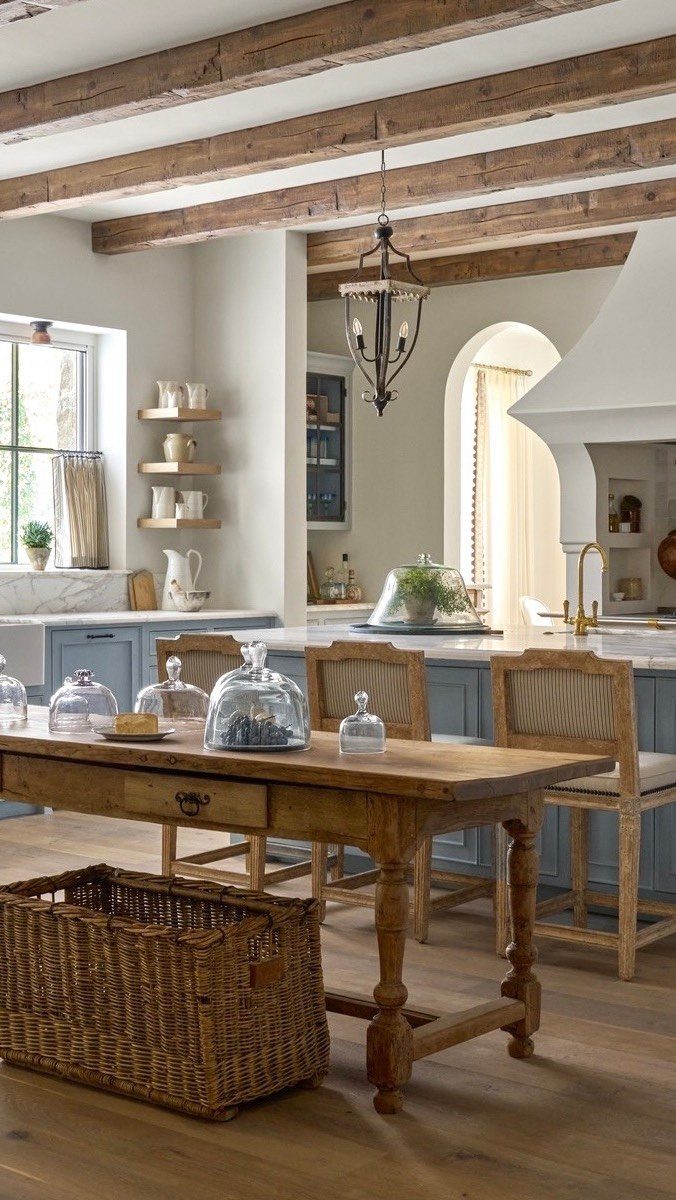
Ceiling beams that look like they came from an old barn give a kitchen history it cannot fake.
The wood is new timber wire-brushed or hit with chains until the grain opens up, then stained to settle into the color of old money. Blue cabinets below keep the room from feeling like a lodge.
You can buy beams ready-distressed or take a Saturday to beat up cheaper lumber yourself. Either way, the ceiling is where the eye goes first in this room, so the investment shows.
A flat ceiling with character beats a vaulted one with none.

【100% Solid Wood Wall Shelf - Sturdy & Durable】 The wall shelf made of high-quality solid wood, it is eco-friendly and odorless. With a robust structure and strong load-bearing capacity, this floating shelves won’t deform easily even after long-term use, providing reliable support for your ornaments, green plants, daily necessities, and more. Enjoy long-lasting durability and peace of mind.

【Elegant Arched Farmhouse Design】Display Case showcases a classic arched dome and farmhouse paneled frame with soft-closing doors and stylish handles, crafted from durable engineered wood with quality laminate for lasting beauty and functional appeal. Product Dimensions: 15.75"L x 30"W x 71"H.

【Black metal pipe and solid wood 】Good rustic look solid wood industrial bathroom shelves with black metal pipes.The tubing is all metal and has a very rustic finish and the wood is a solid piece. This industrial pipe shelving is very very stable and solid on the wall,Fits right in with Your farmhouse vibe..
10. Rustic Wall Treatments
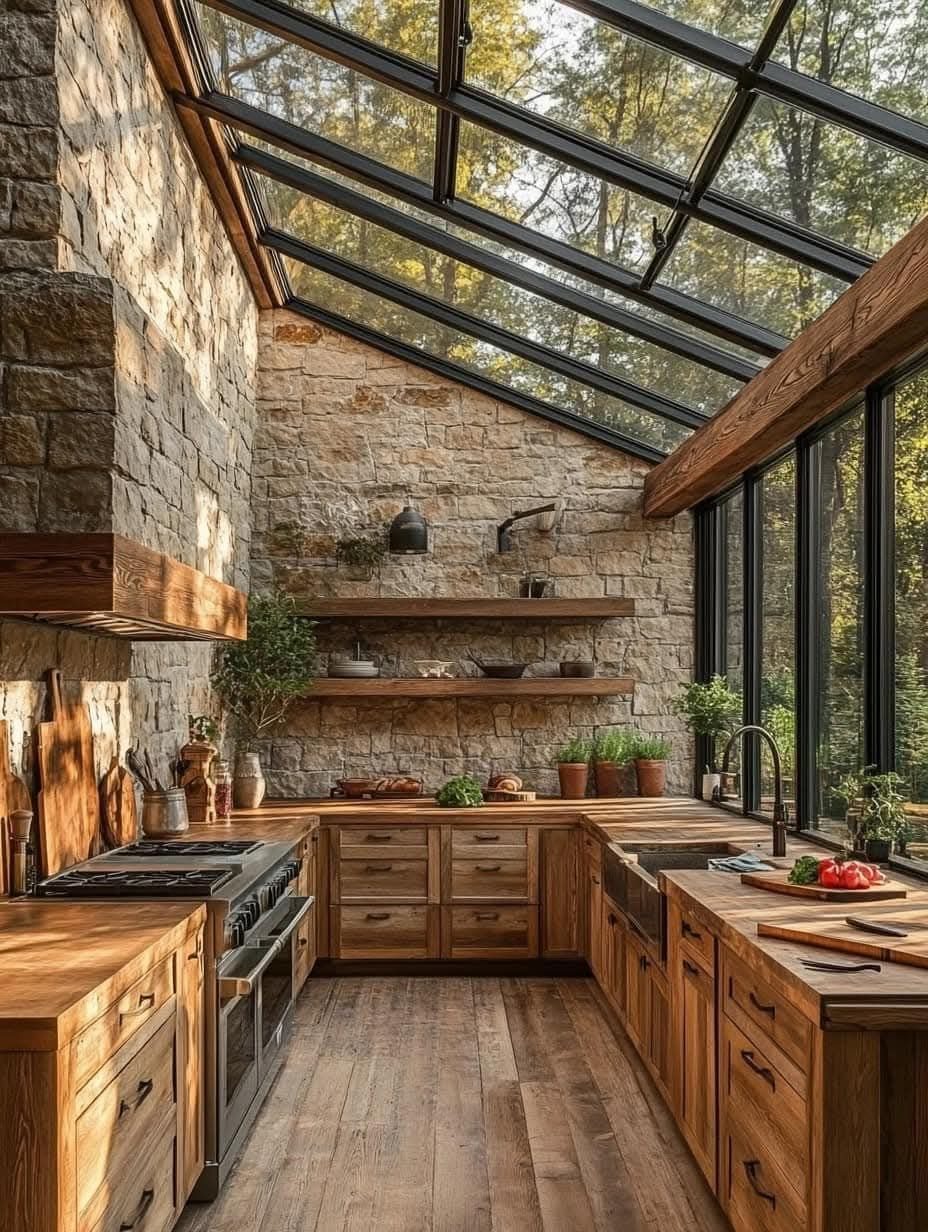
Stone walls that were not built for Instagram age better than anything. Local rock laid dry or nearly dry, with mortar kept back from the face so the edges stay rough.
Wood paneling on the cabinets picks up the same gray-brown tones and keeps the room from feeling like a cave.
If you are starting from drywall, thin stone veneer goes up without footings or structural changes. Cost runs higher than paint, obviously, but the wall needs nothing else: no art, no shelf, no distraction.
The stone is the statement.

Complete 8-foot Coverage for Versatile Installations: this set includes two 48-inch beams, offering a combined 8 feet of coverage; Ideal for ceiling spans, entryways, hallways, or accent walls, you can install them side by side for a continuous run or use them separately for creative, staggered layouts; This flexibility allows you to tailor the faux wood beams for ceiling projects to fit various architectural spaces without needing custom sizing

Item Description: Heritage Timber Salvaged Timber Faux Wood Beam, 3-Sided (U-Beam), 5 1/2"W x 5 1/2"H x 72"L, Kona Brown Finish
Dimensions: 5-1/2 in. Width x 5-1/2 in. Height x 96 in. Length
11. Rustic Flooring
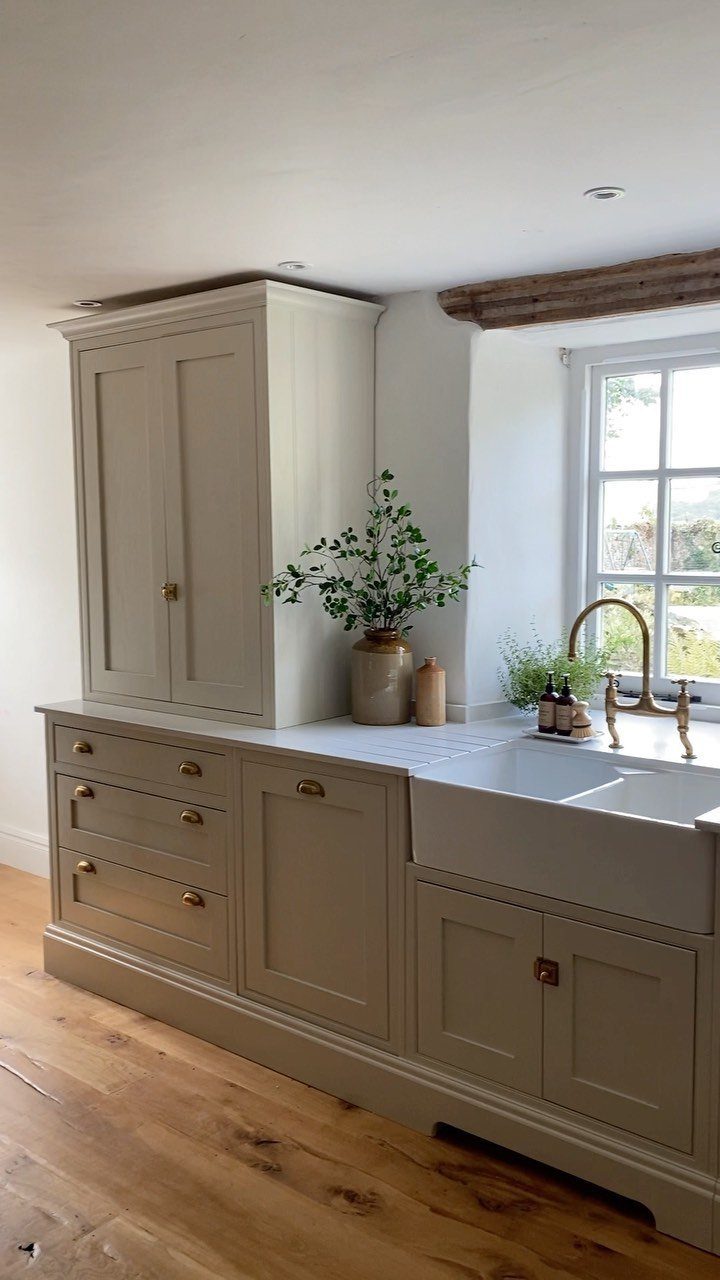
Wide-plank flooring shows every dent and every grain line, which is exactly why it belongs in a farmhouse kitchen.
Boards that run long and carry the same tone as the beam above the window make the room read as intentional rather than assembled from leftovers.
Reclaimed wood costs more and comes with nail holes, stains, and stories; new wide-plank hardwood stains to match and wears in over time.
Stone or limestone also works, especially if you are already dealing with the cold of old walls. The floor you choose depends on what is under it now and what your knees can handle.
Soft wood dents; hard stone aches. I would walk both before deciding.
12. Rustic Wall Art
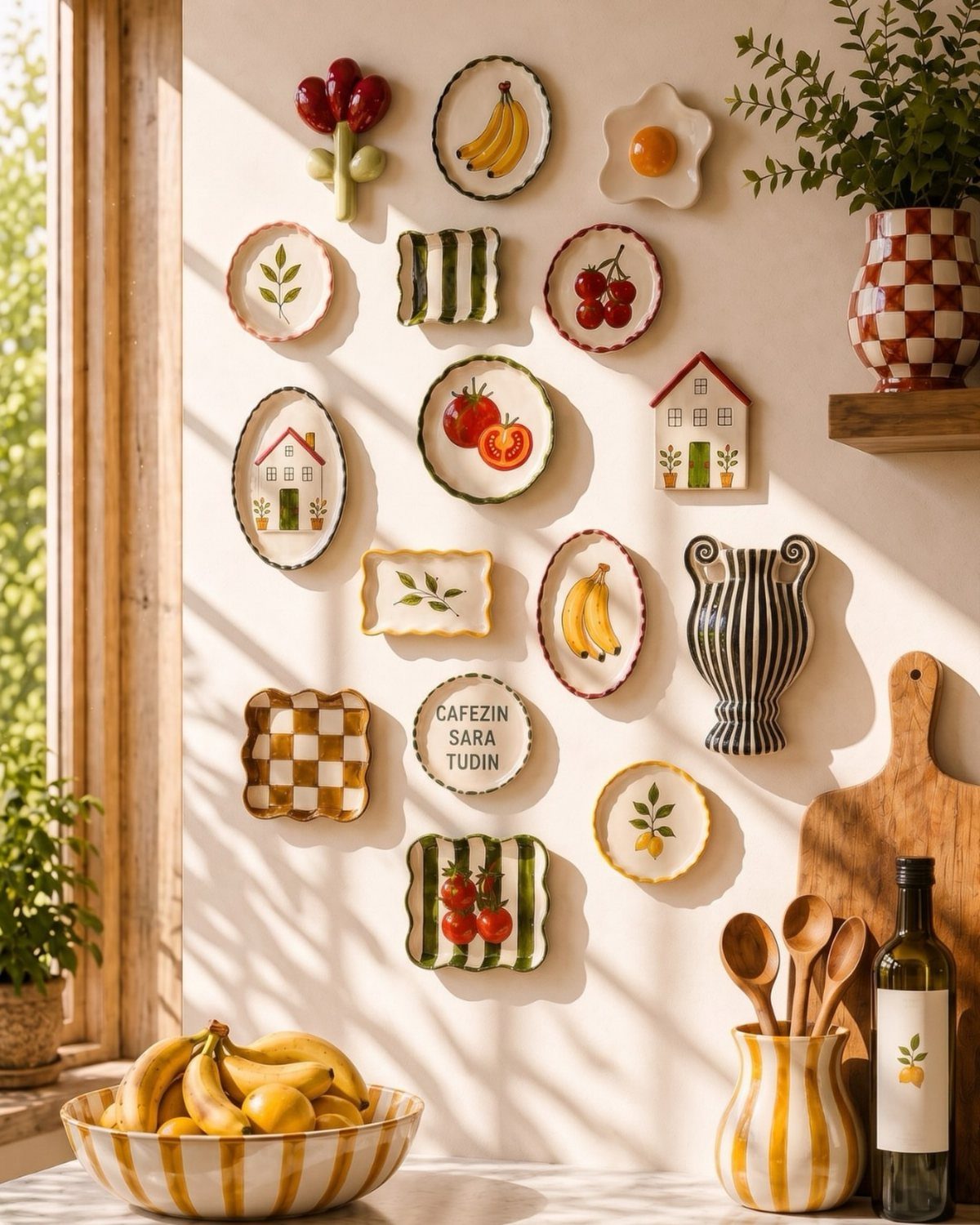
Small plates hung in a cluster turn a blank wall into something a guest leans in to study.
The ceramics are not precious; they are the kind of thing that turns up at estate sales for a few dollars each, or less if chipped.
A single large piece would dominate and feel finished; a dozen small ones invite rearranging as the mood shifts.
Start with a few pieces that share a color, then add what you find. The wall reads as cream because the plates stay in the same warm range; a scatter of every color would read as clutter.
Leave breathing room between pieces. The gap matters as much as the object.
13. Fresh Herbs in Pots
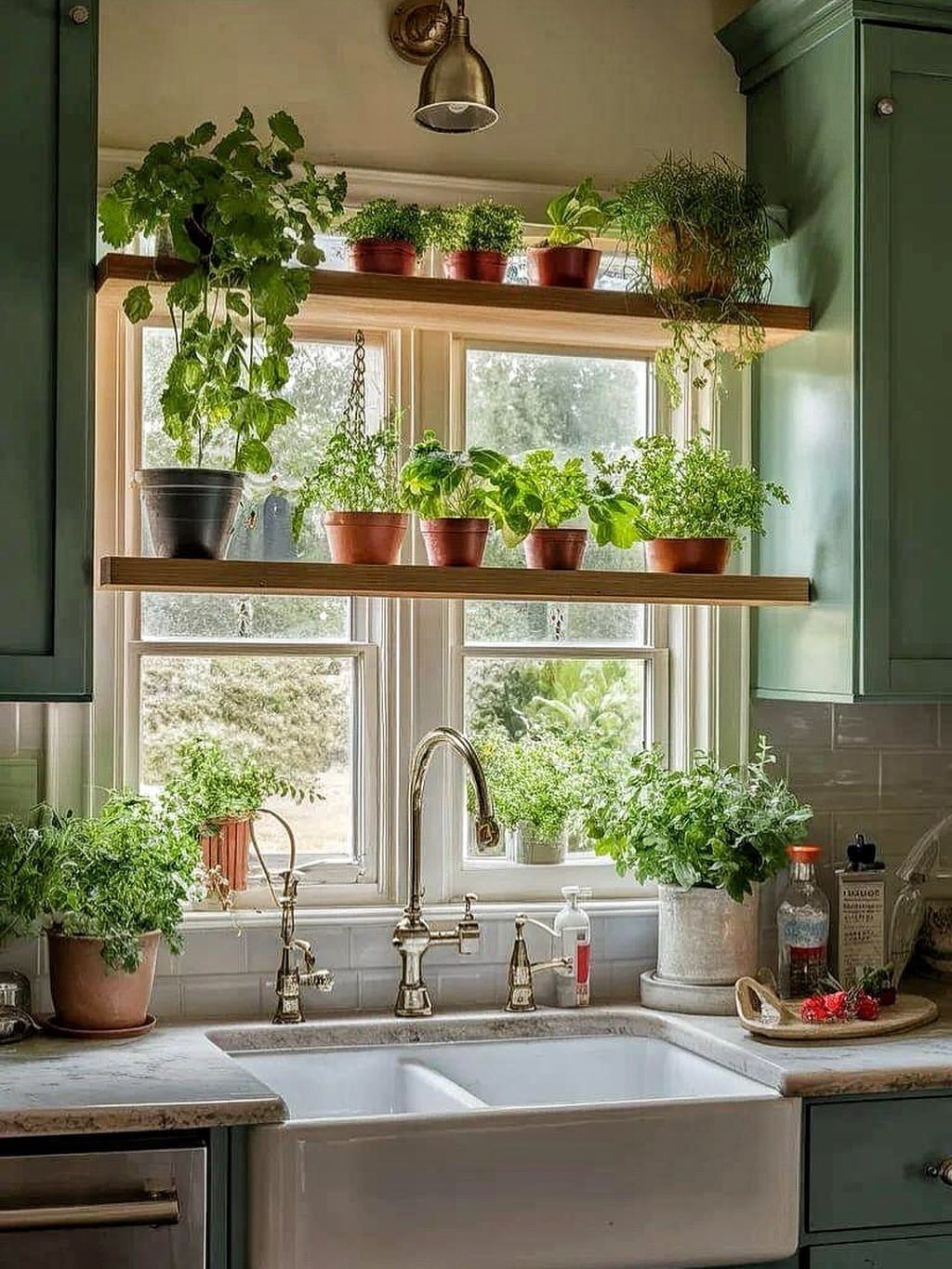
A windowsill lined with potted herbs does two jobs at once: it softens the hard edges of a kitchen and gives you thyme or basil within arm’s reach of the cutting board.
Terracotta pots sit right in the farmhouse wheelhouse, especially against white tile or green painted cabinets. The porous clay dries out fast, so they suit cooks who water regularly; if you travel often, glazed ceramic holds moisture longer.
For shelves above a sink, stick to compact varieties like chives or parsley rather than sprawling rosemary that droops into your dishwater.
A kitchen full of green in January beats anything outside the window.
14. Reclaimed Wood Cabinetry
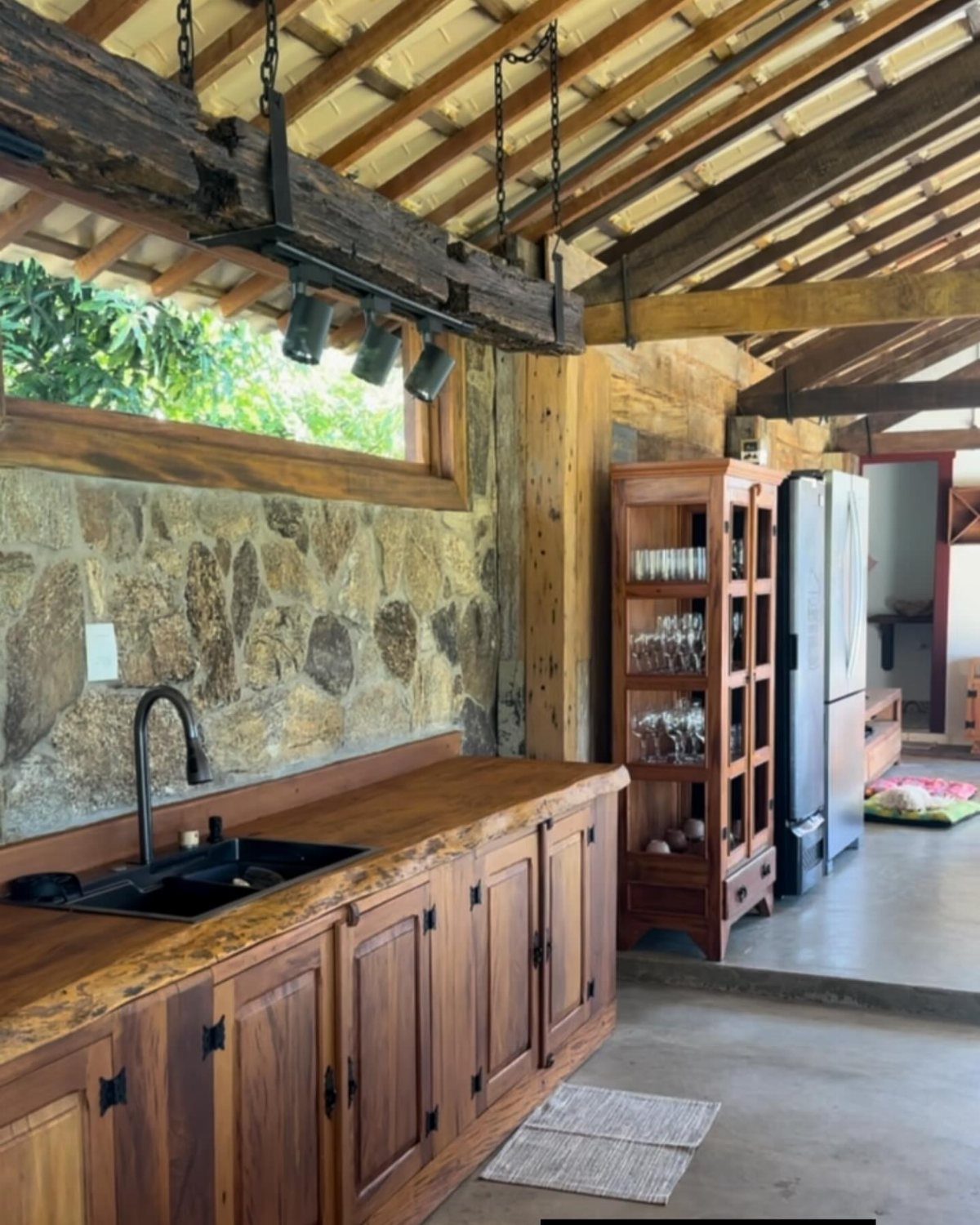
Reclaimed wood carries the marks of its first life: nail holes, saw kerfs, grain patterns that new lumber spends decades trying to fake.
Cabinet fronts built from salvaged timber give a kitchen the one thing factory finishes cannot, which is the certainty that no neighbor has the same thing.
Old wood keeps adjusting to humidity long after milling, so joints need room to breathe and hardware needs occasional retightening. For a full kitchen run, the cost runs high and the supply runs unpredictable.
A single pantry cupboard or a pair of island panels gives you the character without the headache.
I would start there and see if the look sticks before committing the whole room.
15. Shaker-style Cabinetry
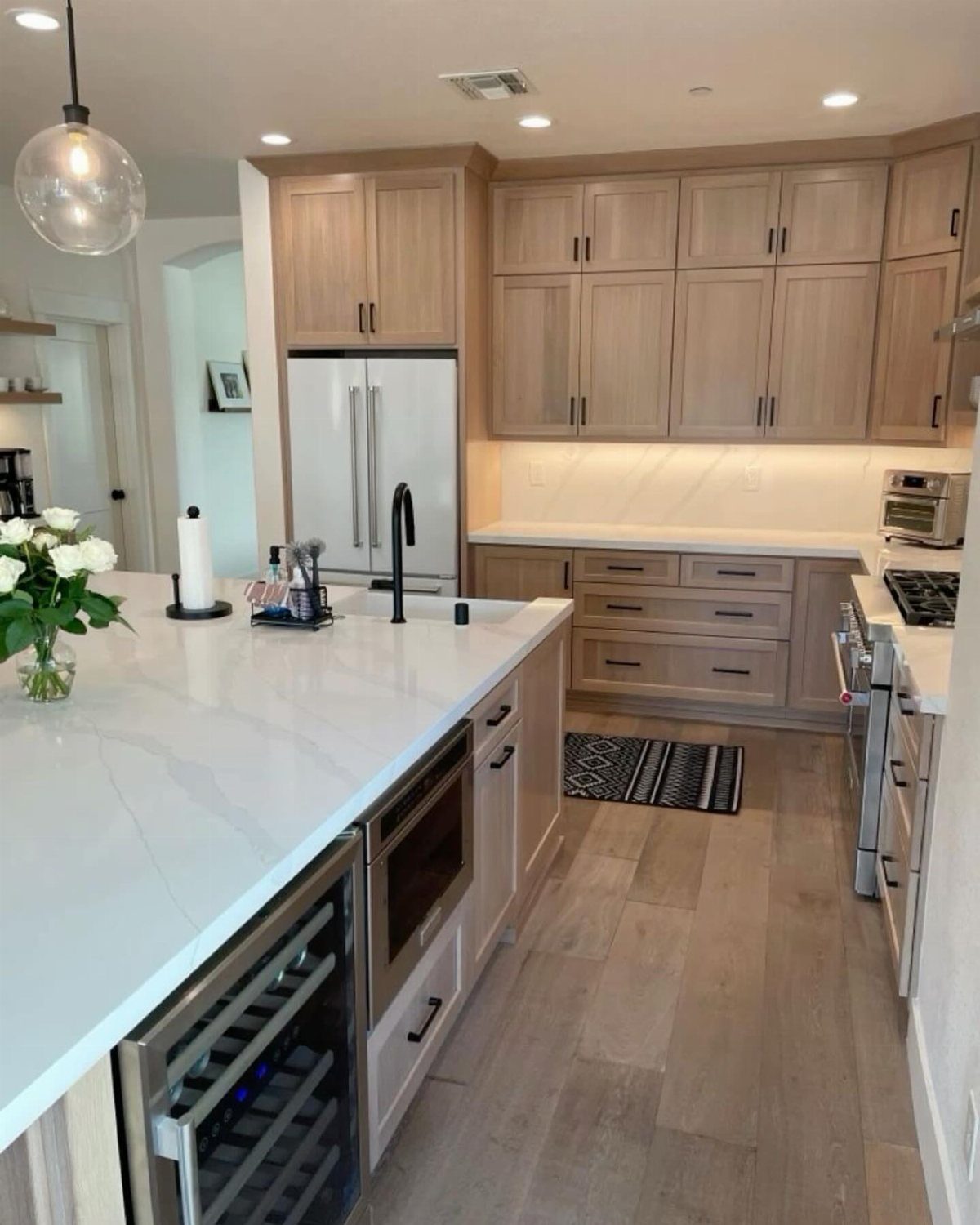
Shaker cabinets earn their keep through restraint: a flat center panel, a simple frame, no carving that dates itself to any decade.
Painted finishes in soft gray, sage, or creamy white read traditional without feeling like a stage set.
Natural timber works too, though it asks more of the rest of the room; you need enough contrast in countertops or flooring so the whole space does not flatten into one tone.
Light wood against white quartz keeps the look current rather than museum-piece.
Upper cabinets in Shaker style can feel heavy in a small kitchen. Swap some cabinets for open shelving to buy back airiness without losing the frame-and-panel language.
16. Vintage-inspired Hardware
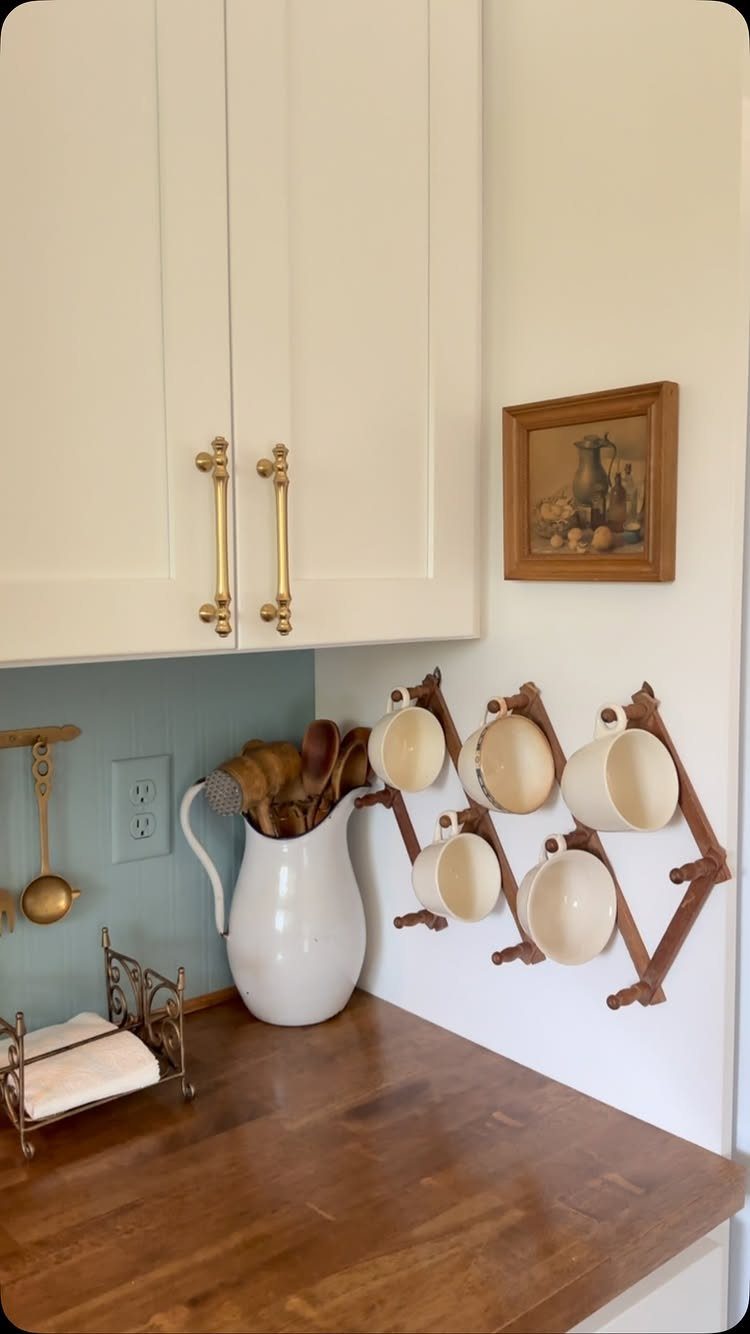
Hardware is the jewelry of a kitchen, and the cheap stuff reads cheap from across the room.
Aged brass warms up white or cream cabinets the way chrome never will; wrought iron leans harder into rustic territory and wants wood tones or darker paint to keep it from looking theatrical.
Vintage-inspired brass handles against cream Shaker doors would turn fussy with busier cabinet profiles. Scale matters too; a small door wants a small pull, and an oversized appliance panel needs a handle you can grip with oven mitts on.
Buy one sample, live with it for a week, then order the rest. The finish changes under your actual bulbs, and return windows close fast.
17. Vintage Kitchenware Collections
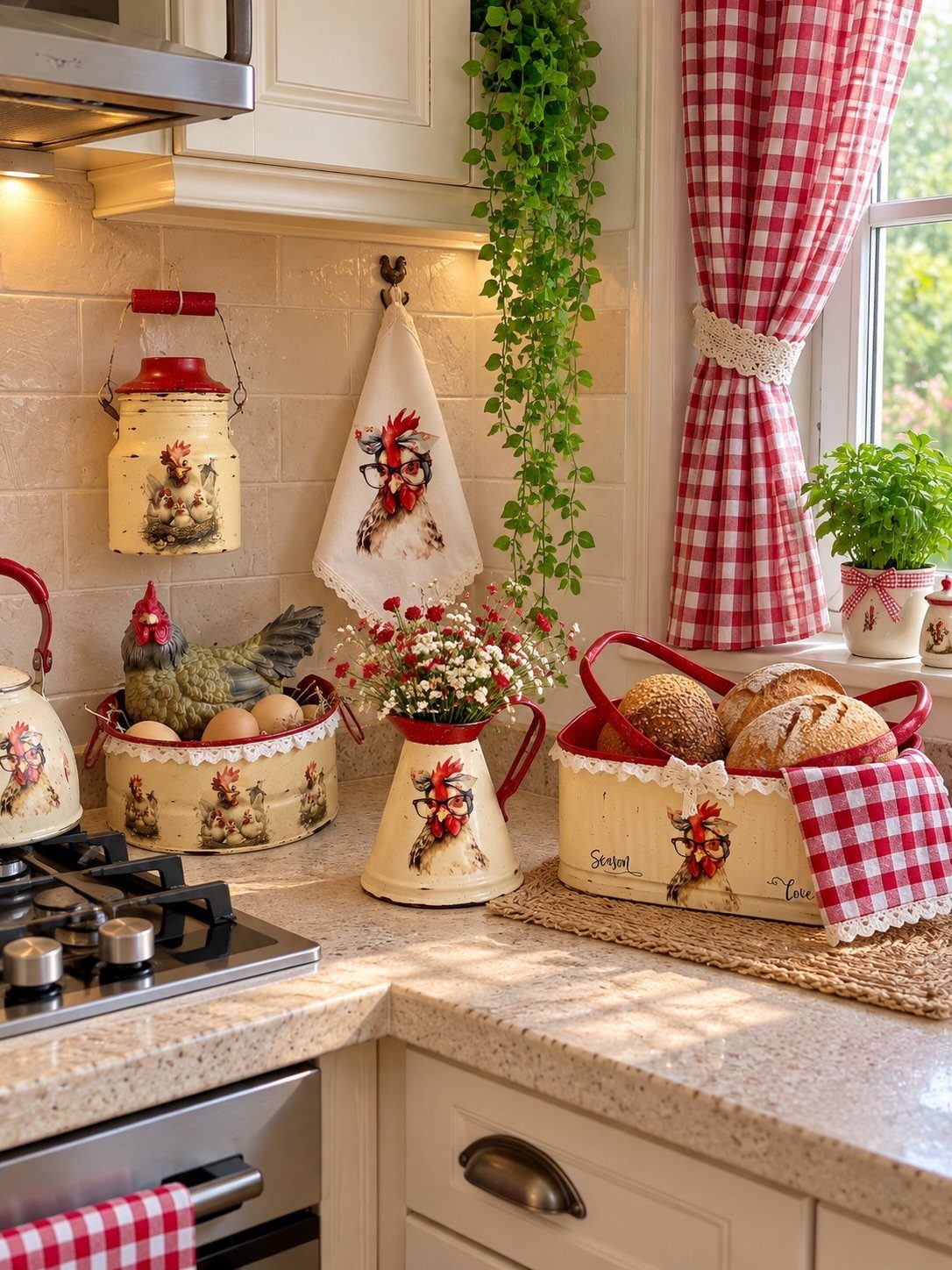
Collections stop being clutter when they share a color, a material, or a motif that ties them together.
Rooster-themed enamelware works when every piece repeats the same cream ground and the same red accent; scatter in a random blue pitcher and the whole shelf starts looking like a yard sale.
Ironstone, lustreware, or a run of matching canisters all do the same job. Density matters: a few pieces look like you forgot to put things away, while a full shelf reads as intentional.
Tall cupboards with glass fronts protect pieces from grease while still showing them off. If you are starting from nothing, hunt one shape first, like pitchers or bread baskets, rather than buying mixed lots that fight each other.
18. Painted Cabinetry
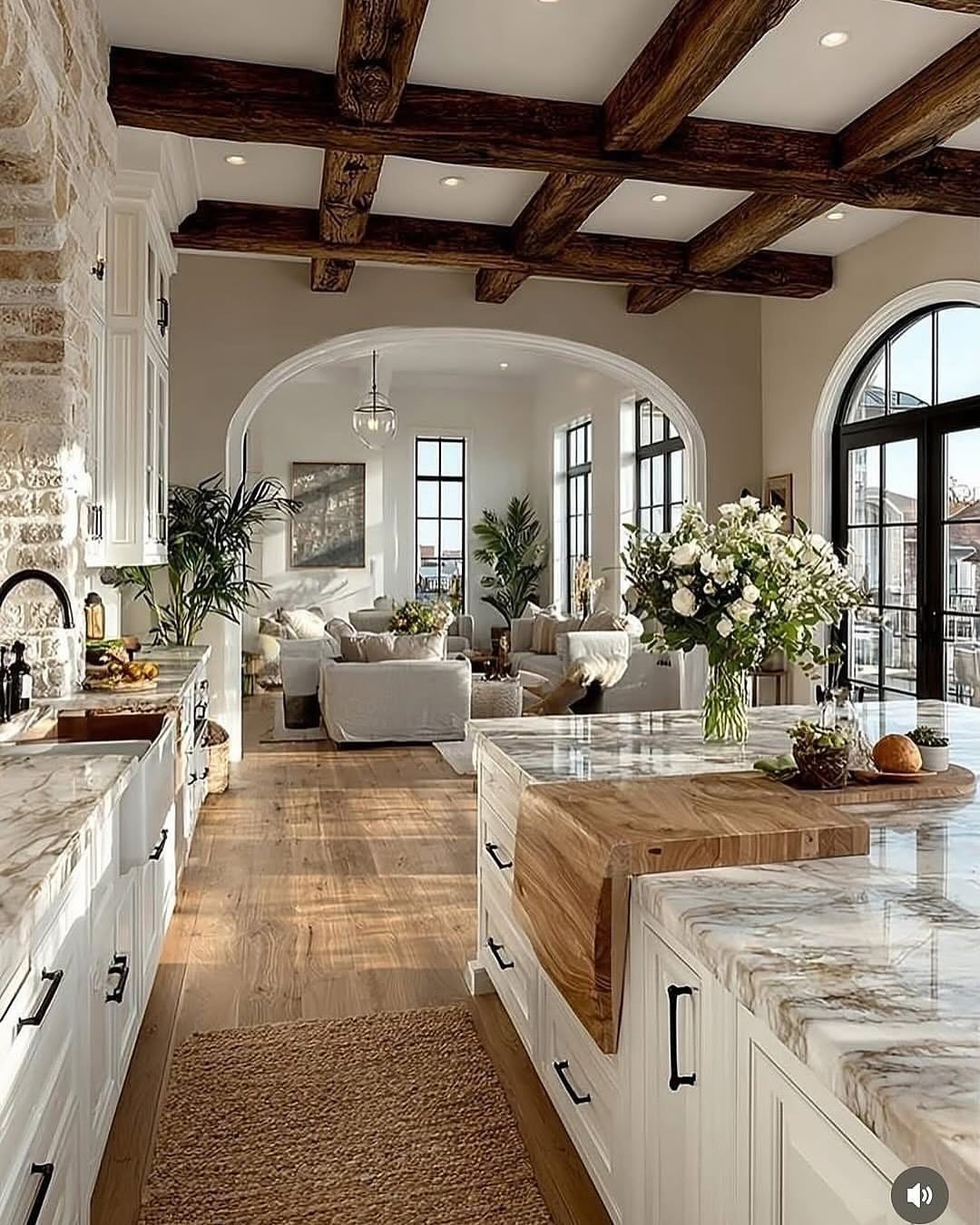
Painted cabinetry is the fastest way to drag a dark or dated kitchen into the current decade without moving a single wall.
White reads brightest and shows dirt fastest; soft gray or cream forgives splashes better and shifts less jarringly against wood floors or stone accents.
Natural materials nearby, timber or stone or hand-thrown ceramics, keep painted cabinets from reading as builder-grade afterthought.
Painted cabinets let you handle more detail than a sleek modern kitchen would: a turned leg on the island, a furniture-style toe kick, hardware with some scroll to it. Just not all three at once.
19. Layered Rustic Kitchen Textures
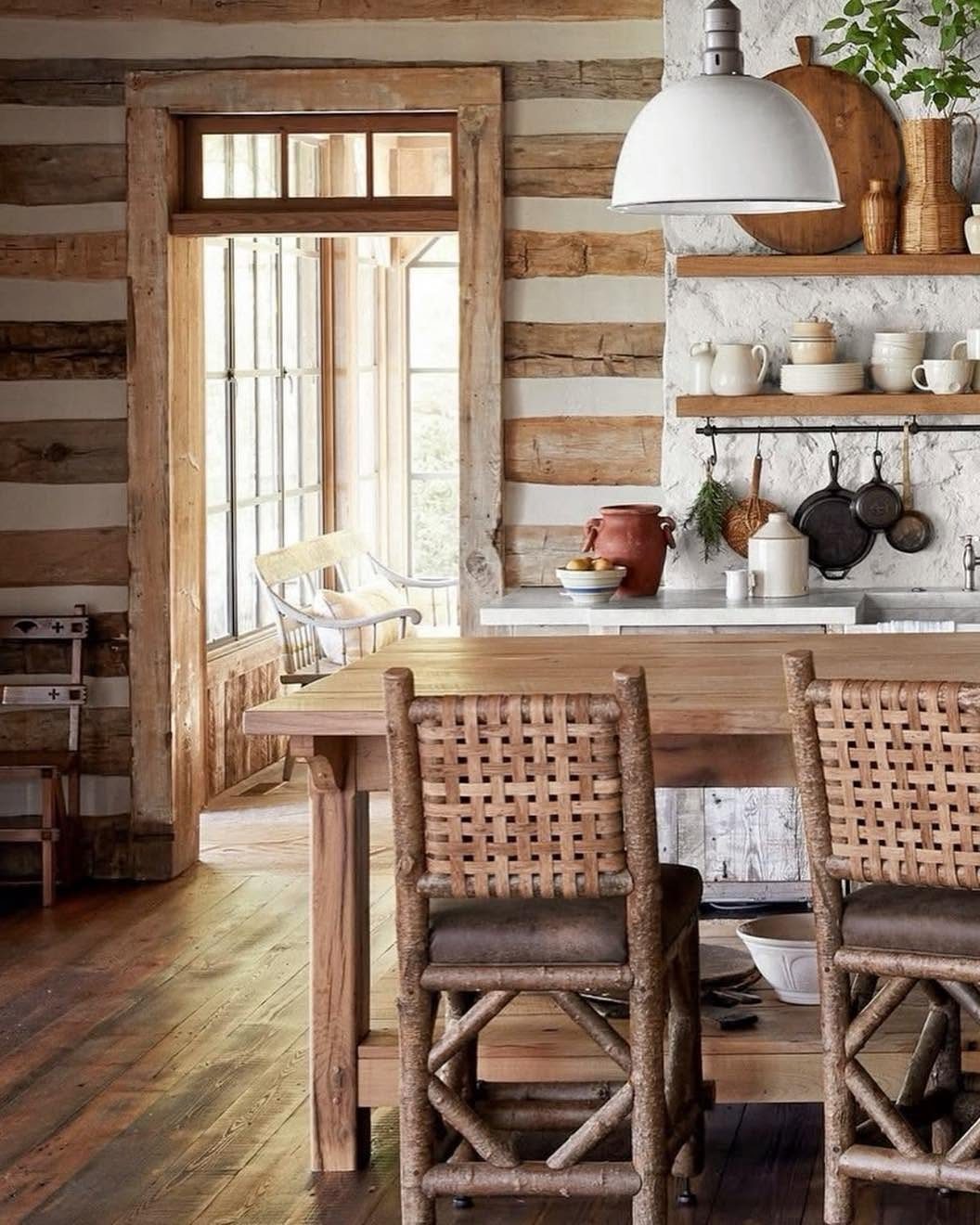
Layering textures keeps a rustic kitchen from feeling like a furniture showroom. Rough chinked logs against smooth stone and woven bark give a kitchen the feel of a place that was assembled over time, not decorated in one pass.
Start with your largest surface, usually walls or floors, as the roughest element. Then add smoother pieces, like a planed wood island or open shelving with ceramic, to keep the space usable.
Woven seats, linen, or unbleached cotton soften the hard edges without going cozy in a way that fights the rustic mood.
The risk is clutter. Two or three distinct textures is usually enough; more than that and the eye has nowhere to rest.
I’d stop before adding metal unless your kitchen runs very warm in tone.
20. Farmhouse Tables
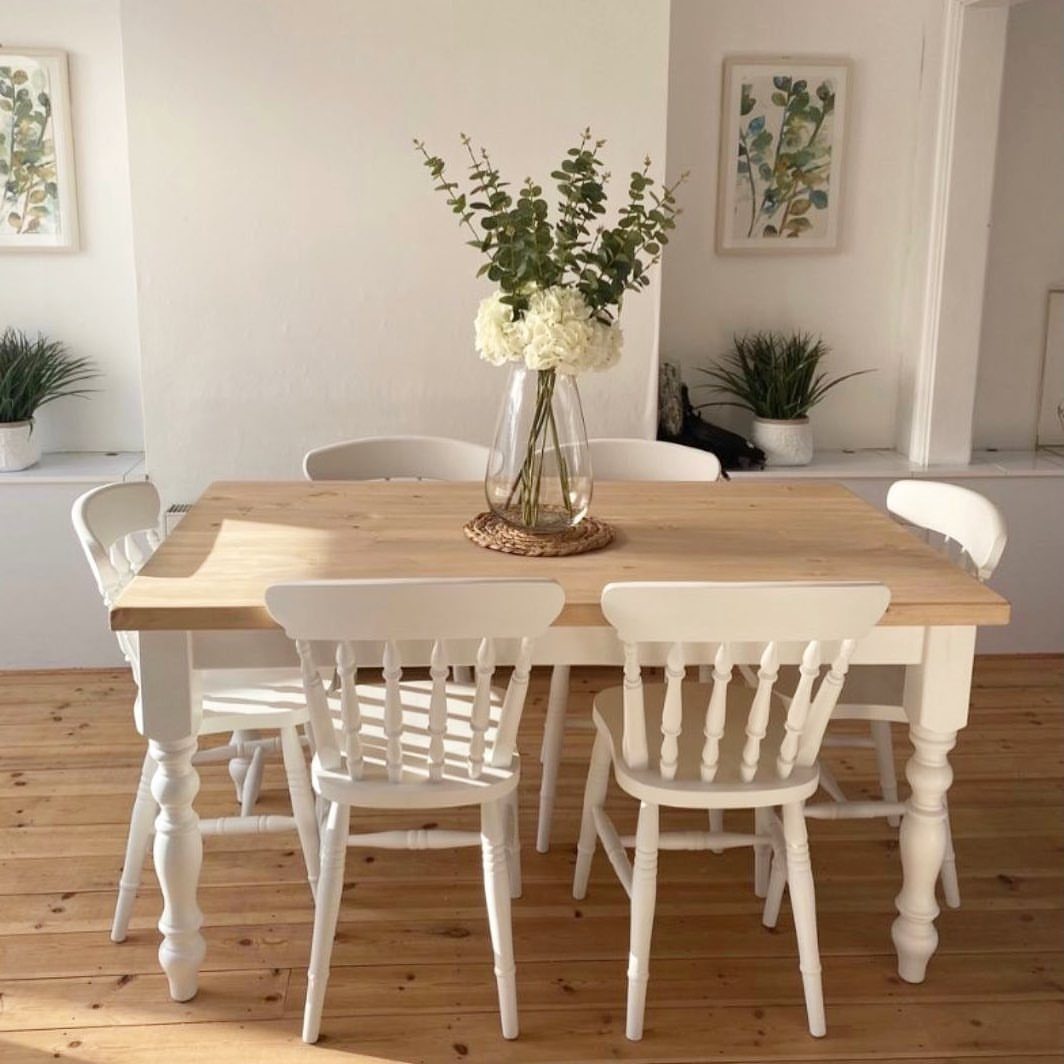
A farmhouse table turns the kitchen into the room where people actually linger.
Size depends on how you use the space. If this is your only dining area, allow enough table width per person and enough clearance to walk behind seated guests.
For tighter rooms, a table on a metal base takes up less visual weight than turned legs and still gives you a work surface at counter height.
An island can substitute in smaller kitchens or more contemporary layouts, but only if it includes seating on at least one side. Without that, you lose the gathering quality entirely.
21. Ceramic Tile Backsplashes
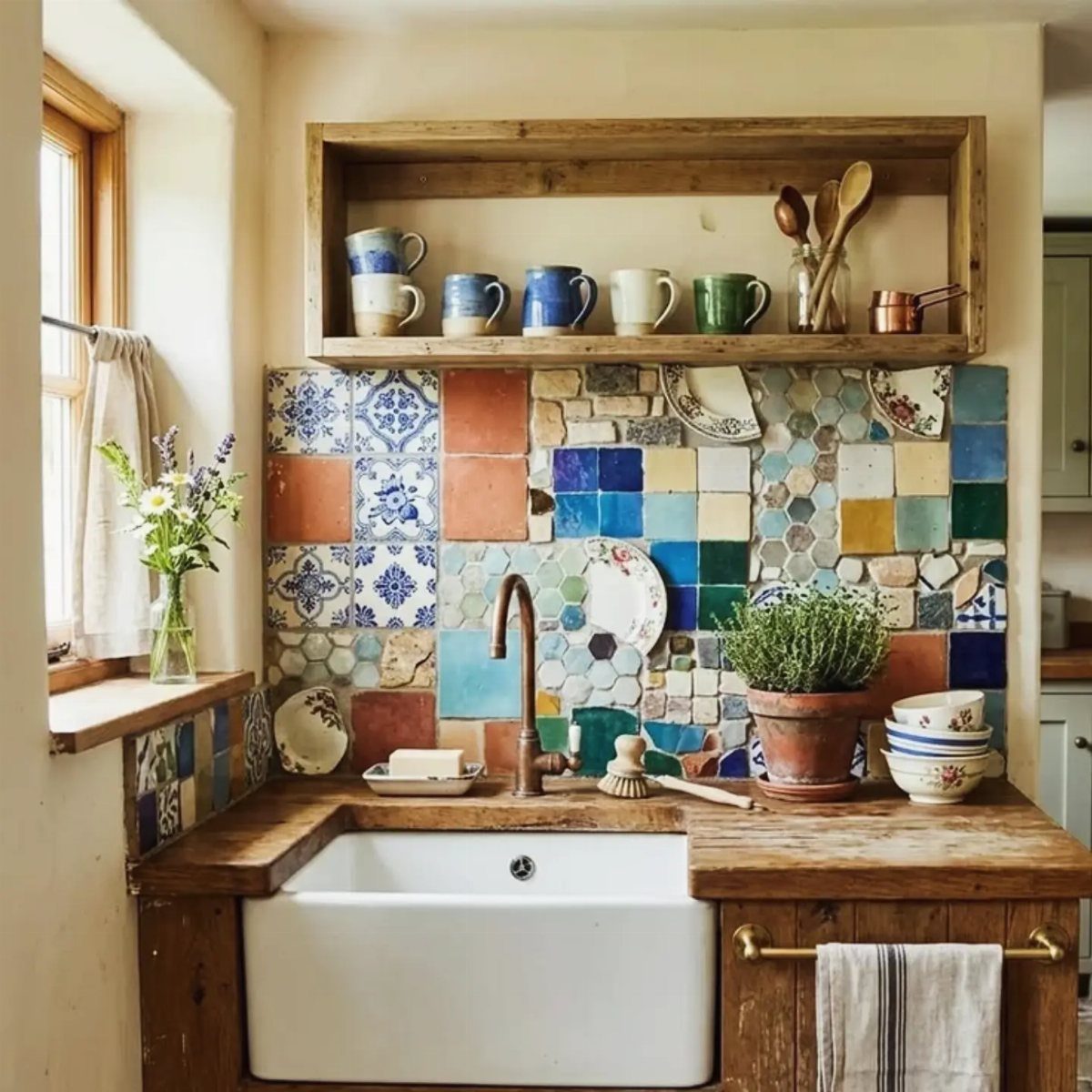
Ceramic tile lets a backsplash hold color and pattern that painted walls or plain stone cannot manage.
Mismatched tiles work best when they share one quality: all matte, all in a warm range, all roughly the same scale. The chaos comes from variation within that boundary.
If you want something bolder, a single graphic tile in a strong color, like the forest green range pairing that shows up in some farmhouse kitchens, needs enough surrounding quiet to let it read as intentional rather than accidental.
Grout color changes everything. Dark grout unifies mixed tiles and hides kitchen grease; light grout brightens but needs more upkeep.
I’d go dark for a working kitchen, light only if the space is more show than cook.
22. Vintage Appliances
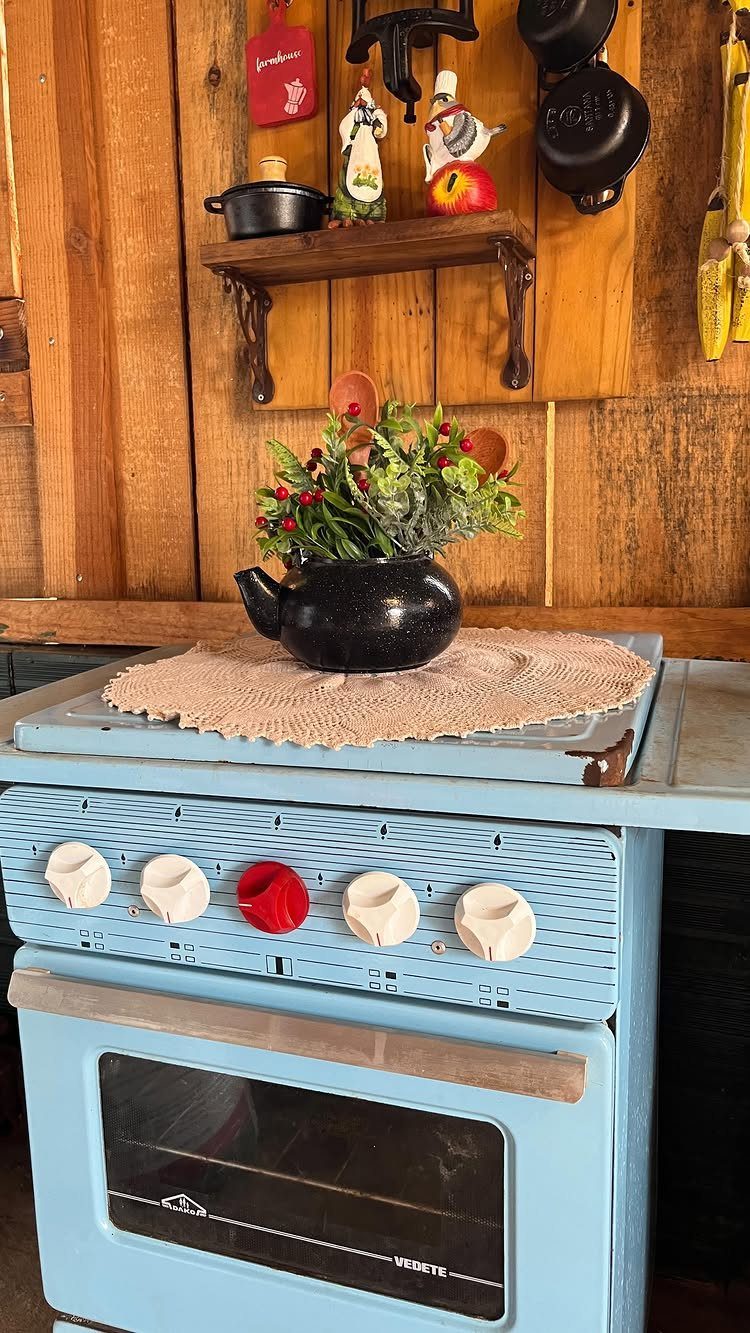
The VEDETE model reads as found object rather than reproduction, which saves the room from theme-park nostalgia.
Modern versions of vintage shapes run from budget-friendly enamel lookalikes to serious restorations with updated internals. Function suffers: older mechanisms heat less evenly, hold temperature less precisely, and cost more to repair.
For a stove you use daily, I’d buy new internals in a vintage shell. For a secondary piece, like a wall oven or a refrigerator, the full restoration becomes more practical.
Color is the other choice. Pale blue, cream, and sage green read farmhouse; brighter reds or yellows shift toward diner or cottage.
Pick the tone that matches your cabinets and flooring, since this piece will anchor the room whether you intend it to or not.
23. Soft Furnishings
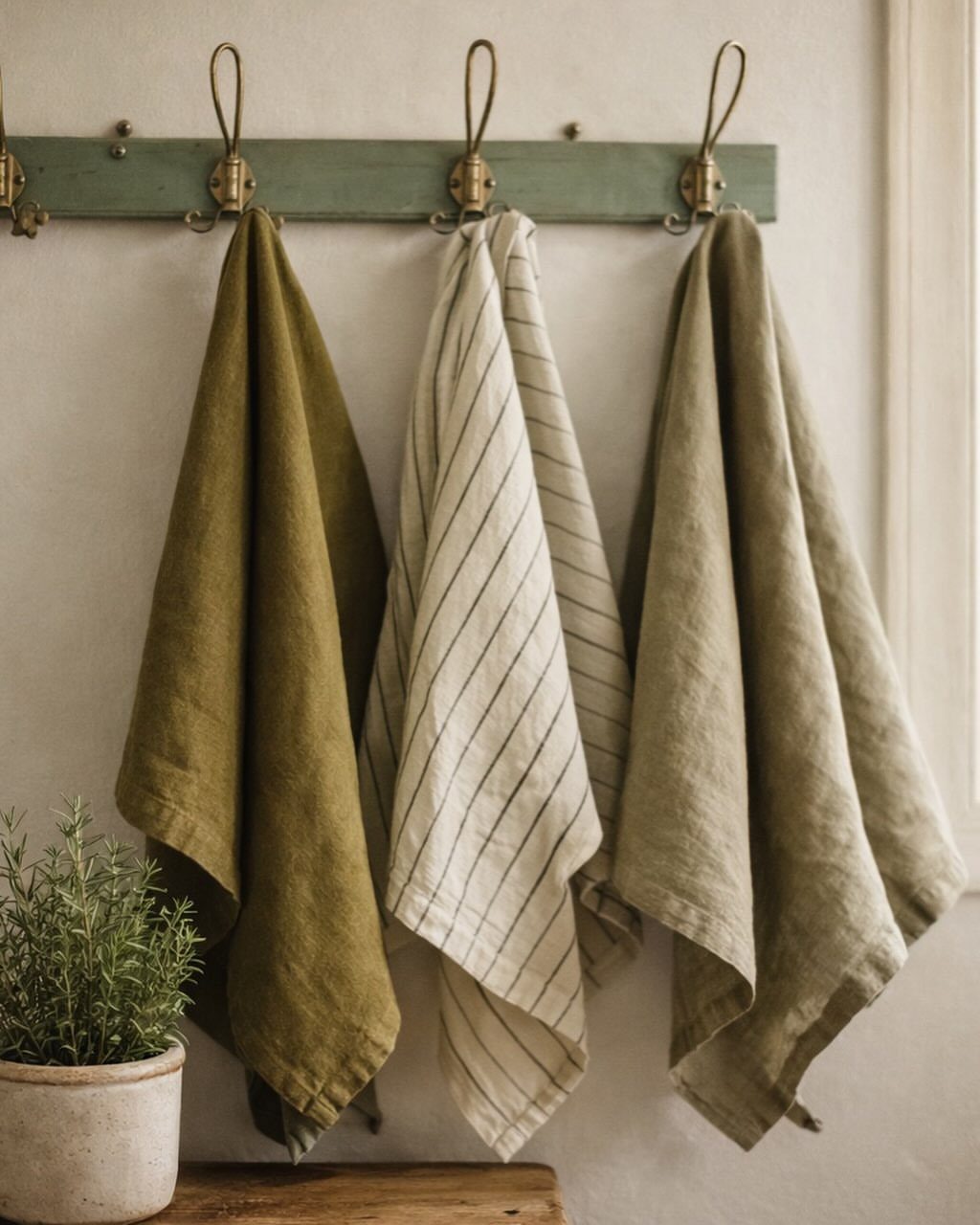
Linen, cotton, and wool soften a kitchen that might otherwise run hard with wood and stone.
Tea towels on brass hooks against plaster pair rough textile with worn wall, and that is what makes the moment feel lived-in rather than staged.
Curtains work only where you have window depth; otherwise they crowd the sill and collect grease. Runners and small rugs are easier to place, but need to be the kind you can wash or shake out regularly.
I’d avoid anything that requires dry cleaning in a kitchen, since spills are not a question of if.
Color matters less than texture here. Olive, cream, and sage all read as neutral in context; what registers is the weave, the slight irregularity that machine-made fabrics flatten out.
Buy natural fiber, accept the wrinkling, and replace every few years when the wear shows.
24. Freestanding Dressers
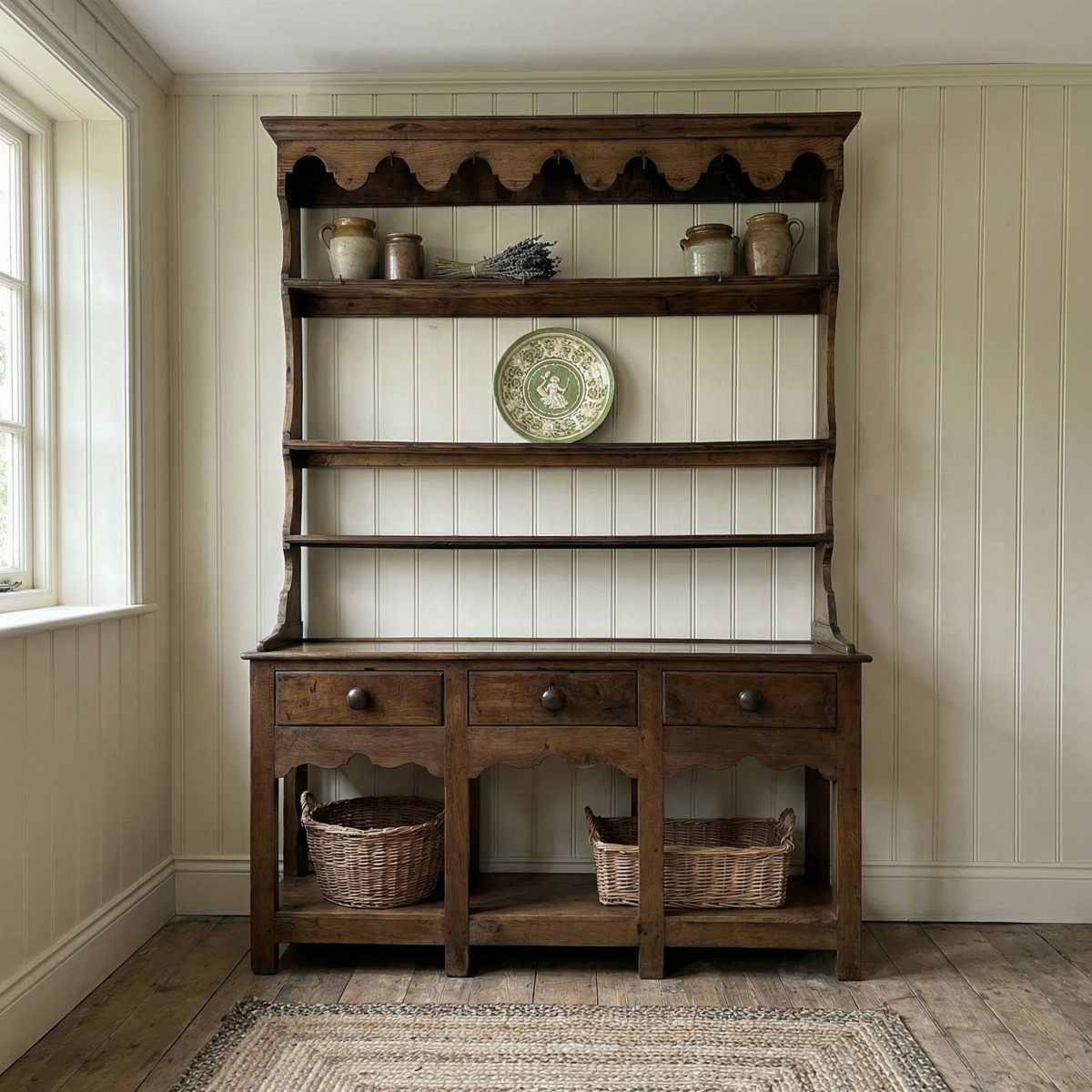
A freestanding dresser adds storage that looks like furniture because it is furniture.
The depth is what separates a dresser from built-in cabinetry. Freestanding dressers project into the room and define space in a way flush cabinets cannot.
Check floor level before you buy old. Farmhouse floors settle, and a dresser with fixed legs will rock on anything less than flat.
Adjustable feet or a shim-ready base saves the wobble. I’d also verify that the back is finished, since these pieces often sit against a wall but sometimes float in a space where both sides show.
25. Exposed Wooden Ceiling Beams
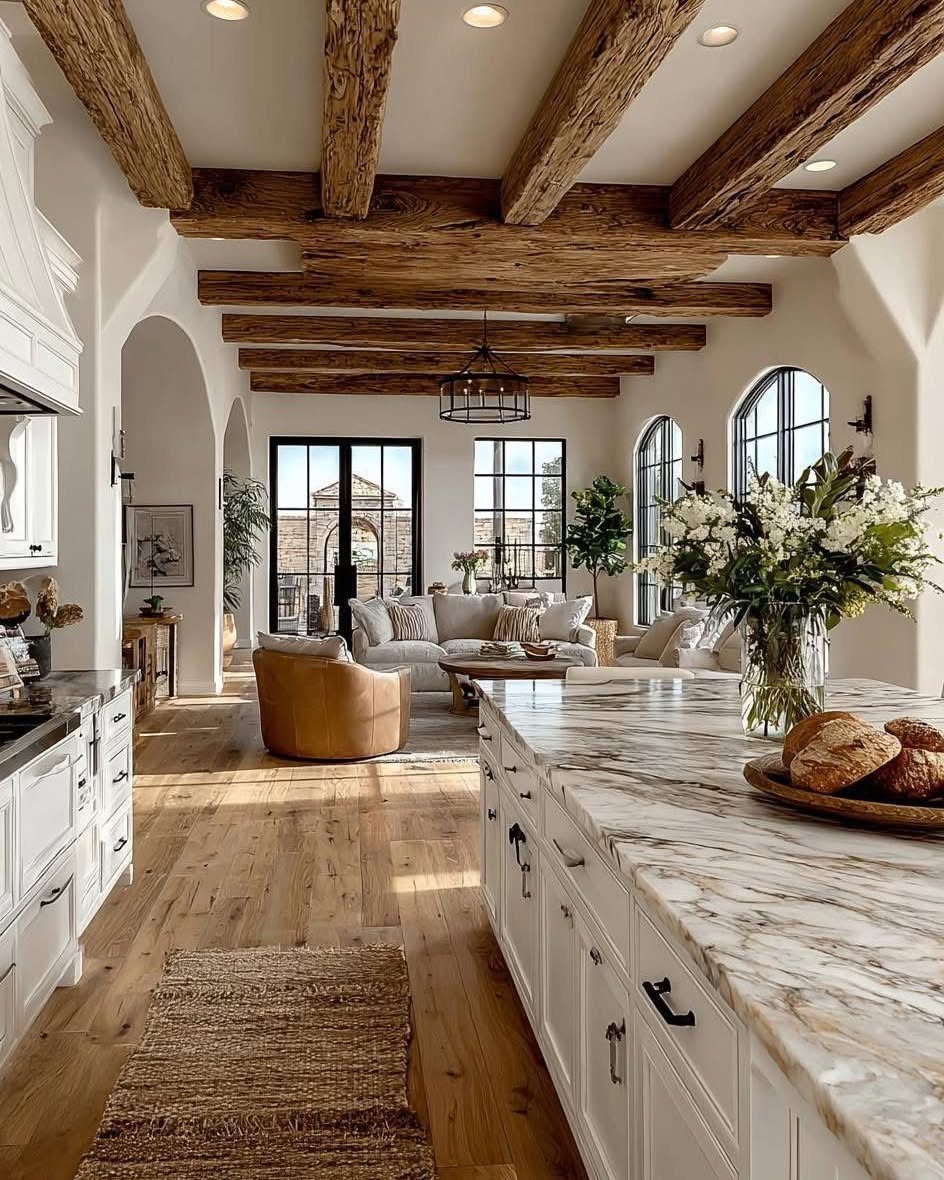
Heavy ceiling beams turn a plain white kitchen into something with history. The wood overhead anchors all that brightness below and keeps the room from feeling too sterile.
Reclaimed oak or pine works best if you can source it; new beams distressed with chains and stains run cheaper and most guests cannot tell after a year of living with them.
Installation needs a structural check, especially in ranch homes where the ceiling may not carry weight. Faux beams in hollow U-shaped pine cost less and slip over existing framework for a weekend project.
This suits open plans where the kitchen shares sightlines with living space. Low ceilings lose headroom fast; in those rooms, skip it.
26. Stone Cooking Archway
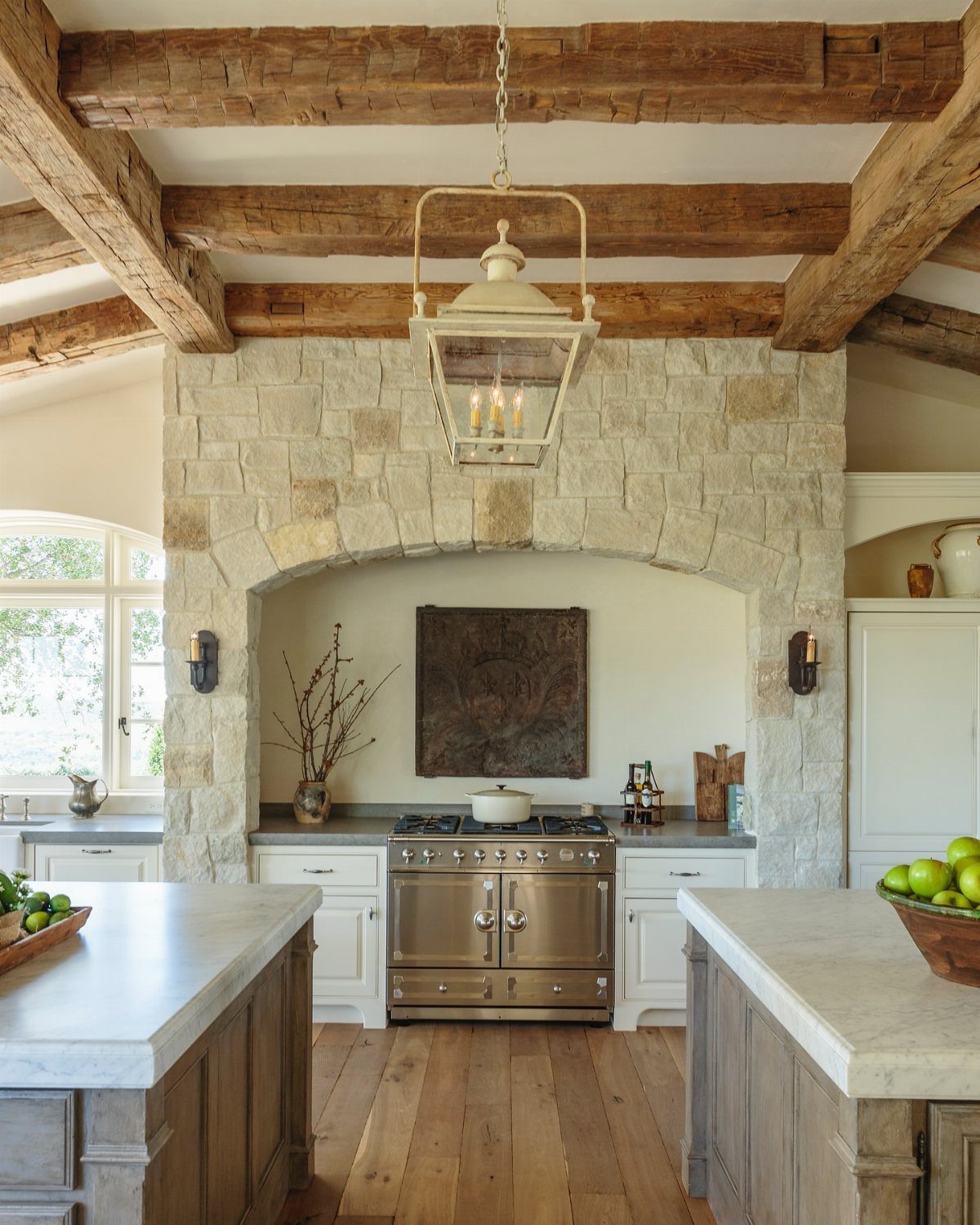
A stone arch over the stove frames cooking as the kitchen’s center in a way no backsplash alone manages. The rough texture against smooth cabinets creates the tension that makes farmhouse style feel collected rather than decorated.
Real stone needs a mason and proper support; the arch carries serious weight. For a lighter approach, lightweight cast stone veneer over a wooden frame achieves the look without engineering a load-bearing curve.
The stove beneath must be chosen before the arch is built; swapping to a wider unit later means rebuilding.
This demands space. Galley kitchens and tight work triangles cannot accommodate the depth a believable arch requires.
It trades flexibility for permanence.
27. Custom Wooden Range Hood
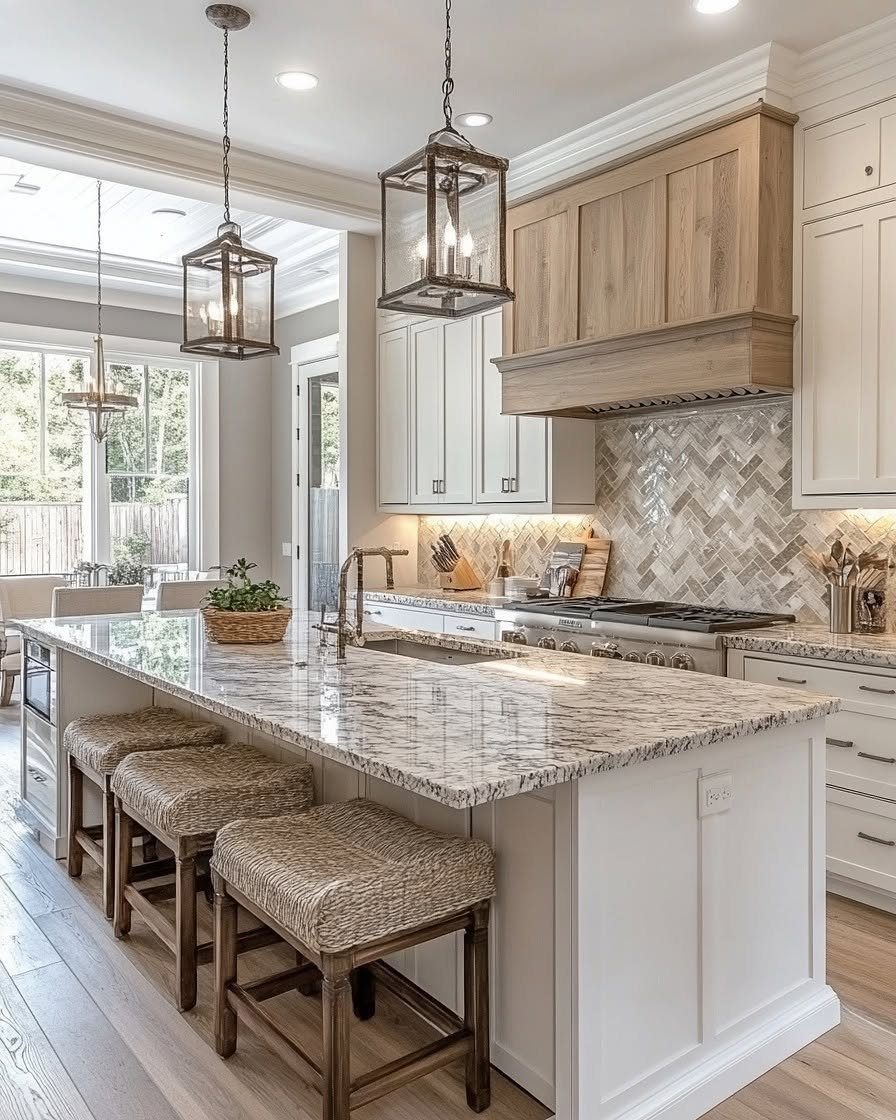
A wooden range hood draws the eye upward and warms all the white surfaces that typically surround it. The natural grain against painted cabinetry gives the kitchen a focal point that feels handmade rather than installed.
Building one means boxing out the vent duct in plywood, then cladding in planks or a solid timber frame. The wood species should match or intentionally contrast nearby tones; matching the floor exactly looks accidental.
Ventilation specs come first, beauty second: a powerful cooktop needs a deeper hood and a baffle filter, which changes the proportions. Zinc tops age to a soft patina if you prefer metal against the wood.
Woven barstools below repeat the material and keep the look from becoming too polished.
28. Cozy Kitchen Window Seat
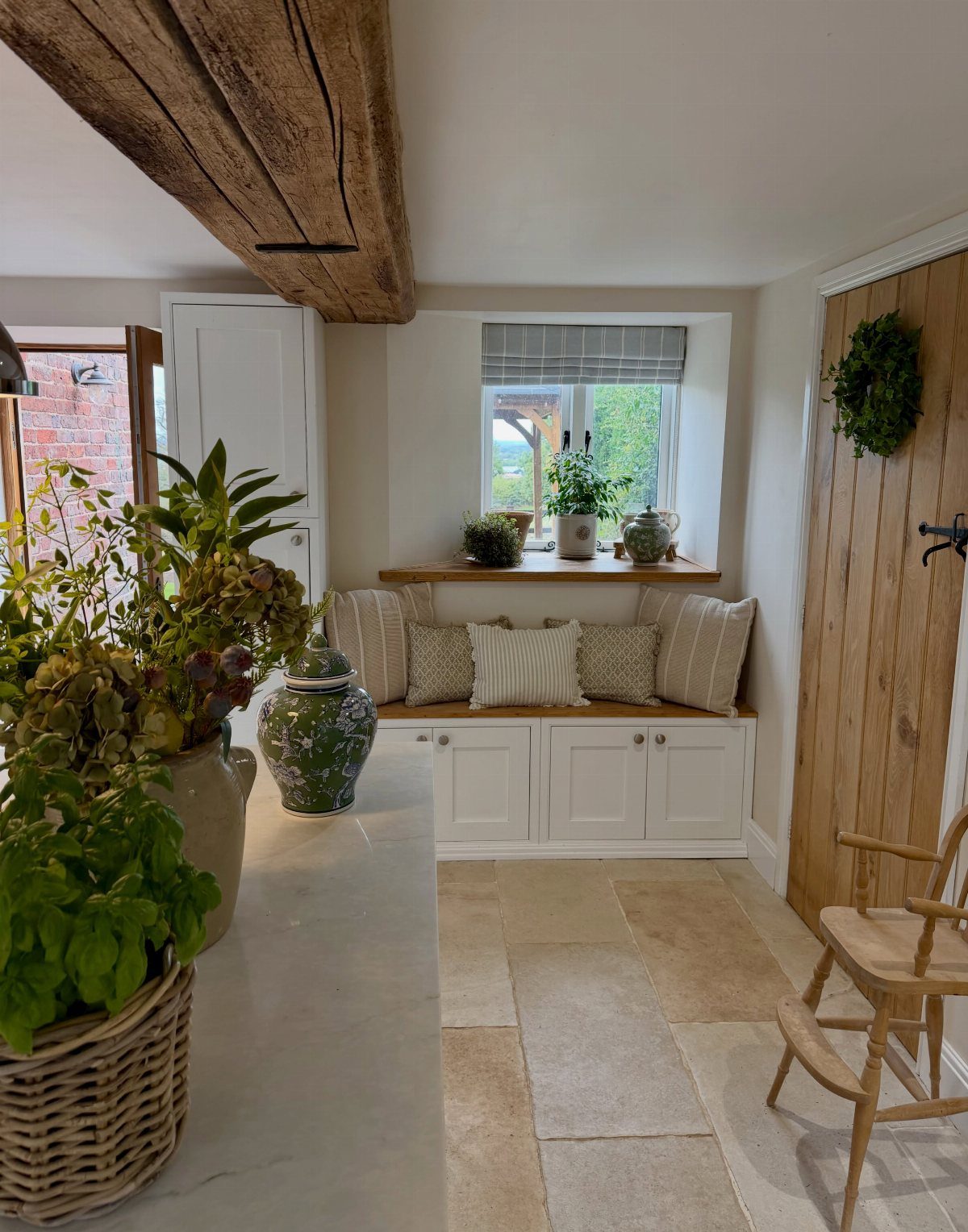
A window seat in the kitchen corner turns waiting for water to boil into something bearable. The bench with its cushions beneath a beam gives the room a reading-nook quality that softens the workaday function of the space.
Building in means measuring the window wall precisely; off-the-shelf benches rarely fit alcoves clean. Storage beneath the lift-up seat justifies the lost cabinet space.
The cushion fabric needs to be something that survives grease and sunlight: heavy cotton canvas or a treated linen, not anything dry-clean only. A wooden shelf above for herbs or small pots keeps the view from the window alive.
This works where the window looks out on something worth seeing. Facing a neighbor’s siding, a seat becomes dead space.
29. Stone Backsplash with Dark Hood
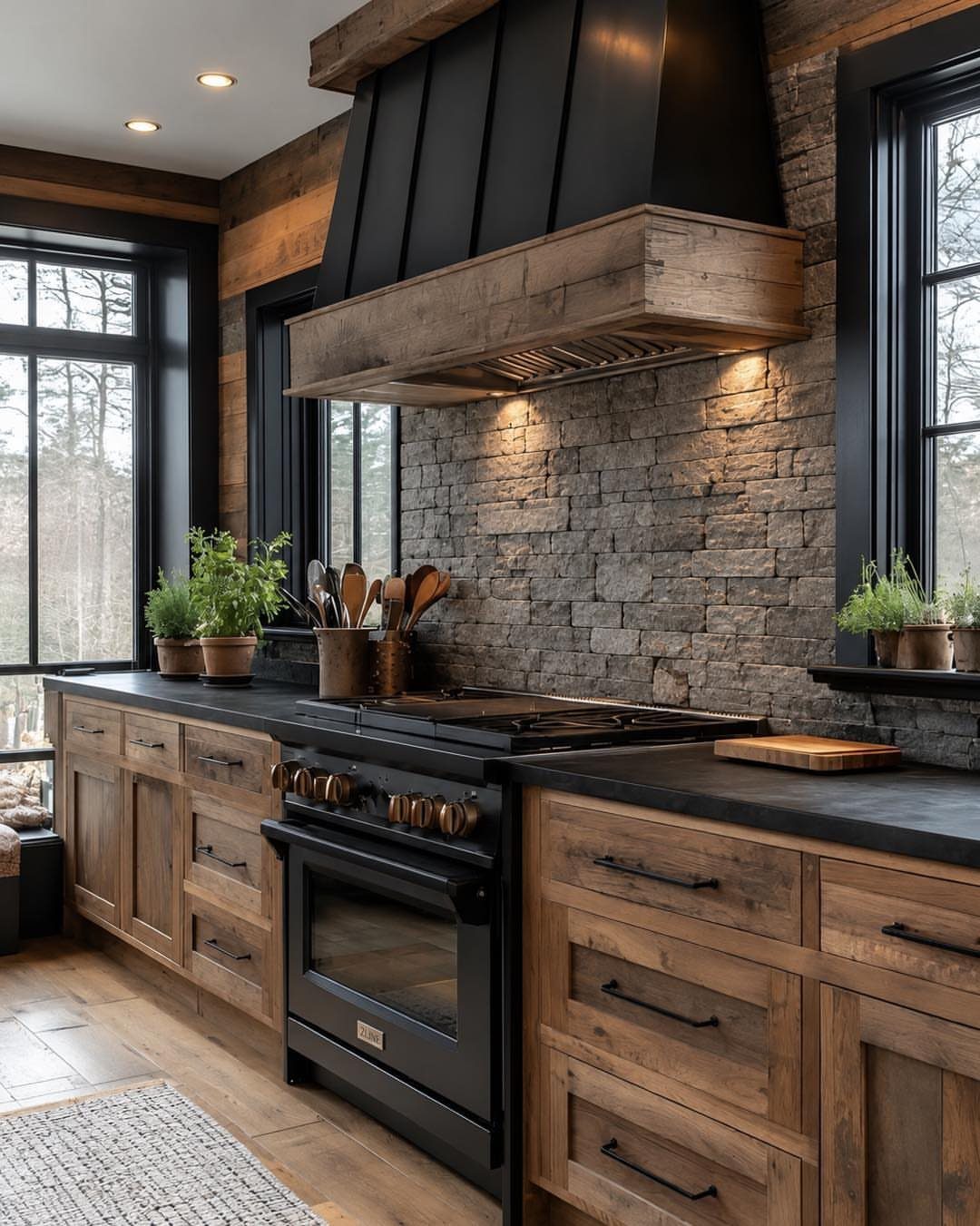
Dark metal and rough stone against natural wood cabinets create a kitchen that reads as collected over decades rather than assembled from a catalog. The black stove centered under that trimmed hood becomes a deliberate choice, not a default.
Stone backsplashes vary enormously in texture and installation. Split-face or stacked stone needs more aggressive cleaning than smooth tile; cooking grease settles into every irregular surface.
The dark hood trimmed in wood ties to the cabinets and keeps the black from floating untethered. A vintage-style stove with modern internals gives the look without the repair bills of true antique appliances.
This palette suits kitchens with strong natural light. In dim rooms, the dark surfaces swallow what little brightness arrives.
Timeless Farmhouse Appeal
Farmhouse kitchens stick around because they solve real problems rather than chasing trends. The style started in actual farmhouses where materials had to last and the kitchen was where everything happened, cooking, mending, talking, warming up.
That same pressure shaped a look built on heavy use and easy repair.
What keeps it alive now is flexibility. Painted cabinets and open shelving read as classic farmhouse, while cleaner lines and quieter finishes pull the same idea forward a decade.
Neither version asks you to choose between working well and looking right. The durable materials that define the style, ceramic sinks, timber counters, cast hardware, age in ways that improve them rather than wearing them out.
A chip in porcelain or a stain in maple becomes part of the history instead of a reason to replace.
The gathering function matters as much as the cooking one. Spaces shaped for people standing and sitting together, not just for one person at a stove, suit how most households actually live.
Mixing Styles
A kitchen can borrow from farmhouse warmth without committing to the full look. The mix works when you keep one foot in each world: natural textures against cleaner lines, or rough timber next to something polished.
Start with layout. Streamlined cabinets in a simple, uncluttered arrangement give you the modern side; grainy timber finishes or visible wood grain bring the rustic element back in.
Warm wood next to concrete countertops or steel accents tips the room toward industrial without stripping away the comfort.
Dark fixtures, deep charcoal or matte black, set up contrast against lighter wood tones and keep the space from going too soft.
The balance is in the textures. Smooth contemporary surfaces next to rough beams or exposed brick give you both sophistication and warmth.
A blackened steel pendant over a timber island does the same job as lace curtains on a factory window: each side makes the other readable. A kitchen built for actual living rarely performs one style from head to toe.
Creating a Welcoming Atmosphere
The feeling of a farmhouse kitchen comes down to whether people want to stay in it.
An island with stool seating does more than add counter space; it gives someone a place to land while you cook, which turns food prep into something shared.
Large windows and open shelving push the walls back visually and keep the room from feeling boxed in.
Black fixtures against white cabinetry set up enough contrast that the space reads as designed rather than accidental. The shiplap or painted boards behind them add texture without clutter.
Social kitchens need breathing room. An open path between cooking zone and seating matters more than extra cabinets.
The layout should let someone set a drink down or lean on a counter without blocking the cook’s triangle. Light, scale, and places to land: these are what make people linger.
Practicality in Design
A farmhouse kitchen earns its keep through daily use, not weekend performance. The original versions were built by people who cooked three meals from scratch and needed surfaces that could take a beating.
That legacy shows in material choices that favor repair over replacement.
Durability is the first practicality. Ceramic sinks, timber counters, and forged hardware all share the trait of aging visibly rather than failing quietly.
A surface that shows wear tells you when it needs attention; one that hides it often goes too far before you notice.
The second practicality is flow. When the layout keeps the cook facing the room, nobody gets stuck alone at the stove while everyone else gathers.
The balance between simple and detailed matters for function too. Too much ornament collects grease and dust; too little feels sterile.
The farmhouse range hits a middle point where cleaning is possible and character remains.
Frequently Asked Questions
Is farmhouse style still in for 2026?
Yes, farmhouse kitchens remain relevant because they keep evolving rather than staying frozen in one look.
Texture and authenticity carry the look forward: exposed wood with its knots still visible, finishes that show a brushstroke or two, and pieces that look shaped by hand rather than factory mold.
What is rustic farmhouse design?
Rustic farmhouse design combines natural materials, vintage elements, and a lived-in atmosphere rooted in historic rural practicality. It centers on rugged textures like weathered wood, patinated metals, and stone alongside aged finishes that suggest down-to-earth authenticity.
The style mixes old and new so the space feels inviting rather than museum-like, with freestanding units and warm colors that make a kitchen feel passed-down rather than decorated in one pass.
What kitchen trends will be outdated in 2026?
Overly minimalist designs and stark modern aesthetics that lack warmth or texture are losing ground. The farmhouse approach avoids this by layering natural materials and imperfect finishes that age rather than date.
A kitchen built from found pieces, varied textures, and materials that scuff and darken and soften with use will outlast any style that depends on looking untouched.